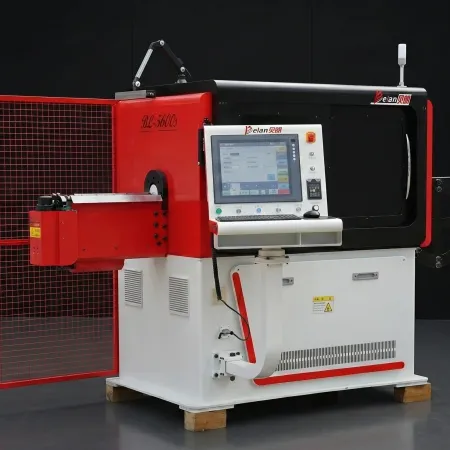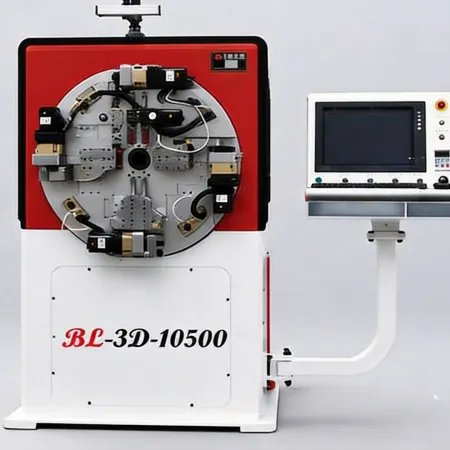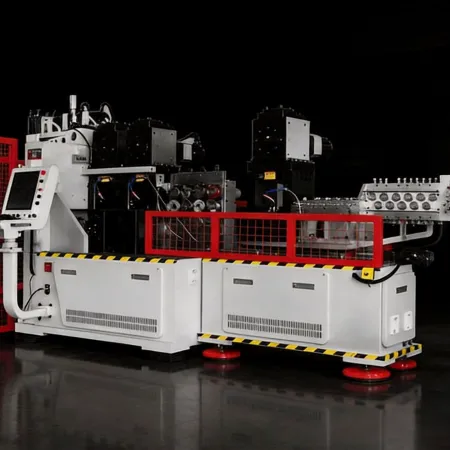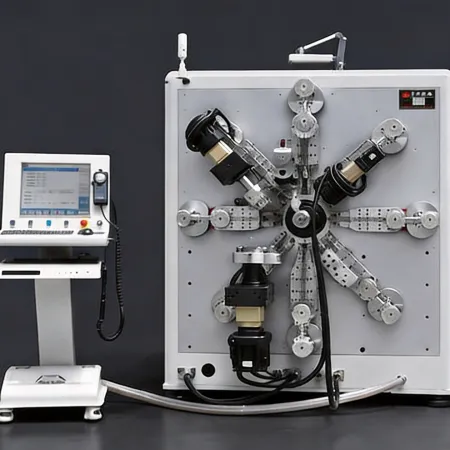
Aluminum Busbar Bending Machine: Precision CNC Forming for Modern Electrical Infrastructure
As global electrical infrastructure shifts toward lightweight, cost-efficient, and high-conductivity materials, aluminum has emerged as the material of choice for modern busbar systems. From medium-voltage switchgear and power distribution cabinets to electric vehicle (EV) battery packs and solar inverters, aluminum busbars are replacing traditional copper in a growing range of applications — driven by a 40% to 60% weight reduction and substantially lower raw material cost compared to equivalent copper conductors.
However, aluminum presents unique forming challenges that conventional bending equipment cannot reliably address. An aluminum busbar bending machine purpose-built for the material's mechanical properties is essential for achieving precise geometry, consistent bend angles, and defect-free surface finish at production scale. This article examines the technical demands of aluminum busbar fabrication and how Belan's CNC busbar bending solutions deliver the accuracy, repeatability, and throughput required by manufacturers serving the global electrical equipment market.
Why Aluminum Busbars Are Dominating Modern Electrical Systems
The global shift toward aluminum in power distribution is not a temporary trend — it is a structural response to three converging forces: material economics, energy density requirements, and sustainability mandates.
Aluminum offers approximately 61% of copper's electrical conductivity at just 30% of the weight. For a given current-carrying capacity, an aluminum busbar cross-section must be approximately 1.6 times larger than copper, yet the resulting assembly still weighs roughly half as much. This weight advantage translates directly into reduced structural support requirements, lower shipping costs, and easier on-site installation — factors that compound in large-scale projects such as data center power distribution and utility substations.
From a cost perspective, aluminum typically trades at one-third to one-quarter the price of copper per ton on international commodity markets. For manufacturers producing thousands of busbar assemblies per month, this differential represents a significant competitive advantage. Furthermore, aluminum's superior corrosion resistance in certain environments — particularly when anodized — reduces long-term maintenance and extends service life in outdoor and high-humidity installations.
Technical Challenges in Aluminum Busbar Forming
Aluminum's mechanical properties differ fundamentally from copper, and these differences must be accounted for in bending machine design, tooling configuration, and process control. The three most critical challenges are:
Springback Compensation
Aluminum exhibits higher elastic recovery than copper after plastic deformation. When a bend is released, the material partially rebounds toward its original shape, resulting in a bend angle that differs from the programmed tool angle. The springback ratio varies with alloy composition, temper condition, bend radius, and material thickness — a 6061-T6 aluminum busbar behaves very differently from a 1350-H111 conductor-grade bar. An effective aluminum busbar bending machine must incorporate programmable springback compensation algorithms that adjust the over-bend angle automatically based on material parameters stored in the control system.
Surface Integrity and Galling Prevention
Aluminum is softer and more prone to surface galling and scratching than copper during mechanical forming. Any surface defect on a busbar contact face can create localized hot spots under high-current conditions, compromising electrical performance and potentially creating safety hazards. Premium busbar bending machines address this through polished tooling surfaces, controlled clamping pressure, and — in advanced systems — roller-based bending mechanisms that minimize sliding contact between the tool and the workpiece.
Wider Cross-Section Handling
Because aluminum busbars require larger cross-sections than copper for equivalent ampacity, the bending machine must accommodate wider and thicker workpieces. Typical aluminum busbars for industrial switchgear range from 20mm to 50mm in width and 3mm to 10mm in thickness. Machines designed only for narrow copper busbars lack the clamping force, tool clearance, and bending torque to handle these dimensions reliably. Dedicated aluminum-capable machines feature reinforced bending arms, wider tooling stations, and higher-torque servo motors to maintain forming precision across the full material range.
Belan CNC Busbar Bending Solutions for Aluminum
Belan has developed two primary machine platforms for aluminum busbar fabrication, each optimized for different production scales and complexity requirements. Both machines share a common engineering philosophy: full servo-electric drive, multi-axis CNC coordination, and integrated automation that eliminates secondary handling between forming operations. Browse the complete Belan busbar bending machine lineup for detailed specifications.
BL-TP-50-7E: High-Capacity Aluminum Busbar Forming
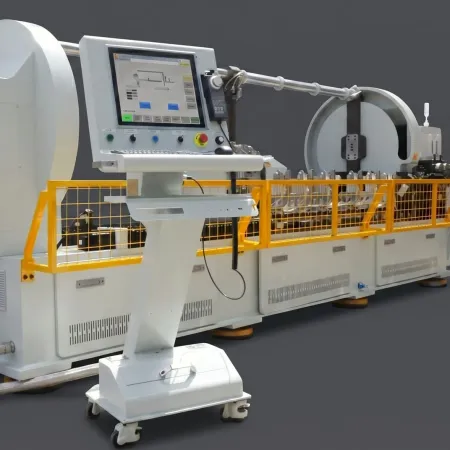
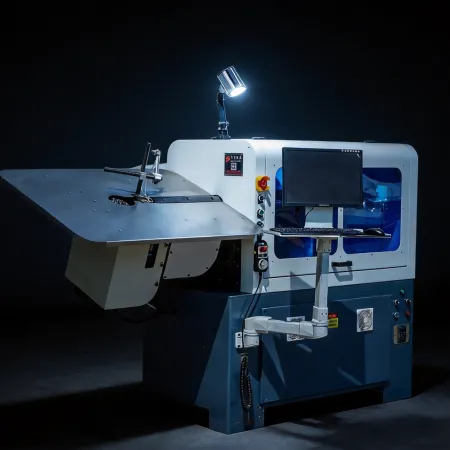
The BL-TP-50-7E is Belan's flagship 13-axis CNC busbar bending machine, purpose-engineered for both copper and aluminum busbar processing. Its aluminum capability extends to widths of 15mm to 50mm and thicknesses of 1.0mm to 8.0mm, covering the full range of busbar specifications found in low-voltage and medium-voltage electrical equipment. Visit the Belan products page to explore this model and the complete TP Series range.
BL-TP-50-7E Key Specifications
| Aluminum Busbar Capacity | W15–50mm / T1.0–8.0mm |
| Control Axes | 13 axes, full servo |
| Total Servo Power | 58.7 KW |
| Machine Weight | 6,800 KG |
| Auto Feeder Load | 1,500 KG |
| Key Components | Sanyo servo motors, Taicheng reducers, Yitu CNC (Taiwan) |
| Machine Dimensions | 3,000 × 2,200 × 2,100 mm |
The 58.7KW total servo power — distributed across feeding (4.5KW), turning (2.7KW), dual curling stations (2.0KW + 4.5KW), eight arm motors (5.5KW each), and servo shearing (1.0KW) — provides exceptional torque for bending thick aluminum bars without speed compromise. The 6,800KG machine frame, built on an A3 steel base, ensures minimal vibration and maximum structural rigidity during high-force forming operations.
A defining feature of the BL-TP-50-7E is its single-setup integrated processing: feeding, rotating, bending, curling, and servo shearing are completed in one automated cycle without manual material transfer between stations. The 1,500KG automatic feeder supports continuous production runs, and the Yitu computer control system stores bend programs with automatic springback adjustment for different aluminum alloys.
BL-TP-45-6E: Versatile Mid-Range Busbar Processing
For manufacturers with moderate throughput requirements or mixed copper-aluminum production lines, the BL-TP-45-6E offers a balanced combination of capability and footprint. This 13-axis TP Series machine provides the same multi-axis CNC architecture and integrated forming approach as its larger counterpart, in a configuration optimized for medium-volume busbar fabrication.
Both machines share Taiwan-sourced critical components — Sanyo servo motors for positioning accuracy, Taicheng precision reducers for torque transmission, and the Yitu industrial CNC platform for motion control — ensuring consistent quality across the product range. This common component ecosystem simplifies spare parts management and technical training for organizations operating multiple Belan machines.
Key Industries and Applications
Aluminum busbars produced on Belan CNC bending machines serve a diverse range of electrical equipment sectors. Each application imposes distinct requirements for bend complexity, dimensional tolerance, and surface quality — all of which the TP Series machines are engineered to meet.
Switchgear and Power Distribution
Low-voltage and medium-voltage switchgear assemblies require busbars with multiple bends, offsets, and twists to route power through confined enclosure spaces. The 13-axis coordination of Belan's busbar bending machines enables complex 3D geometries to be formed in a single program cycle, eliminating the cumulative tolerance errors that arise from multi-step manual bending. Manufacturers producing IEC 61439-compliant switchgear benefit from the repeatable accuracy and documented process parameters that CNC control provides. For a practical example of Belan's busbar processing capabilities in action, see our cut-to-length busbar bending case study.
EV Charging Infrastructure
DC fast-charging stations and onboard EV power distribution units increasingly rely on aluminum busbars for weight reduction and thermal management. The forming requirements for EV applications are particularly demanding: compact bend radii, tight angular tolerances, and pristine surface finish on contact areas. Belan's servo-controlled bending process maintains consistent bend quality across high-volume production, which is essential for automotive-tier quality standards. Explore Belan's dedicated EV busbar processing solutions for detailed application guidance.
Energy Storage and Battery Systems
Utility-scale battery energy storage systems (BESS) and commercial battery packs use aluminum busbars for module interconnections and main power take-off connections. The bending machine must accommodate the long, wide aluminum bars typical of these applications while maintaining flatness and preventing twist along the bar length. The BL-TP-50-7E's 3,000mm machine length and reinforced bending arm design are tailored for these demanding workpiece dimensions.
Solar Inverters and Renewable Energy
String inverters and central inverters for photovoltaic installations incorporate aluminum busbars for DC input connections and AC output distribution. These applications require corrosion-resistant forming that preserves the busbar's electrical integrity in outdoor and rooftop environments. Aluminum's natural oxide layer, combined with controlled forming that avoids surface damage, delivers long-term reliability in these challenging conditions.
Data Center Power Distribution
Hyperscale data centers use aluminum busbar trunking systems for efficient power distribution from transformers to server racks. The bend quality, dimensional consistency, and throughput of CNC busbar bending directly impact the installation speed and electrical performance of these mission-critical systems. With production volumes measured in kilometers of busbar per facility, the automated feeding and high-speed cycling of Belan's TP Series machines offer a measurable throughput advantage.
Selecting an Aluminum Busbar Bending Machine: Key Considerations
Investing in an aluminum busbar bending machine involves evaluating technical capabilities against production requirements. The following criteria should guide the selection process:
| Material Range | Maximum aluminum width and thickness the machine can handle. Ensure the spec covers your largest busbar dimensions with adequate margin. |
| Axis Count & Coordination | More axes enable complex geometries in a single cycle. 13-axis systems handle bends, offsets, twists, and curls without repositioning. |
| Servo Power | Adequate servo power ensures consistent bending speed and torque for thick aluminum bars. Underpowered machines slow down on heavy-gauge material. |
| Springback Control | Programmable compensation tables for different aluminum alloys and tempers. Essential for achieving tight angular tolerances. |
| Automation Integration | Auto-feeding, auto-shearing, and program storage for lights-out production capabilities and reduced labor dependency. |
| Build Quality | Machine weight, frame material, and component sourcing directly affect long-term accuracy and service life under production conditions. |
| After-Sales Support | Availability of spare parts, remote diagnostics, and on-site technical service for international customers. |
Why Manufacturers Choose Belan for Aluminum Busbar Fabrication
Belan's position in the global busbar bending machine market is built on three pillars: engineering depth, component quality, and application expertise earned through installations across multiple industries and countries. Large-scale deployments of Belan busbar machines across new energy production bases demonstrate the capability to deliver at enterprise scale, while the integrated forming process documented in production — covering feeding, bending, curling, and servo shearing in a single automated cycle — provides transparency into manufacturing quality and workflow design. Learn more about Belan's engineering philosophy and manufacturing capabilities.
The use of premium-grade components — Sanyo servo motors, Taicheng precision reducers, and Yitu industrial CNC controllers, all sourced from Taiwan — reflects a design philosophy that prioritizes long-term reliability over short-term cost reduction. The A3 steel machine base, welded and stress-relieved for dimensional stability, provides the rigid foundation that consistent bending accuracy demands.
For international buyers, Belan offers comprehensive pre-shipment inspection, overseas installation support, and ongoing technical service. Machines are CE-certified for the European market and built to meet the documentation and traceability requirements of ISO 9001 quality management systems. Details on warranty coverage and service commitments are available on the Belan after-sales support page.
Get a Quote for Your Aluminum Busbar Bending Requirements
Selecting the right aluminum busbar bending machine is a capital decision that affects production quality, throughput, and total cost of ownership for years to come. Belan's engineering team provides detailed technical consultation to match machine configuration with your specific aluminum busbar specifications, production volume targets, and facility constraints.
Ready to Discuss Your Aluminum Busbar Bending Project?
Share your busbar specifications and production requirements with our engineering team for a customized machine proposal and detailed quotation.
Contact Belan Engineering →Frequently Asked Questions
What aluminum alloys can Belan busbar bending machines process?
Belan TP Series busbar bending machines are compatible with common electrical-grade aluminum alloys including 1350 (EC grade), 6101, 6061, and 6063 in various temper conditions. The CNC control system stores bend parameter profiles for different alloys, automatically adjusting over-bend angles to compensate for material-specific springback characteristics. If your application uses a specialized aluminum alloy, Belan's application engineers can develop and validate a custom bending profile during pre-sales evaluation.
Can a single machine handle both copper and aluminum busbars?
Yes. The BL-TP-50-7E is specifically designed for dual-material operation, supporting copper busbars up to 45×7mm and aluminum busbars up to 50×8mm. The machine stores separate program libraries for each material type, and switching between copper and aluminum production requires only a program selection — no mechanical changeover or tooling swap is needed. This dual-material capability makes the machine particularly cost-effective for manufacturers serving diverse electrical equipment markets. Browse the full Belan product catalog for machine specifications and comparison.
What is the typical lead time for a Belan aluminum busbar bending machine?
Standard lead times for Belan busbar bending machines range from 45 to 75 days depending on configuration, customization requirements, and current production queue. Machines built with optional accessories, specialized tooling, or non-standard voltage/frequency specifications may require additional lead time. Belan provides a confirmed delivery schedule at the time of order placement, and customers receive regular production status updates throughout the manufacturing process.
Do Belan busbar bending machines come with CE certification?
Yes. Belan busbar bending machines are CE-certified for the European market, meeting the essential health, safety, and environmental protection requirements of applicable EU directives. Full technical documentation, including EU Declarations of Conformity, machine manuals, electrical schematics, and risk assessments, is provided with each shipment. Machines destined for other regulated markets can be configured to meet additional regional certification requirements upon request.
Is on-site installation and training provided for international customers?
Belan provides comprehensive overseas installation, commissioning, and operator training as part of the machine delivery package. A field service engineer travels to the customer's facility to supervise machine positioning, perform electrical and mechanical commissioning, calibrate the CNC system with customer-specific busbar samples, and train operating personnel on programming, daily operation, and preventive maintenance procedures. Remote technical support is available thereafter for troubleshooting and process optimization. For details on service scope and warranty terms, visit the Belan services page.
For more information about Belan's aluminum busbar bending solutions, machine specifications, or to request a detailed quotation, please contact our engineering team with your busbar dimensions, material specifications, and production volume targets.