
If you have spent any time sourcing a copper busbar bending machine lately, you have probably noticed that every supplier’s brochure looks the same: axis counts, kilowatts, a photo of a tidy bend. After delivering busbar machines into five BYD production bases and training operators from three continents in our Dongguan workshop, we can tell you the brochure numbers are rarely where projects succeed or fail. The difference usually hides in two places — how the machine treats your busbar surface, and how fast it switches when your order book changes. This article is the version of our sales conversation we wish every buyer could hear before signing anything.
The Busbar Itself Has Changed — Most Machines Have Not Caught Up
Ten years ago, most copper busbars were bare flat bar. Today, a large share of new-energy work comes coated: PVC-mica clad copper busbars for high-voltage wiring, PA12 insulated busbars for battery systems, anodized aluminum busbars for inverters and energy-storage cabinets. The conductor is the same metal your father bent by hand. The surface is not.
A coated busbar is unforgiving. If the feeding mechanism grips it with point-contact rollers, the insulation dents. If the bar slides sideways during feeding, the coating scuffs. If clamping pressure is set for bare copper, a PA12 layer can crack at the first bend — and a cracked insulation layer is a breakdown waiting to happen, not a cosmetic reject. We have seen whole batches scrapped at incoming inspection for exactly this reason.
This is why we keep coming back to feeding when customers ask what makes one busbar bending machine better than another. Bending gets the glory; feeding decides whether the finished part passes inspection.
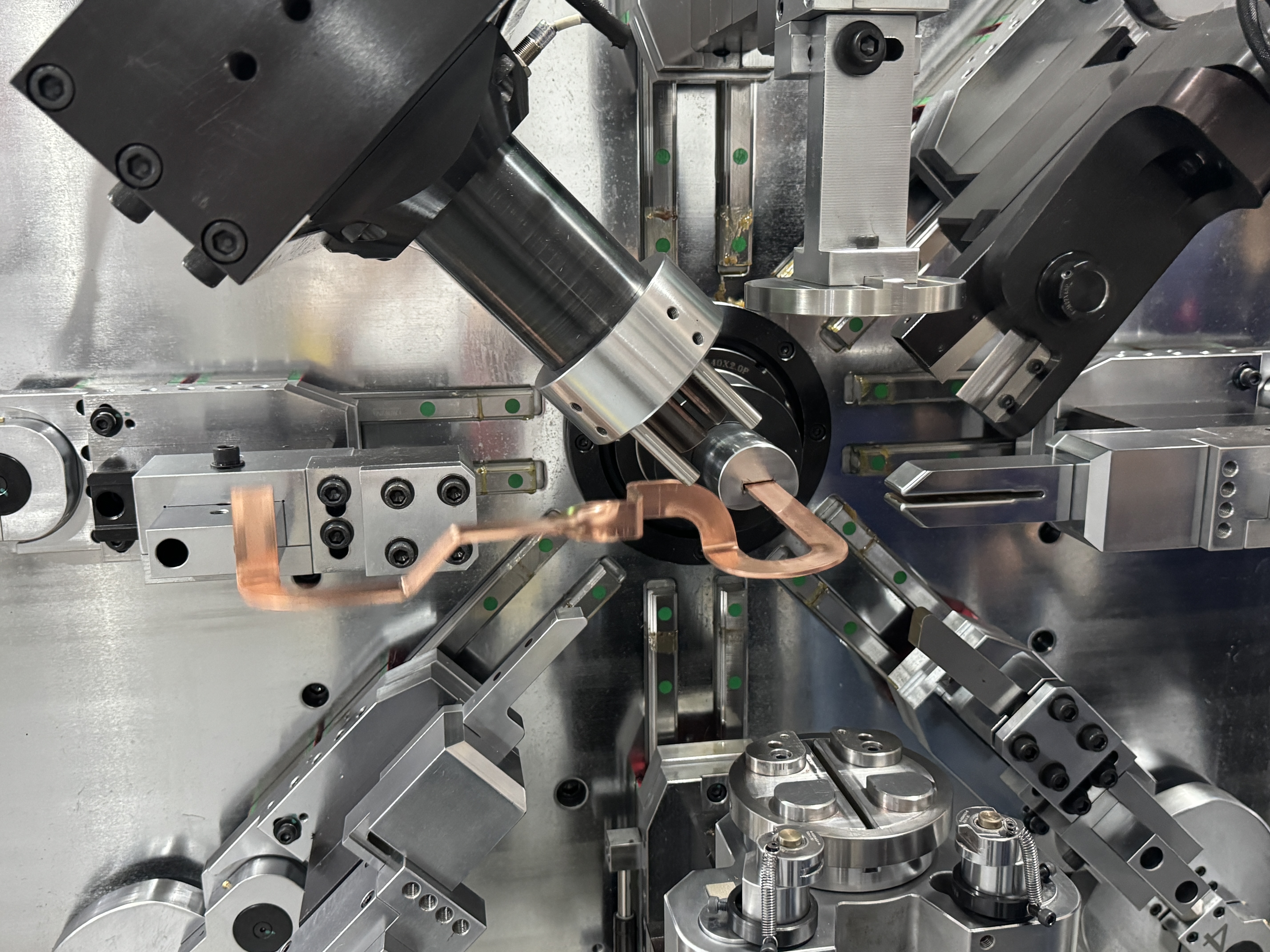
Feeding: Track-Type vs Roller vs Clamping
There are three mainstream feeding structures on the market, and they behave very differently on coated material:
| Feeding structure | How it works | Where it struggles |
|---|---|---|
| Track-type feeding | The bar rides in a track conveyor that carries it to the bending zone with full-length support — our core design, with no point contact on the coating | Needs correct track specification per bar size; slightly more tooling to set at delivery |
| Roller feeding (8-roller sets) | Rollers pinch and push the bar in steps | Point pressure marks soft coatings; slippage on oily or polished bar causes length drift |
| Clamping feeding | A gripper clamps the bar and pulls it through | Clamp marks on insulated surfaces; grip force must be retuned for every material change |
On bare copper, all three will make good parts. On PA12 or PVC-mica coated bar, the difference shows up within the first hour of running. If your order book includes insulated busbars — and in new-energy work, it almost certainly does — put feeding structure at the top of your comparison list, above axis counts.
What Our Machines Actually Do, Step by Step
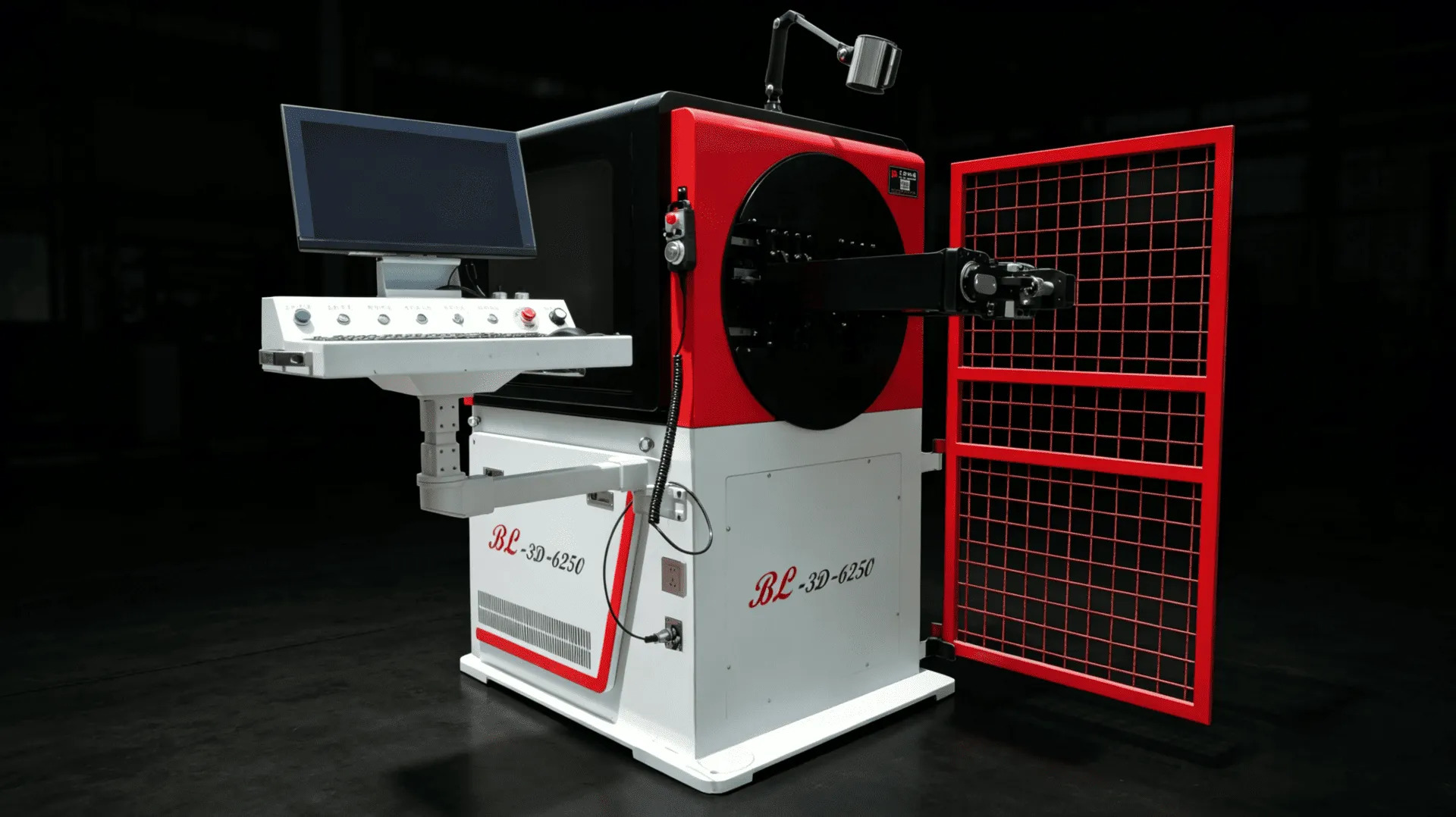
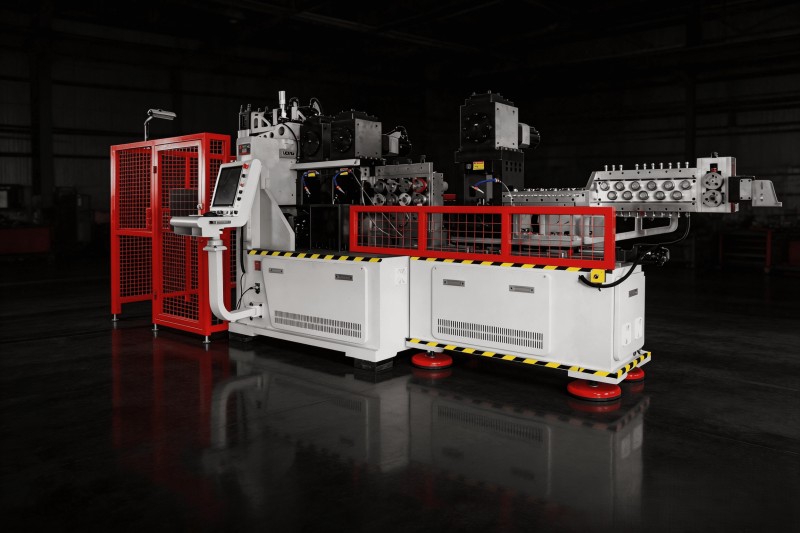
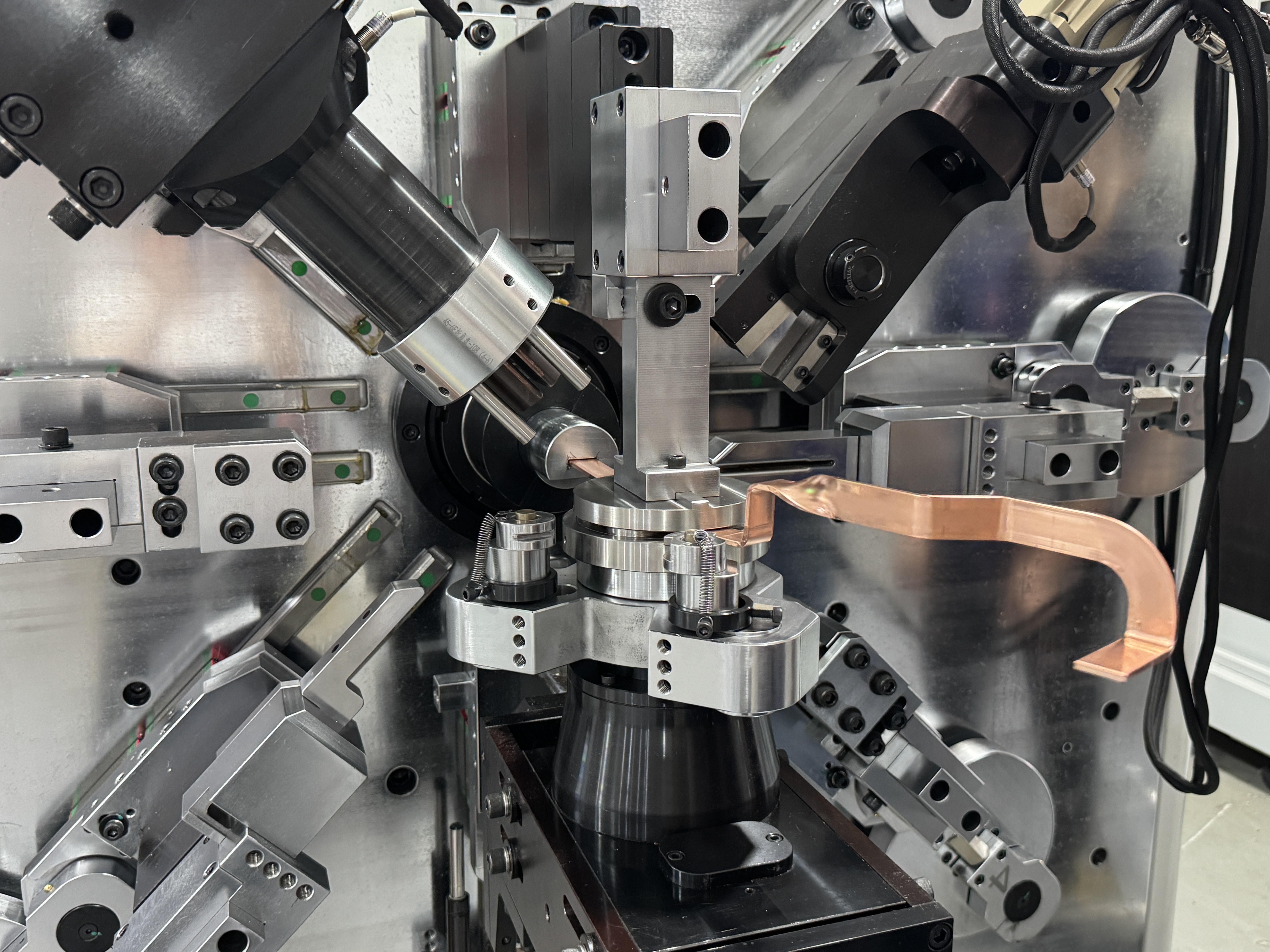
Every BELAN busbar machine runs the same closed loop: coil or bar goes on the feeding rack, the auxiliary feeding unit hands it to the straightening module to take out internal stress, the track conveyor carries it to the bending zone, the servo bending arms form it — flat bends, vertical bends, twists, the compound 3D shapes battery systems demand — and the servo shear cuts the finished part off automatically. Coil in, finished busbar out, no manual handling in between.
Which machine in the family fits you depends on your bar:
| Model | Copper busbar range | Aluminum busbar range | Best suited for |
|---|---|---|---|
| TP-DL-45-6E · 16-axis segmented | Width 12–45mm, thickness 2.0–6.0mm | On request | EV battery packs, BMS links, compact 3D busbars |
| TP-DL-60-8E · 16-axis segmented | Width 15–60mm, thickness 2.0–8.0mm | On request | Distribution cabinets, charging infrastructure, larger sections |
| BL-TP-50-7E · 13-axis | Width 15–45mm, thickness 1.0–7.0mm | Width 15–50mm, thickness 1.0–8.0mm | Mixed copper and aluminum order books in one shop |
All three use full-servo drive systems — there is no hydraulic station to warm up, no oil temperature drift between the first part of the shift and the last. The 58.7KW BL-TP-50-7E, for instance, sits on a 6800KG frame and runs Sanyo servos with a Taiwan-made Yitu control system, because after testing both third-party and self-developed controls we chose the option with the strongest long-term maintenance support behind it.
Changeover Is Where the Money Actually Leaks
Here is a scene we watch in almost every factory we visit: the machine bends beautifully, and then the order changes. Operators loosen straightening rollers, re-thread the bar, re-tune clamping, run test pieces, scrap two or three, and forty minutes later production resumes. Do that four times a day and you have lost half a shift — quietly, in no report anywhere.
So we factory-fit every machine with an auxiliary feeding device. The operator pulls the new bar to the feeding station and presses start; the machine carries it into the straightening zone by itself. Nobody loosens rollers, nobody re-threads. For the multi-specification, small-batch reality of new-energy work, this single detail moves more output per week than a faster bending cycle ever will.
What 32 Machines for BYD Taught Us
BELAN became a BYD Tier 1 supplier and delivered 32 busbar bending machines across five production bases — Dongguan, Shenzhen, Xi’an, Zhengzhou and Changsha. Getting through that audit was not about our brochure. Their team looked at equipment reliability over time, whether output stayed consistent week after week, whether we could manufacture and deliver at volume, and what happens after installation. The repeat questions were never “how many axes?” They were “show us the machine running in month six.”
The same lesson came back from other customers. A bus-bar manufacturer in India sent their technical team to our factory for a 12-day training program on a BL-TP-45-6E — safety, material loading, cutter mounting, straightening, CNC editing, commissioning, bulk production and daily maintenance, all on their own workpieces rather than our demo parts. LEONI put our automatic aluminum bar processing line into live production, and MANDO came back with a second-unit order after the first one survived their project bidding. Repeat orders, we have learned, are the only specification that matters.
Our Honest Advice Before You Buy
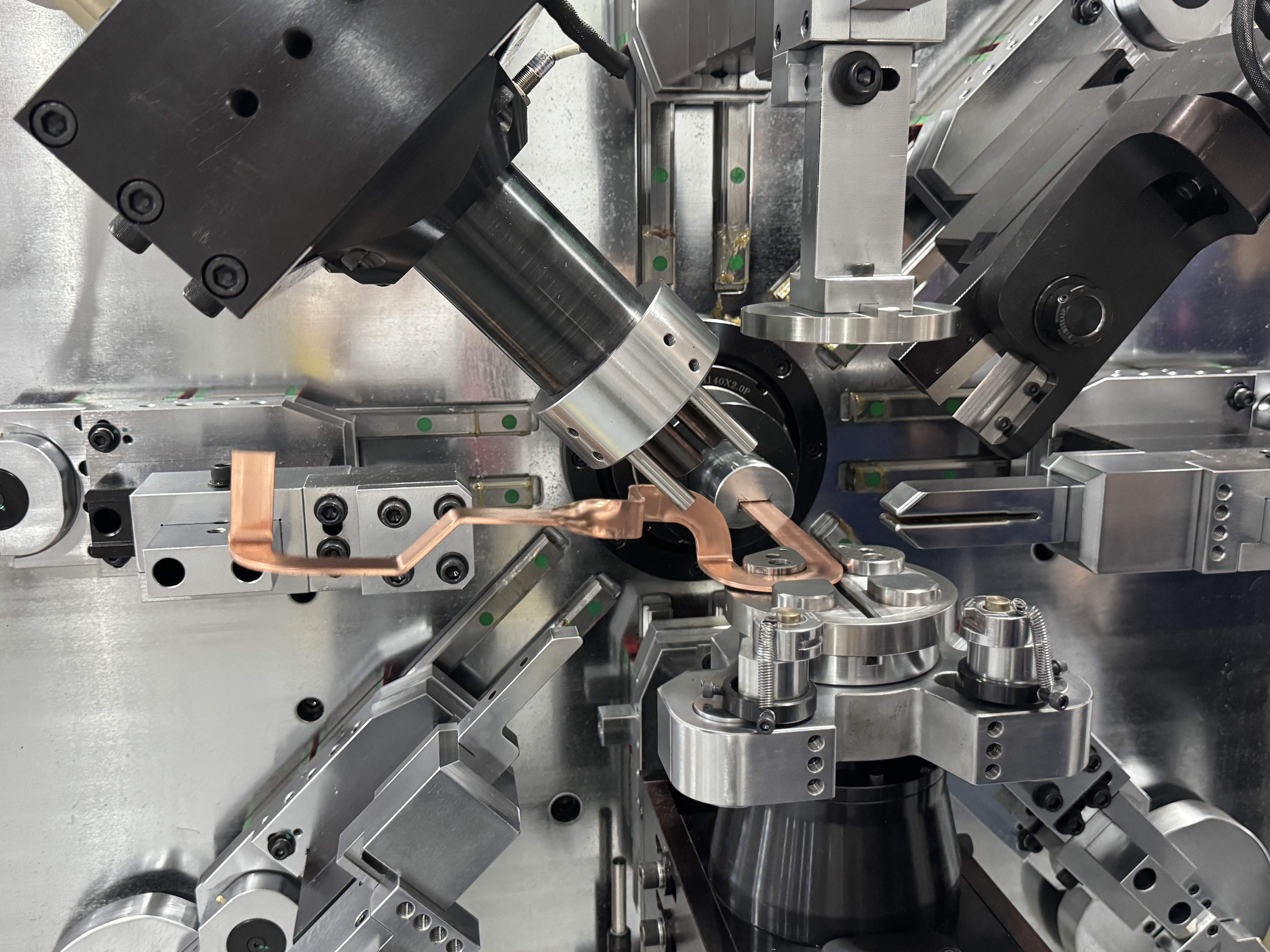
Send your actual bar stock — coated or bare, copper or aluminum — and a drawing, and we will bend the part here and film it. Watch five things in any trial you run, ours or anyone else’s: the surface of the finished bar under good light, the angle on the fifth bend versus the first, how long a changeover really takes with your second part number, whether the operator needs a programming degree, and what the first-pass yield looks like over a hundred cycles. A supplier who resists that trial is telling you something.
We would rather win the argument with a bent bar than a brochure. Most of our best customers started exactly that way.
Common Questions from the Workshop Floor
Will the machine damage PA12 or PVC-mica coated busbars?
That is precisely what the track-type feeding was engineered for — the coating rides on full-length support with no point contact. During your trial we bend your coated bar first, before anything else, and you inspect the surface under your own standard.
We run copper and aluminum in the same week. One machine or two?
The BL-TP-50-7E was built for exactly this mixed order book, with compensation values stored per material. Springback behavior does not transfer between copper and aluminum, so each material keeps its own program — switching is a program load, not a re-teaching session.
How long until my operators run it independently?
Our standard program runs 12 days on-site: your team handles material loading, cutter changes, straightening, CNC editing and commissioning on their own parts, with our engineer beside them. By bulk production day, they run it — the Indian customer mentioned above went through exactly this schedule.
What if my busbars are wider than 60mm?
Then the TP-DL series is not your machine, and we will say so. Switchgear-scale sections need a different platform, and matching the machine to your heaviest bar honestly is how we keep customers for a decade. Tell us the largest section in your order book and we will point you to the right equipment, even when it is not ours to sell.
Want to see your own busbar bent before you decide?
Send us a bar offcut and your drawing. We will run it on the matching machine, film the trial, and send you the report — the same first step the BYD project started with.