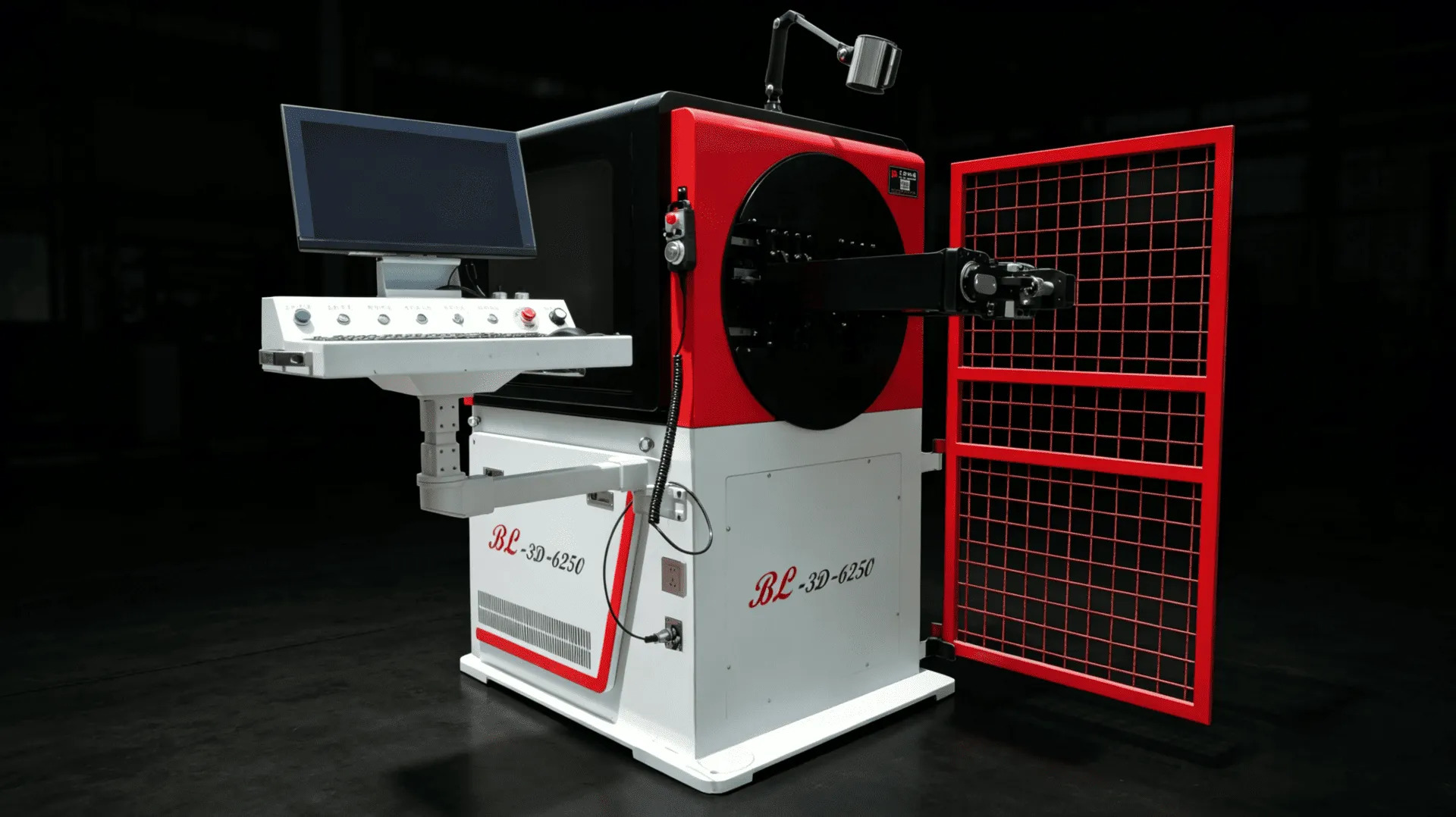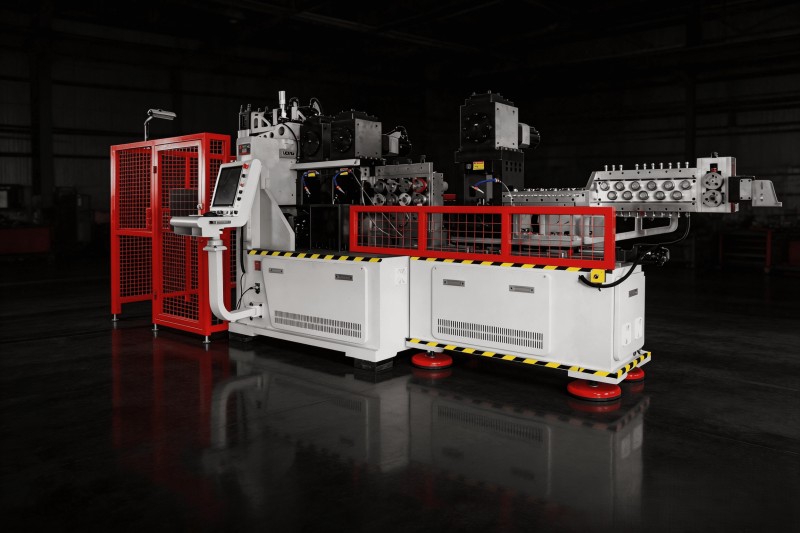

CNC Wire Bending Machine Buyer’s Guide
The machine quote is the smallest, most visible number in the purchase. The true cost of owning an imported wire bending or wire forming machine lands only after freight, duties, installation, training, and a decade of spare parts are counted — and buyers who skip that math are the ones who run out of budget before the first part ships.
Direct answer: Budget the landed cost, not the quote. Beyond the machine price, plan for international freight and insurance, import duties and VAT, customs clearance and local delivery, installation and commissioning, operator training, site preparation, a spare-parts buffer, and the risk cost of distance from support. Build the total from line items, confirm each with your forwarder and broker, and treat the headline price as roughly half to two-thirds of what you will actually spend.
The Quote Is the Starting Line, Not the Total
When a supplier sends a price for a CNC wire bending or wire forming machine, that number almost always covers the machine on the factory floor in the origin country — nothing after it. It does not include the crate, the ship, the port, the duty, the truck to your door, the electrician who connects it, or the week your operators spend learning it. Importers who budget only the quote are not being careless; they are simply reading a number that was never meant to describe the total.
The right way to think about it is the landed cost: the full amount you spend to get the machine installed, running, and supported at your facility. Treat the quote as one input to that calculation, not the answer. For equipment this size, the quote typically represents somewhere around half to two-thirds of the landed cost, and the share shifts with distance, destination regulations, and how turnkey the supplier’s handover really is. Confirm the exact split with your own forwarder and customs broker rather than assuming.
The Cost Layers Beyond the Machine Price
Most budgets break down not because the machine is expensive, but because the layers around it were never listed. The table below separates what the quote usually includes from what it usually does not, so you can build your own line-item budget instead of discovering gaps after payment.
| Usually in the quote | Usually NOT in the quote | What to ask |
|---|---|---|
| Machine, basic tooling, standard controls | Export crating and seaworthy packaging | Is crating included, or quoted separately? |
| Factory acceptance test at the maker | International freight and marine insurance | FOB or CIF? Who books the vessel? |
| Standard spare parts kit (sometimes) | Import duty, VAT, and customs clearance fees | What HS code and duty rate apply? |
| Operating manual (often digital) | Local delivery, lifting, and installation | Does the price include on-site commissioning? |
| Warranty on parts for a fixed period | Operator training and line integration | How many days of training are included? |
| CE or regional declaration (for some markets) | Spare-parts buffer and future consumables | What wear items and at what price? |
Freight, Insurance, and Packaging
A CNC wire bending machine is a several-ton, irregular steel crate — not a parcel. Ocean freight is typically quoted by volume or weight, whichever is greater, and the machine’s crated dimensions often matter more than its tonnage. Inland trucking at both ends, port handling, and lift-on/lift-off fees add up and are easy to forget. Marine insurance is a small percentage that you should never skip; a damaged machine arriving uninsured turns a good price into a total loss.
Packaging quality is the hidden variable. A supplier that builds a proper seaworthy crate with moisture protection and internal bracing protects your investment during weeks at sea; a weak crate can let a machine arrive with a twisted frame. Confirm whether crating is included in the quote or quoted separately, and specify the Incoterm (FOB, CIF, or DDP) so you know exactly where the supplier’s responsibility ends. The difference between FOB and DDP can be a large slice of the budget, because DDP shifts freight, duty, and clearance risk onto the seller.
Import Duties, VAT, and Customs Clearance
Customs is where budgets swing hardest, because duty and tax rates depend on your destination, not on the supplier. Every country classifies machinery under its own tariff schedule, and the rate for a CNC wire forming machine varies widely by region and by whether the unit is described as a bending, forming, or general-purpose machine. VAT or GST is usually applied on top of the customs value (machine plus freight plus duty), so it compounds the earlier layers rather than sitting beside them.
Clearance also carries its own fees: broker charges, document handling, and potential inspection or storage costs if paperwork is incomplete. The single most useful question is the HS or tariff code your broker will use, because that code drives the duty rate. For the European market specifically, the CE declaration must cover your exact model before the machine can be placed on the market — this is why our guide on CE certification for the European market matters for buyers there. Have your broker quote duty and tax on a landed-value basis, not on the factory price, so the number reflects reality.
| Destination factor | What affects your cost | Action |
|---|---|---|
| Tariff classification | HS code and national rate for CNC forming machines. | Ask your broker for the exact code and rate. |
| VAT / GST | Applied on machine + freight + duty. | Model it on landed value, not factory price. |
| Conformity evidence | CE or regional declaration for your model. | Confirm coverage before shipping. |
| Clearance fees | Broker, handling, potential inspection storage. | Get a written all-in clearance quote. |
Installation, Commissioning, and Training
A machine that arrives is not a machine that runs. Installation and commissioning — positioning, levelling, electrical connection, first part setup, and process tuning — can be done by the supplier’s engineer, your local technician, or a mix of both, and the cost and lead time differ sharply by route. A turnkey handover where the supplier commissions on-site and leaves the line producing is the most expensive option up front and usually the cheapest in total, because it removes the trial-and-error that otherwise consumes your engineering time.
Training is the line item buyers most often under-budget. Your operators need to load programs, change tooling, run first-article inspection, and respond to faults — and that knowledge does not arrive with the crate. Confirm how many days of on-site training are included, whether remote support continues afterward, and whether your team can be trained on your floor with your parts. Our overseas after-sales framework describes the support model that protects you after the engineer leaves.
Site Preparation: Power, Foundation, and Floorspace
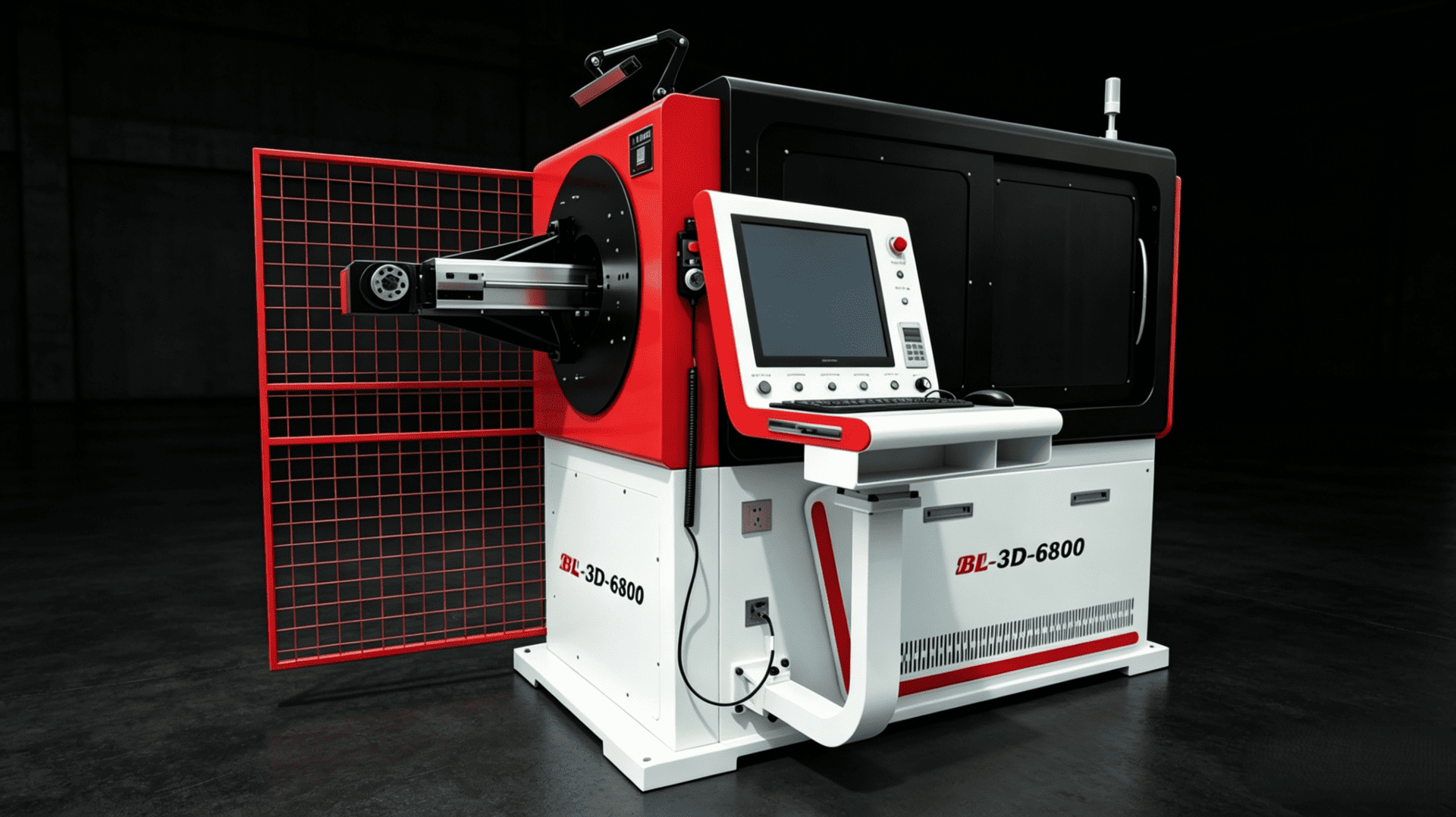
Before the machine lands, your facility has to be ready, and that readiness has a cost of its own. A multi-axis CNC wire forming machine draws meaningful three-phase power, may need a voltage or frequency conversion depending on your grid, and benefits from a levelled, vibration-damped foundation for accuracy. Floorspace for the machine, the wire racks, the unloading area, and operator movement is often underestimated, and a cramped cell costs cycle time every single day for the life of the asset.
Add the mundane but real items: a crane or forklift rated for the crated weight, compressed air if the design uses it, and network or data connections if you want remote diagnostics. None of these appear on the machine quote, yet all of them must be paid for before the first part is made. Walk the cell with the supplier’s layout drawing before you commit, and price the site work locally.
Spare Parts and Consumables
The machine will consume wear items from the first week: feed wheels, cutters, straightening and bending guides, and the common servo and sensor components. Buying these only after a breakdown means paying air-freight prices under downtime pressure. A sensible approach is to negotiate a spare-parts package as part of the purchase and to hold a buffer of the true wear items locally, priced and lead-timed in writing before you sign.
Ask the supplier for the wear-parts list with unit prices and lead times, and confirm which items are machine-specific versus standard industrial components you can source nearby. A manufacturer that stocks its own wear items and states lead times in writing is far easier to keep running than one that treats every replacement as a custom order. Treat the spare-parts budget as a fixed line, not an afterthought.
The Cost of Distance: Downtime and After-Sales Risk
The least visible cost is the one that arrives a year later: a fault, a worn module, a question no one locally can answer. Distance from the builder converts a minor issue into days of stopped production while parts cross an ocean. This is not a reason to avoid importing; it is a reason to price the risk explicitly and choose a supplier whose support model shrinks it.
Can the maker read faults and push software fixes online, cutting a week of waiting to a day?
Holding wear items nearby turns a breakdown into a purchase order, not a shipment.
A stated response time and regional service presence decide whether downtime lasts a shift or a season.
Currency, Payment Terms, and Financing
The quote is denominated in a currency you may not hold, and the exchange rate between signing and paying can move the real cost by a noticeable margin on a capital purchase. Agree on a fixed rate window or a currency clause so a swing in exchange does not quietly inflate the budget. Payment terms matter just as much: a schedule linked to inspection and acceptance milestones protects you, while full payment before you see the machine removes your leverage precisely when you need it most.
If the machine is being financed, build the interest and any import-financing fees into the landed-cost model rather than treating them as separate from the equipment. A lower headline price with punishing terms can cost more than a higher quote with sensible milestones. Align the payment plan with your own cash-flow reality, not with what the supplier prefers.
A Total-Landed-Cost Budget Framework
Use the structure below to build your own budget. The figures are typical ranges expressed as a share of the machine quote — treat them as a checklist of what to price, and confirm each line with your forwarder, broker, and electrician. They are planning aids, not quotes; your actual numbers depend on machine size, destination, and Incoterm.
| Budget line | Typical share of machine quote | Confirm with |
|---|---|---|
| Export crating & packaging | Small, but varies with crate quality | Supplier |
| International freight & insurance | Moves with volume, weight, and route | Freight forwarder |
| Import duty & VAT / GST | Driven by HS code and destination | Customs broker |
| Local delivery & lifting | Fixed local cost | Local mover |
| Installation & commissioning | Higher if turnkey on-site | Supplier / local tech |
| Training | Priced by days and travel | Supplier |
| Site preparation | Power, foundation, floorspace | Local contractor |
| Spare-parts buffer | Wear items, priced in writing | Supplier |
| Financing cost | If the purchase is financed | Your bank |
When every line is filled, the sum is your real budget. Most first-time importers find the non-machine lines add up to a meaningful fraction of the quote — which is exactly why building the list before you sign prevents the worse surprise of running out of funds mid-project.
What to Ask Before You Sign
Turn the framework into a checklist and require written answers. A supplier who prices the landed cost transparently is easier to trust than one who only ever quotes the machine.
- ☐ Is export crating included, or quoted separately — and is it seaworthy?
- ☐ Which Incoterm applies (FOB, CIF, DDP) and where does the supplier’s responsibility end?
- ☐ What HS code and duty rate will your broker use, and what is the VAT / GST on landed value?
- ☐ Are installation, commissioning, and on-site training included, and for how many days?
- ☐ Does your facility meet the power, foundation, and floorspace requirements, priced locally?
- ☐ What is the spare-parts list, with unit prices and lead times, in writing?
- ☐ What is the after-sales response time, and is remote diagnosis available?
- ☐ What are the payment milestones, and are they linked to inspection and acceptance?
- ☐ Is the CE (or regional) declaration provided for your exact model and scope?
- ☐ What exchange-rate or currency clause protects the price between signing and payment?
A Note on the Three Machine Families
The budget logic above applies across the equipment we cover, but the cost profile differs by family. A CNC wire bending machine and a wire forming machine share most landed-cost lines, while a busbar bending machine may carry different tooling and compliance considerations depending on the copper or aluminum section it processes. Read the DLP guides for each family to match the budget to the right machine before you request quotes.
Frequently Asked Questions
What does landed cost mean for an imported machine?
Landed cost is the full amount spent to get the machine installed, running, and supported at your facility. It includes the quote plus freight, insurance, duties, VAT, clearance, local delivery, installation, training, site preparation, spare parts, and financing — everything after the machine leaves the supplier’s floor.
Is FOB or CIF better for the buyer?
Neither is universally better. FOB means you control and can price the freight and insurance yourself; CIF means the supplier books them, which can be convenient but less transparent. DDP shifts nearly all logistics and duty risk to the seller and is often the most predictable for the buyer, at a higher quoted price. Choose based on whether you want control or predictability.
How much should I budget beyond the machine price?
It varies with machine size, destination, and Incoterm, so confirm each line locally. As a planning rule, the non-machine items often add up to a meaningful share of the quote, which is why building the line-item budget above before signing prevents mid-project funding gaps. Do not treat the quote as the total.
Who pays import duty, the buyer or the seller?
Under FOB and CIF the buyer pays duty and VAT at the destination, because the quote covers the machine only to the port of shipment. Under DDP the seller absorbs duty and clearance in the price. The Incoterm in your contract decides this, so confirm it in writing.
Should I buy spare parts up front?
Yes, for the true wear items — feed wheels, cutters, guides, and common servo or sensor parts. Buy them as part of the order and hold a local buffer priced and lead-timed in writing. It converts a future breakdown from an urgent air-freight emergency into a routine purchase order.
Send Us Your Part Drawing for a Landed-Cost Picture
BELAN Machinery, a professional provider of automotive wire forming solutions. Share your wire diameter, material, tolerances, and target volume, and our engineering team will outline the right machine architecture and help you scope the true delivered cost before you commit to a quote.