

14mm Chair Frame Rotary Head Wire Bending Machine in Turkey
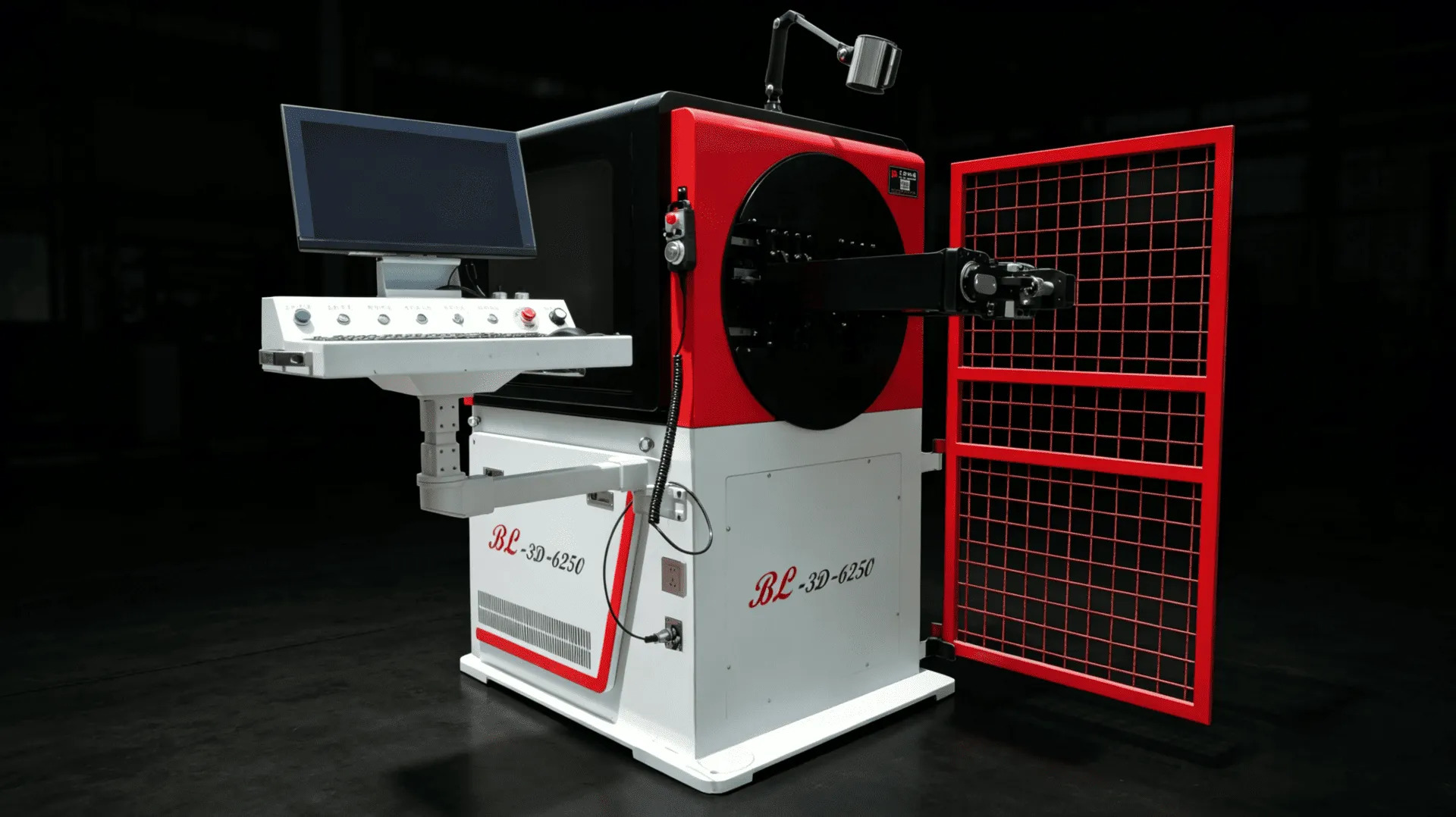
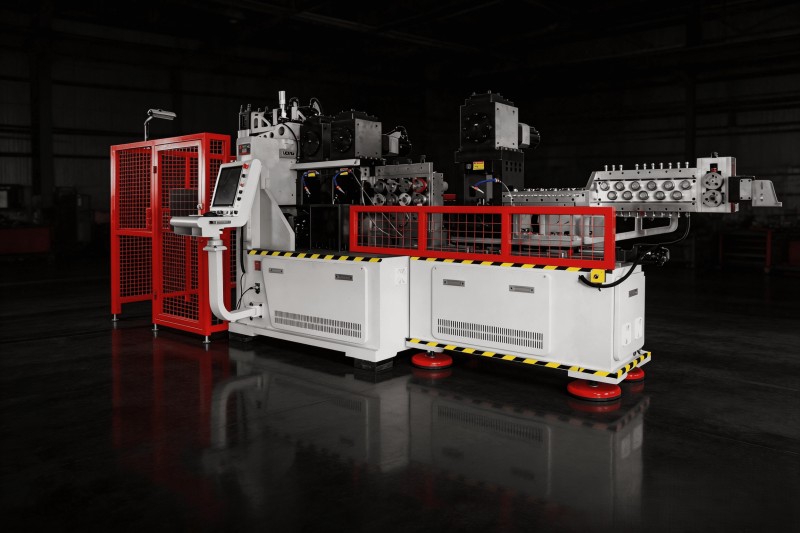
A BL-3D-51400 rotary head wire bending machine supplied by BELAN has completed seven days of on-site training at a customer factory in Turkey. The machine was purchased mainly to manufacture chair supports from 14 mm solid wire.
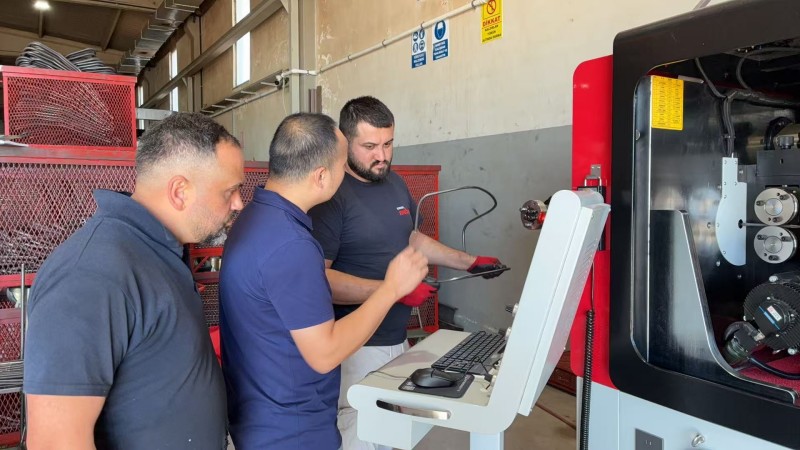
BELAN engineers used the customer’s actual product during the training. The program covered machine operation, programming, straightening, bending parameter adjustment, sample inspection and routine maintenance. After practical training, the customer’s employees independently operated the machine and produced an accepted 14mm chair frame sample.
What Are the Forming Requirements for a 14mm Chair Frame?
A chair support made from 14 mm solid wire requires sufficient bending force, suitable forming space and accurate control of multiple spatial angles. Because the material is relatively thick, its strength and springback must also be considered during product setup.
If the feeding length, bending angle or forming direction is inaccurate, the deviation may increase as consecutive bends are completed. For chair supports that will later be welded or assembled, dimensional differences can affect the position of the connecting points.
Machine selection should therefore consider more than the maximum wire diameter. The product geometry, material strength, bending radius, production volume and required dimensional tolerance must all be evaluated before confirming the forming solution.
Why Use a Rotary Head Forming Method?
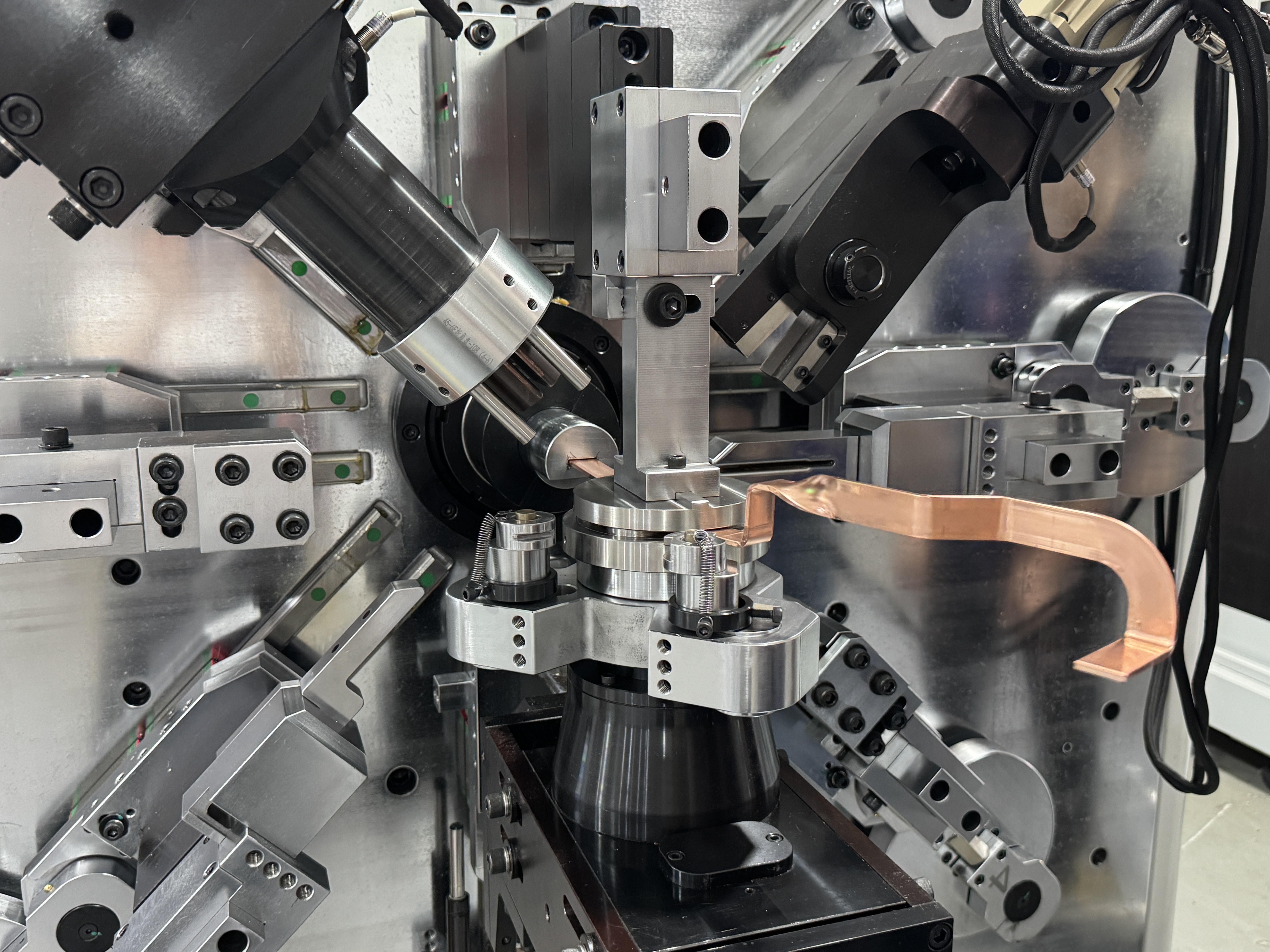
The BL-3D-51400 changes the bending direction through its rotating forming head. During production, the wire mainly moves forward and backward instead of continuously rotating with the product.
Using a rotary head wire bending machine for heavy-gauge chair supports can reduce the movement of long material during forming. The rotating head changes direction according to the program and completes different three-dimensional bends.
The machine provides forming space for products with different angles and profiles. Its multi-axis control coordinates wire feeding, head rotation and bending movements according to the programmed sequence.
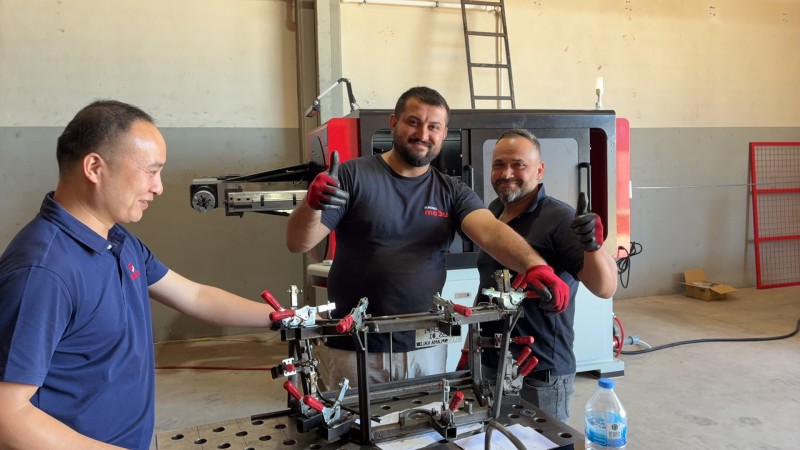
Preparing the 14mm Wire for Production
Straightening Unit Adjustment
During the training, BELAN engineers first adjusted the straightening unit according to the 14 mm material. The purpose was to ensure that the wire entered the feeding and forming area in a suitable condition.
Insufficient or excessive straightening can affect the final product profile. The scale on the straightening structure allows operators to record the settings used for a particular material specification. These records provide a reference when the same product is manufactured again.
Wire Feeding and Tooling Inspection
After loading the material, the customer’s employees checked the feeding path and confirmed that the bending tools were securely installed. The wire was moved through the straightening and feeding mechanisms at a controlled speed before automatic production began.
These preparation steps directly affect the operation of the rotary head wire bending machine. For this reason, every employee was required to complete the material loading and inspection procedures independently.
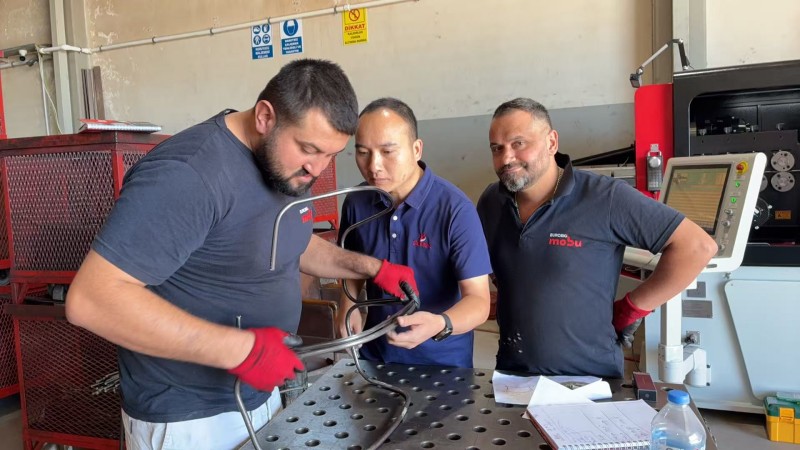
How Was the Chair Support Program Created?
BELAN engineers divided the chair support geometry into individual feeding and bending operations. The feeding length, bending angle, spatial direction and operating sequence were entered into the CNC control system.
After the initial program was created, each movement was tested separately. The operators observed the position and direction of every bend before running the complete production cycle.
This step-by-step method allowed the operators to confirm that the formed sections would not interfere with the machine structure or bending tools. It also helped them understand which program line corresponded to each position on the finished product.
The training focused on the actual programming interface of the rotary head wire bending machine. Employees learned how to enter data, review the bending sequence and locate the operation that required correction.
Why Does the First Sample Require Parameter Compensation?
Solid steel wire produces a certain amount of springback after bending. The required compensation varies according to the material strength, wire diameter, bending radius and target angle.
After the first sample was produced, the main dimensions and bending angles were checked. When a deviation was identified, the corresponding feeding or bending operation was adjusted instead of changing the complete program.
The sample was produced and measured again after each parameter correction. Through this process, the chair support gradually reached the required dimensions and overall shape.
The confirmed parameters were saved in the product program. This allows the customer to load the established data when the same 14mm chair frame is scheduled for future production.
Customer Employees Completed Independent Setup
During the first stage, BELAN engineers demonstrated the complete operating process. The customer’s employees then began loading the material, selecting the product program and operating the machine themselves.
When a dimension or angle required correction, the employees checked the sample and identified the relevant program step. They then adjusted the corresponding parameter and produced another sample for inspection.
The objective of the seven-day training was not simply to introduce machine functions. Employees were expected to understand the production process and complete basic product adjustments without relying entirely on the BELAN engineer.
By the end of the training in Turkey, the operators could use the rotary head wire bending machine to manufacture the required chair support and make basic program corrections.
Routine Maintenance for Stable Operation
Checks Before Machine Startup
Before starting production, operators should confirm the condition of the bending tools, wire path, lubrication points and working area. Tools and unused materials should be removed from the machine’s movement range.
Inspection During Production
During continuous operation, employees should observe whether the material feeds smoothly and whether the product dimensions remain stable. Unusual noise, vibration or tooling wear should be checked before production continues.
Cleaning and Maintenance Records
The straightening unit, feeding mechanism, rotating head and bending tools require regular cleaning, inspection and lubrication. Maintenance records help operators monitor component conditions and identify changes before they affect product quality.
The 14mm Chair Support Passed Product Acceptance
Before the seven-day training was completed, the customer’s employees independently operated the machine using the confirmed program. The finished chair support was checked for its overall profile, main dimensions and bending positions.
The sample met the customer’s acceptance requirements. The result confirmed that the equipment had completed installation, commissioning, operator training and practical product verification.
The employees had also gained the basic skills required for machine operation, program editing, parameter correction and routine maintenance. This created a practical foundation for future chair support production at the customer’s factory.
From Equipment Delivery to Independent Production
Product acceptance is not the end of an equipment project. It represents the point at which the customer begins operating and managing the machine independently.
The BL-3D-51400 combines multiple three-dimensional bending operations within one product program. This helps reduce differences caused by repeated manual positioning and separate bending processes.
For furniture manufacturers, the production value of a rotary head wire bending machine is not limited to producing one accepted sample. Changeover efficiency, product consistency and the operator’s ability to manage production are equally important.
Evaluate Your Wire Forming Project with BELAN
If you are planning a heavy-gauge chair support, automotive seat frame or complex 3D wire product, send BELAN your drawings, material specifications and production requirements. Our engineering team can evaluate the forming process, machine model, sample testing and operator training plan. Contact us to discuss a suitable rotary head wire bending machine for your project.
BELAN Machinery, your expert provider of automotive wire forming solutions.