
Most buyers start shopping for a busbar bending machine by comparing model numbers. That is the wrong end of the decision. Model numbers describe what a machine can do; your order book describes what it must do. Reverse the sequence and the shortlist gets shorter and more accurate, because three-quarters of the specification is already written in the parts you ship every week.

Ask Four Questions Before the Model Number
1. Is your order book one product family or twenty?
A plant running one bar family at volume needs throughput and repeatability. A plant running twenty families in small lots needs changeover speed above all. These two needs pull in opposite directions, and no single configuration is best at both.
2. Coated bar or bare?
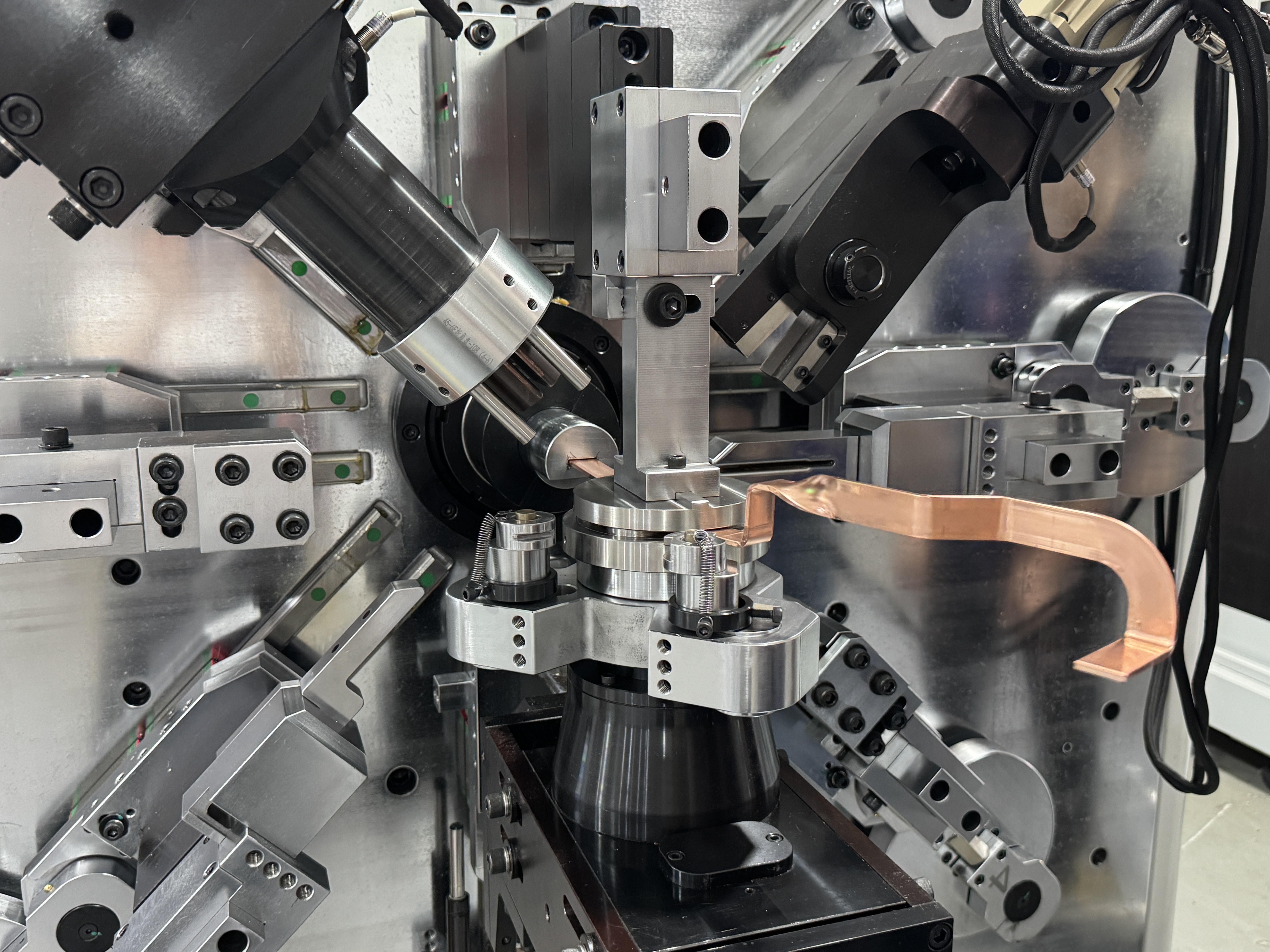
This question decides the feeding system, and the feeding system decides your scrap rate on insulated parts. PVC, PA12 and mica-tape coatings cannot survive point-loaded roller feeding. An 8-wheel feeder needs a new wheel set for each bar width — roughly 4,000 RMB per set and about twenty minutes of changeover. A tracked belt adjusts pressure instead of changing parts, and runs all three coatings.

3. Where do your bar sizes actually sit?
Not the widest bar you have ever quoted — the widest you expect to sign. A 12–45 mm machine idles if every order is 20–30 mm, and chokes if a 55 mm storage bar arrives next quarter. Write the 80th percentile, then add margin consciously.
4. What cycle time does your customer demand?
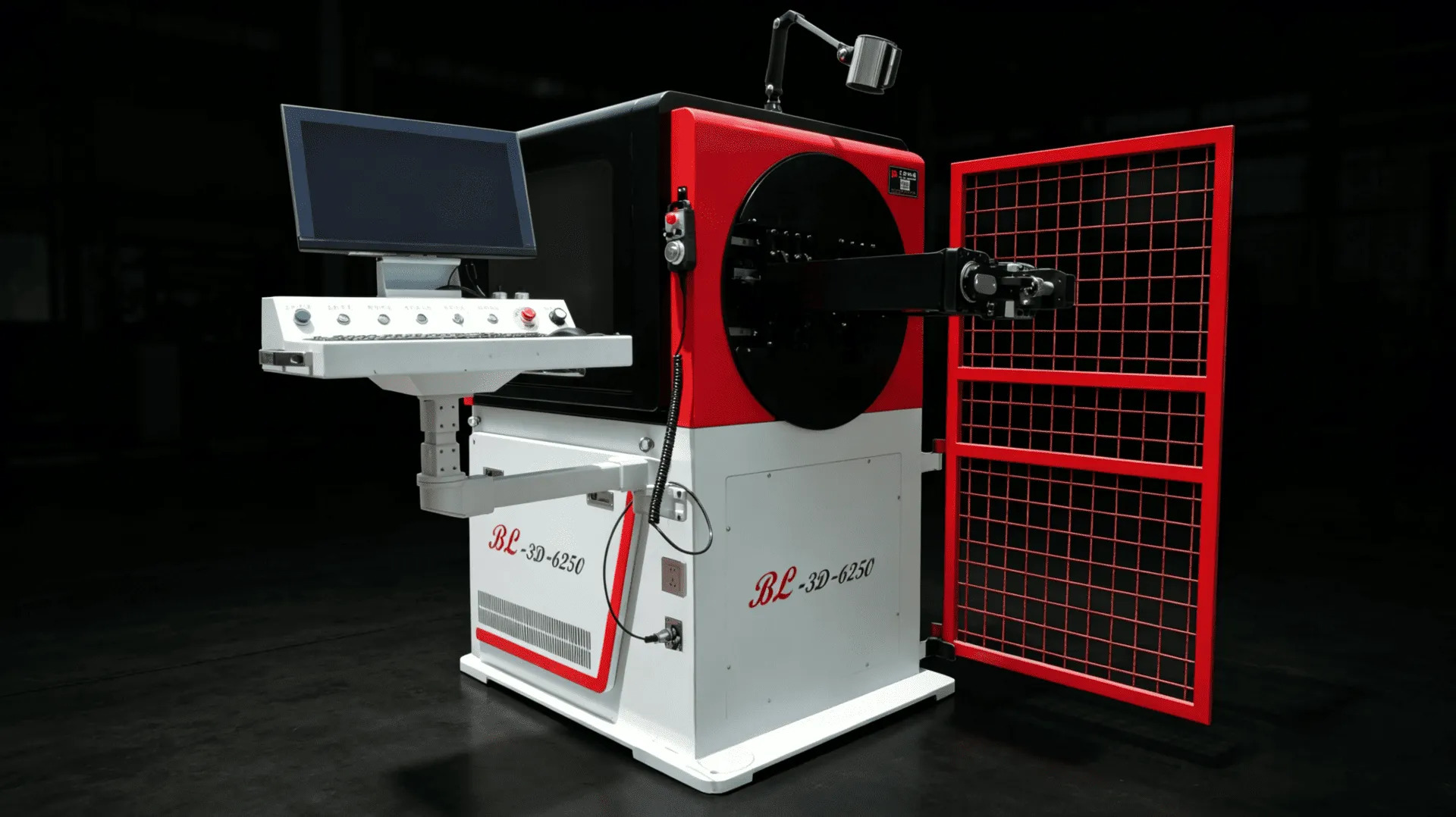
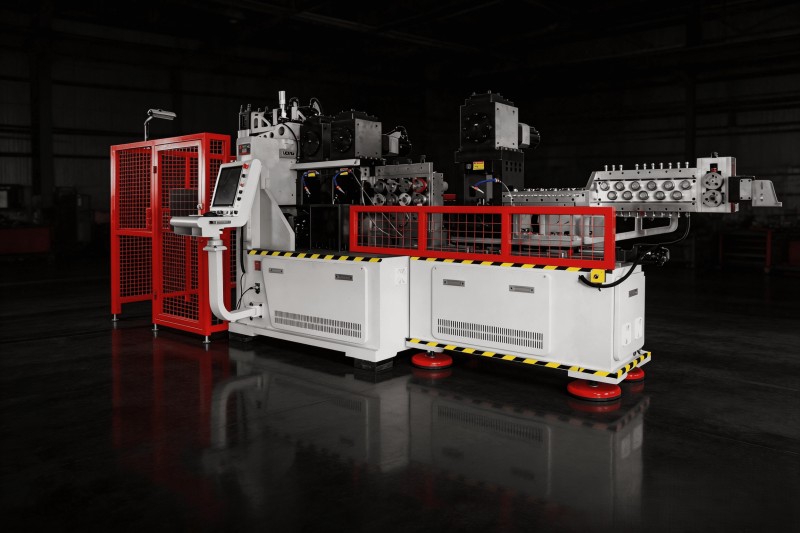
Cycle time decides whether you need a stand-alone unit or a multi-station cell. A single 16-axis busbar bending machine produces one part every few seconds of bending time; a robot-served line with straightening, peeling, punching and welding in sequence delivers a finished bar every 75–85 seconds but removes six handling steps. The right answer depends on the takt time you promised, not on the machine’s prestige.
Four Order Types and the Configuration They Need
The table maps four order types to the busbar bending machine configuration we build for each:
| Order type | Bar range | Configuration that fits |
|---|---|---|
| EV pack links, single family | 20–40 mm wide, 2–6 mm thick | 16-axis segmented, tracked feed |
| Coated bars (PVC / PA12 / mica) | 15–50 mm wide, 2–7 mm | Track feed + HF preheat at outlet |
| Long formed bars | 600–2,500 mm length | Dual-head forming, 25.8 kW, 110–120 s/pc |
| Mixed copper and aluminum | 12–40 mm wide | 13-axis, pressure-adjustable track, no wheel change |
Each row is a real configuration we build, not a theoretical category. The differences between them are mechanical, not cosmetic: a machine specified for bare copper at one bar width will not quietly adapt to coated mica bar in five widths.

The Spec Buyers Forget: Acceptance Evidence
Ask what happens before the machine is crated. Endurance testing above 100,000 load cycles, verified feed accuracy of ±0.1 mm over a 300 mm stroke and bend repeatability of ±0.2° at 90° are the numbers that decide whether your hundredth bar matches your first. Any busbar bending machine supplier should be able to show these records on request — automotive customers audit exactly this, and a supplier who cannot produce them is a supplier who has never been audited.
Match the Machine to the Order, Then Negotiate
Configuration work is unglamorous and it saves more money than price negotiation. Write your four answers down, rank them, and the shortlist usually collapses from six models to two. Then ask each supplier to bend your tightest part — the drawing with the smallest radius and the thinnest wall — on the busbar bending machine they are proposing.
A busbar bending machine is a five-to-ten-year asset, and the cost of getting the configuration wrong is not the price difference. It is the scrap, the changeover hours and the second machine you buy two years later. Send BELAN your order structure — materials, coatings, size bands and weekly volume — and we will return a configuration proposal with the reasoning shown, so you can compare it against any other supplier line by line.
BELAN Machinery, your expert provider of automotive wire forming solutions. Submit your bar sizes, coatings and weekly volume, and our engineers will assess which configuration fits your order structure.
Send Us Your Order Structure, and We Will Show the Reasoning
Tell us your materials, coatings, size bands and weekly volume. Our engineers will assess which configuration fits and explain why, so you can compare it against any other proposal line by line.