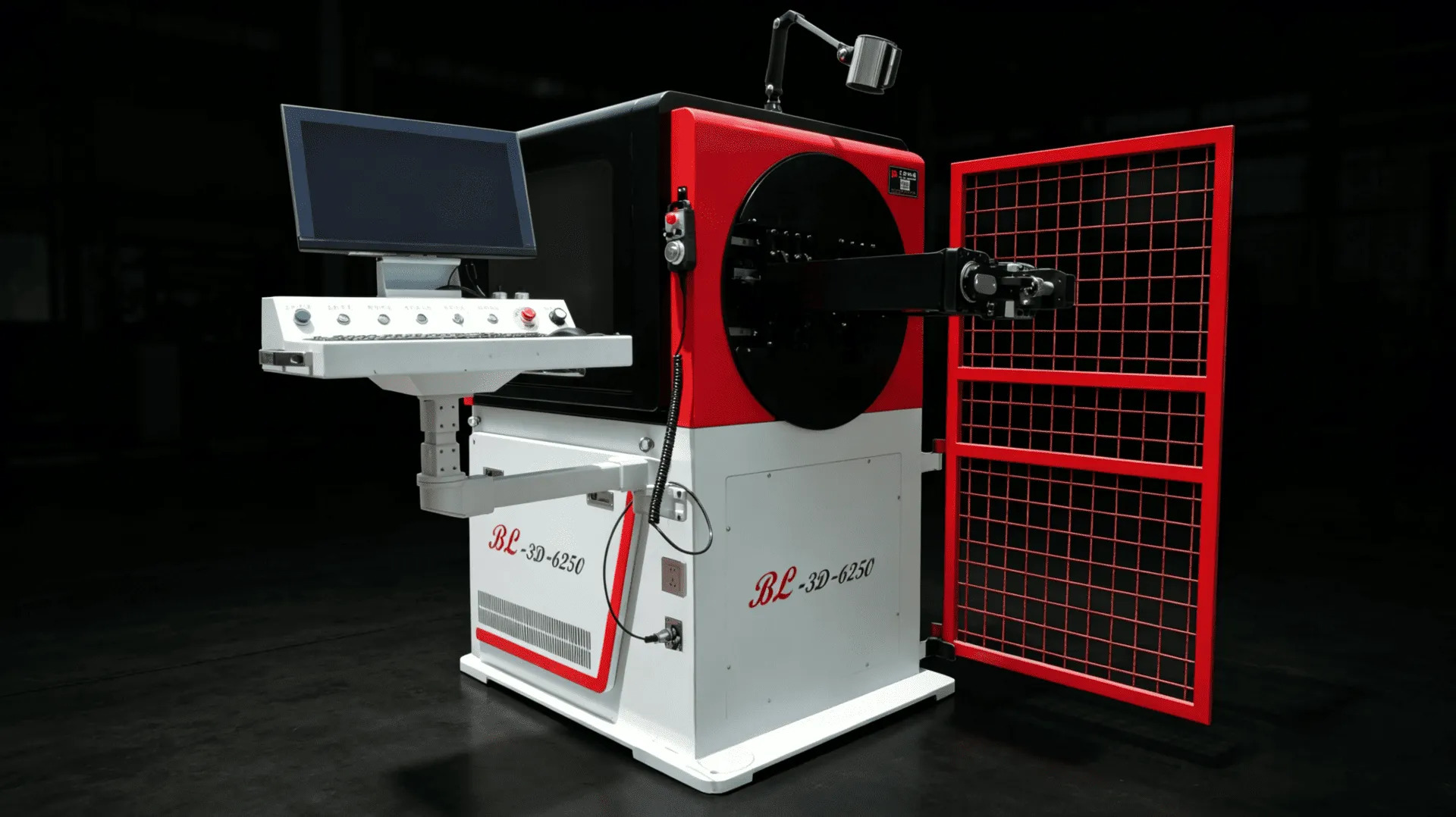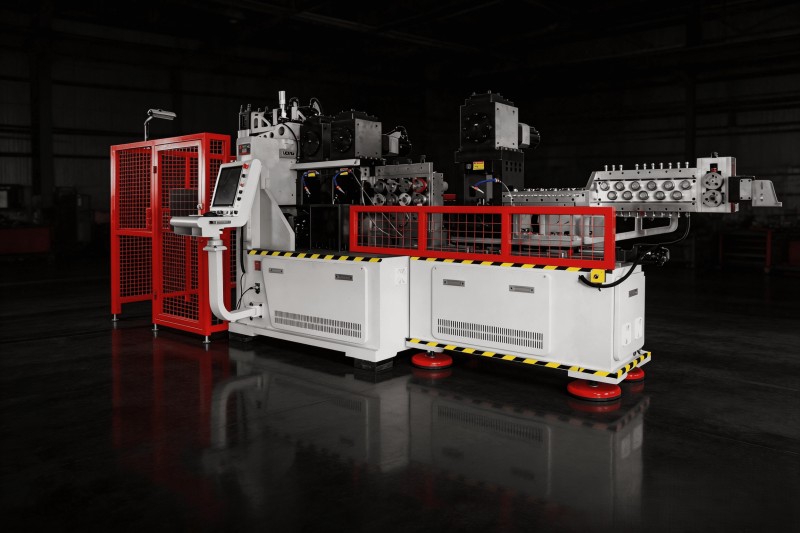

Buyers compare axes, torque and accuracy sheets. Almost nobody asks how the bar gets into the bend — which is exactly backwards. On a busbar bending machine, the feeding system decides, before the bar ever reaches the bend head, whether coated insulation survives, whether a width changeover takes minutes or half an hour, and how much of your operator’s day goes to fighting the machine instead of running it. We have run all three feeding designs on production floors. Here is what the data says.
Three Designs, One Question Nobody Benchmarks
Roller Wheels — Common, Cheap, Limited
The traditional approach is a bank of eight roller wheels that grips and advances the bar. It works, which is why so many machines ship with it. The limits show up the moment your product mix does:
- PA12-coated bar runs fine. PVC-mica bar does not — point contact from the wheels is too aggressive for low-adhesion coatings, so PVC-mica production is effectively off the menu.
- Every bar size needs its own wheel set. Changing size means swapping all eight wheels: about 4,000 RMB per set and roughly 20 minutes of downtime. A shop running five bar widths keeps five wheel sets in a cabinet and eats changeovers all week.
- Point contact marks soft bar. Aluminum and thin coatings show wheel flats when feed pressure runs high.
Rollers suit a narrow case: one or two bar widths of bare copper, no coated work in the pipeline.
Clamp Feeding — Gentle on Mica, Slow on Copper
Clamp feeding grips the bar between pads and pulls it forward in discrete strokes. Contact pressure is controllable, so PVC-mica bar — the most fragile common coating — runs without wheel damage, and there are no wheels to change. The cost is throughput. The grip-release-grip cycle caps feed speed, and on PA12 copper, a high-volume material, output drops hard. Shops that bought clamp feeders for mica work end up watching their bare copper tonnage suffer, or keep a second machine just for bare bar. A feeding design that forces a second machine is not saving anything.
Tracked Belt — Full Wrap, No Wheels, No Pause
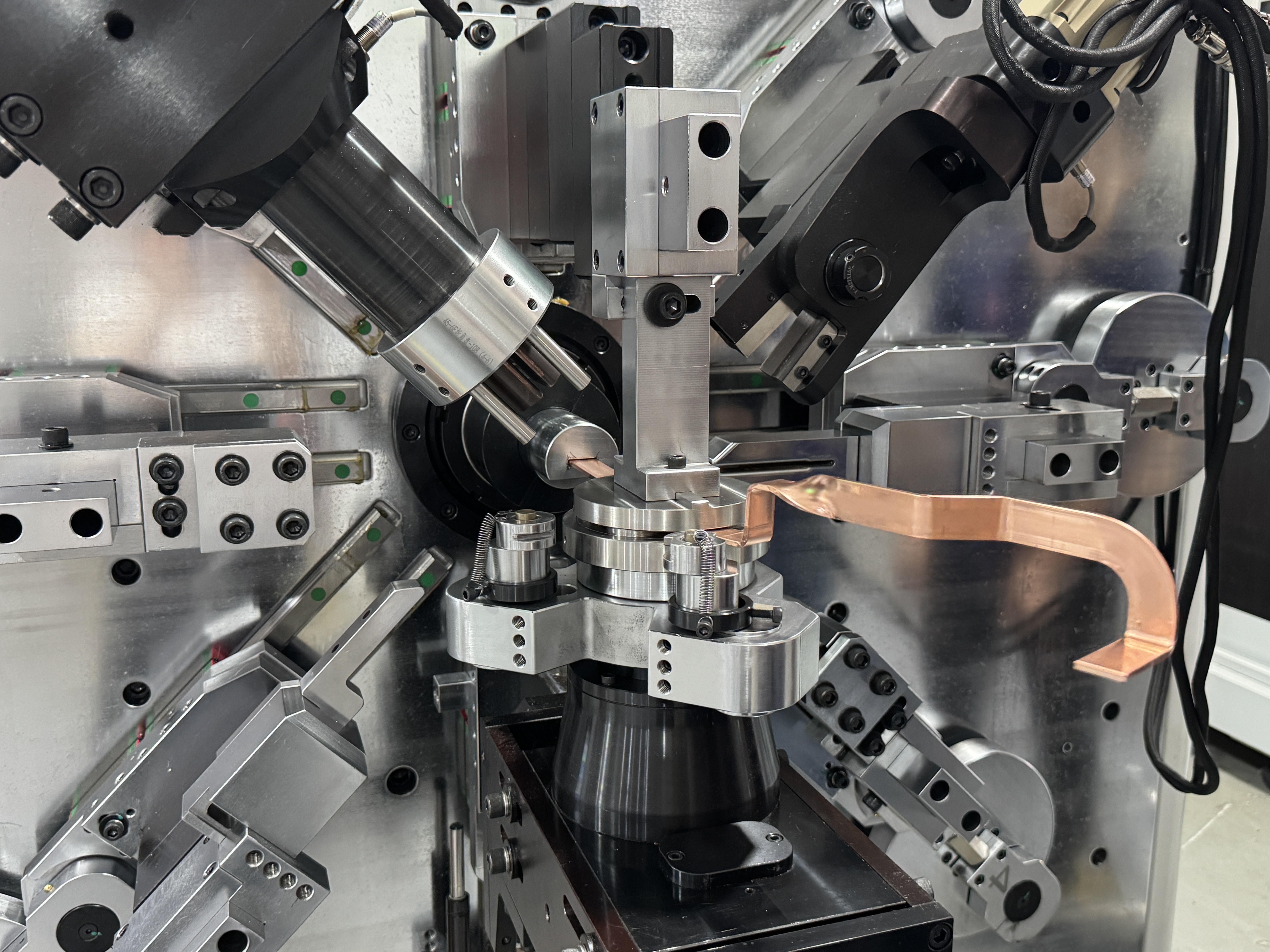
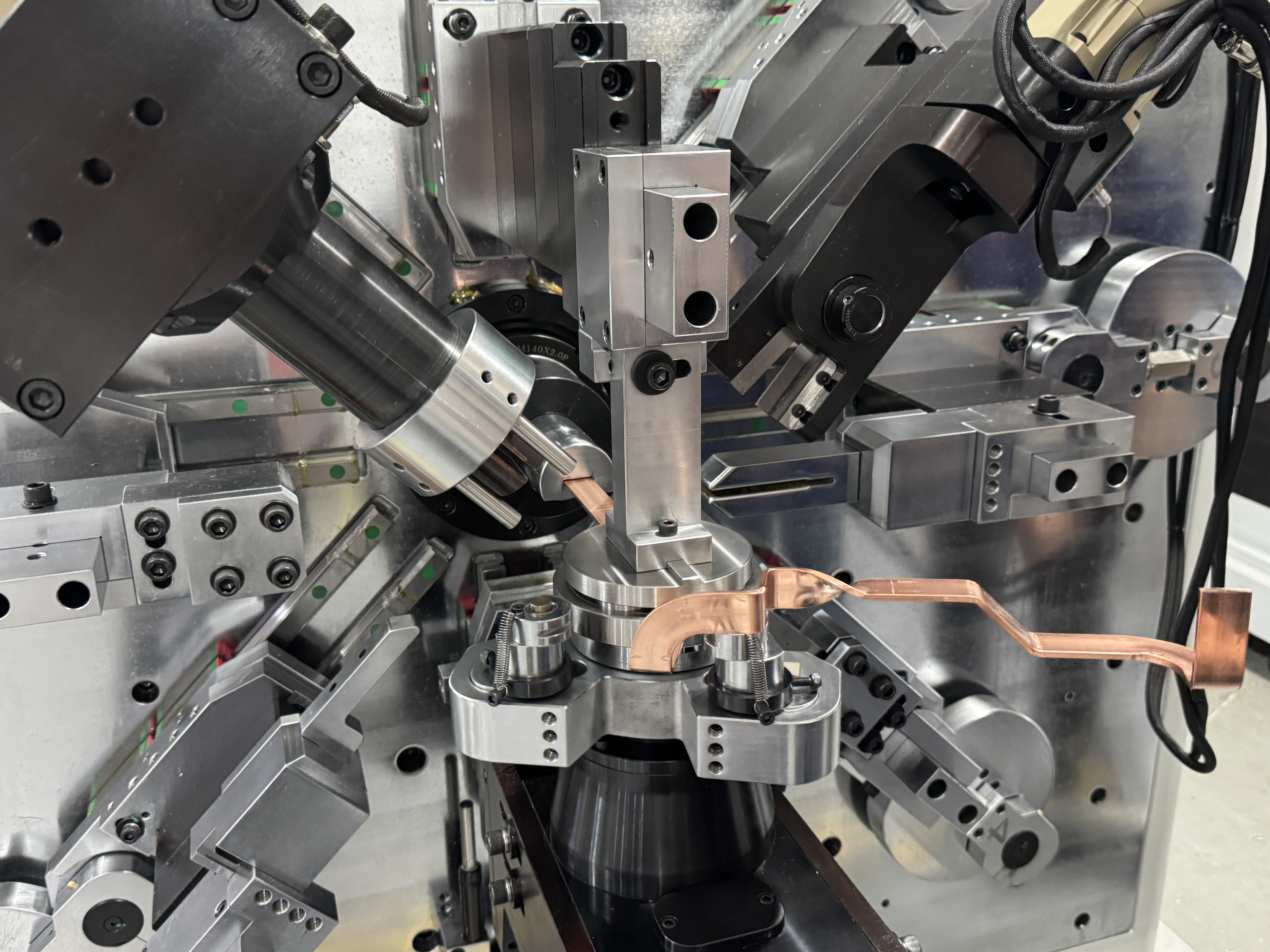
The tracked belt takes a different approach: a conveyor belt wraps the bar across a wide surface instead of pinching it at points, with pressure adjusted against the bar. On production that means three things:
- Widest compatibility. PA12 and PVC-mica coated copper and aluminum both run. One machine covers bare copper in the morning and mica-tape bar after lunch, with a pressure adjustment in between — not a mechanism swap.
- Full-wrap contact. The load spreads across the whole coating face, so soft aluminum and low-adhesion coatings arrive at the bend undamaged.
- No mid-stroke release. The belt never lets go of the bar, so feed speed stays level with rollers.
This is the design we build into our TP series, paired with an auxiliary feed unit and a straightening unit. On a 16-axis busbar bending machine like the TP-DL-45-6E, tracked feeding is what lets one cell run mixed material without penalties in damage or downtime.
Six Rows That Decide It
The whole copper busbar feeding system decision fits in six rows. Score your own order book against this table before you shortlist anything.
| Factor | Roller (8-wheel) | Clamp | Tracked belt (ours) |
| PA12 coated copper | Runs well | Slow, low efficiency | Runs well |
| PVC-mica coated | Not compatible | Runs | Runs |
| Width changeover | Swap 8 wheels, ~20 min | Adjust pads | Adjust pressure, minutes |
| Changeover cost | ~4,000 RMB per set, stocked per size | None | None |
| Coating contact | Point pressure, marks soft bar | Pad pressure, controllable | Full wrap, distributed |
| Feed speed | Fast | Slow | Fast |
Most buyers find one row that eliminates half the market on its own — usually PVC-mica compatibility or changeover time — and it is almost never the row a busbar bending machine brochure leads with.
Three Questions, One Pick
Your order book, not a brochure, should pick the copper busbar feeding system:
- Bare copper only, fixed widths? Rollers are adequate and cost less upfront.
- Steady PVC-mica orders? Clamp or tracked both run it — but check what each does to your bare copper tonnage first.
- Mixed materials, coated and bare, widths still changing? Tracked is the only design that takes all of it without penalties in changeover time or coating damage. A busbar machine size changeover drops from a half-day wheel project to a few minutes of parameter adjustment. For mica-heavy production we build a dedicated 13-axis busbar bending machine, the BL-TP-45-6EL, with tracked feeding and straightening built in.
How We Verify Feeding Before Shipment
Every machine we ship runs a 100,000-cycle endurance load before delivery, with feed length accuracy verified at ±0.1 mm over 300 mm. The feeder carries that load every single cycle, so we test it as its own item during acceptance instead of folding it into the bend test. Feeding is also the cheapest place in the line to gain or lose quality — which is why every busbar bending machine we build gets its feeder proven before it leaves the floor.
Send the Material List, See the Difference
Send BELAN your material list — metals, coatings, width and thickness range — and we will run all of it across our tracked feeder in one session, film it, and send you the video along with a changeover cost comparison against your current setup. Judge the feeding structure on your own bar, coated and bare, not on a sample book. Get the busbar bending machine feeding decision right and the accuracy figures behind it start meaning something. For model selection, a feeding trial or a cell layout review, talk to our engineering team.
BELAN Machinery, your expert provider of automotive wire forming solutions.