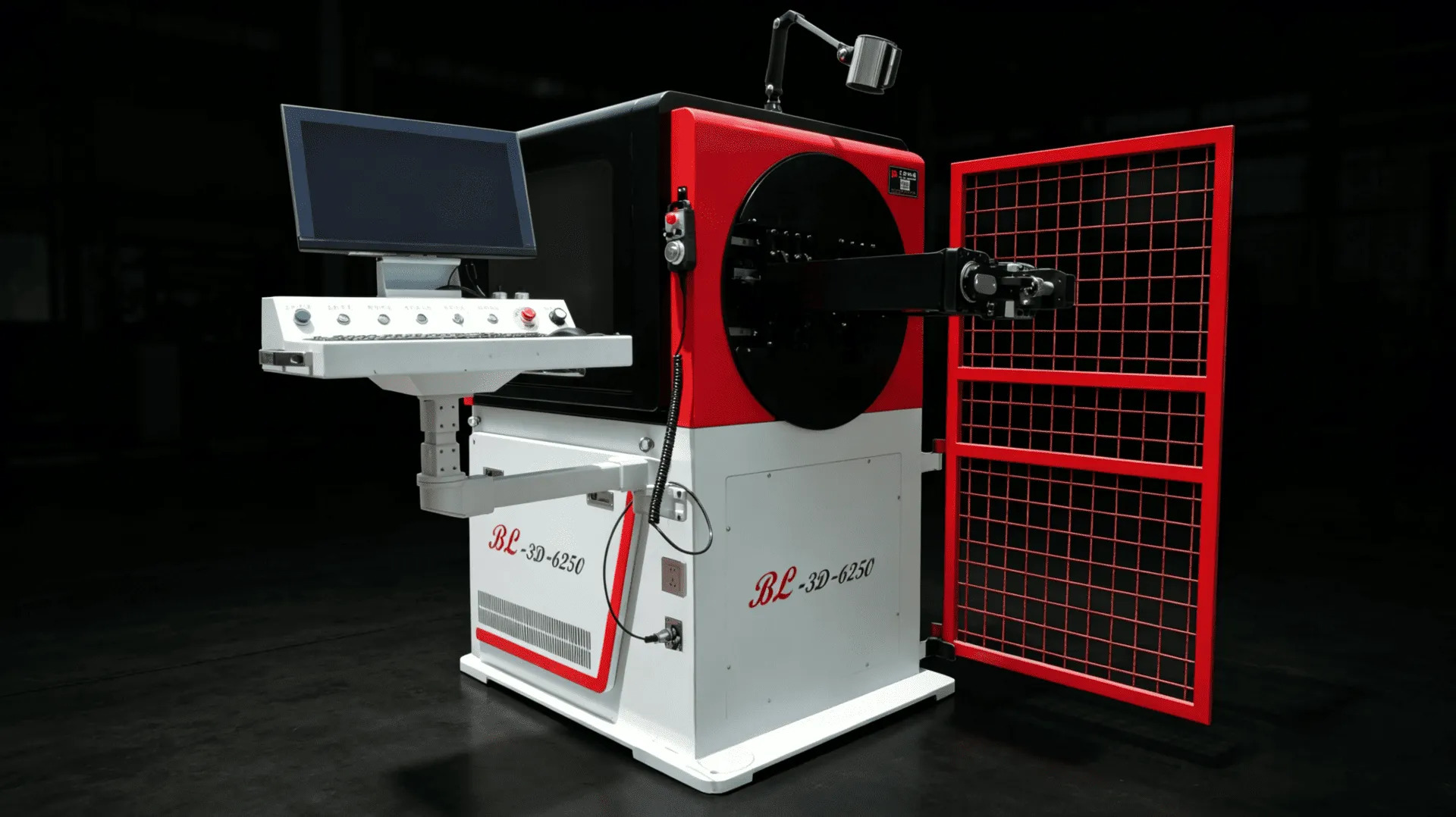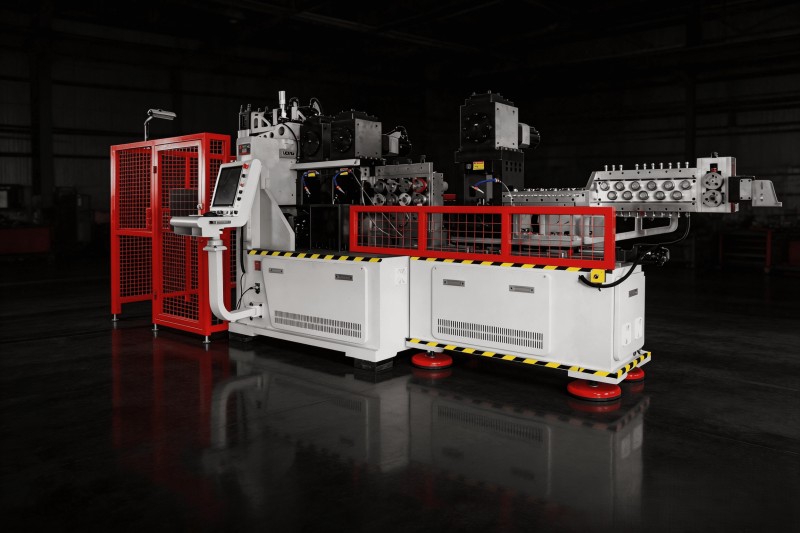


The 8–16 mm band is where large-diameter wire orders pile up: furniture chair frames, shelf reinforcement wires, automotive headrest rods, construction anchor parts. Lately customers keep sending the same drawing with the same question — the BL-3D-51400, 51600 and 61600 look almost identical on paper, so which one should I buy? Here is how we walk buyers through this CNC wire bending machine trio on our own shop floor, so the decision comes off a spec sheet instead of a guess.

Where Buyers Go Wrong in the 8–16 mm Band
Most buyers pick by maximum wire diameter: the drawing tops out at 14 mm, so a 16 mm machine gets ordered. The catch is hard wire. The 51400 reaches 14.0 mm on soft wire but only 10.0 mm on hard wire, and a 12 mm hardened part — quenched steel wire is common in this class — needs the 16 mm machines. The opposite mistake hurts too: when half the shop’s work sits between 5 and 8 mm, running it all through a 16 mm-class frame wastes stroke and feeding capacity every shift. Sizing a large diameter wire bending machine starts with splitting the soft and hard wire ranges, never with a single number.
The Three-Machine Spec Table
Across this class of CNC wire bending machine, only two things actually change: the wire envelope and the internal rotation axis. The envelope figures below come from our product pages; the power figures follow the confirmed factory configuration, including the extra servo on the 61600.
| Item | BL-3D-51400 | BL-3D-51600 | BL-3D-61600 |
|---|---|---|---|
| Wire diameter (soft) | Φ5.0–14.0 mm | Φ8.0–16.0 mm | Φ8.0–16.0 mm |
| Wire diameter (hard) | Φ5.0–10.0 mm | Φ8.0–12.0 mm | Φ8.0–12.0 mm |
| Control axes | 5 | 5 | 5 + internal rotation axis |
| Total power | 19.4 kW | 26 kW | 28 kW (incl. internal axis servo) |
| Machine weight | 4,600 kg | 5,800 kg | 5,800 kg |
BL-3D-51400: The Transition-Range Machine
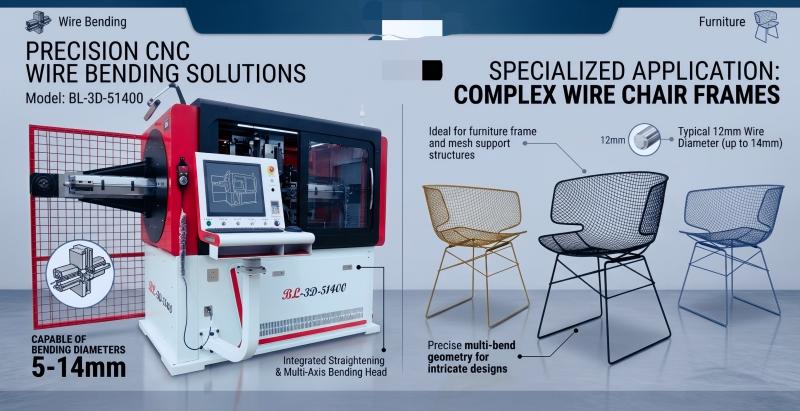
The 51400 is underrated. Its 14.0 mm soft-wire ceiling and 10.0 mm hard-wire ceiling fill the gap between small rotary-head machines and the 16 mm class, so you never buy a 16mm wire bending machine for one 14 mm part. A furniture customer in Turkey sent drawings that topped out at a 14 mm chair bracket in soft wire; the 51400 was the right landing spot, and that machine has been in production since installation. If your order book mixes sub-10 mm hard wire with 12–14 mm soft wire, the CNC wire bending machine here is the most economical of the three, and its lighter 4,600 kg frame is easier to place on a crowded floor.
BL-3D-51600 and BL-3D-61600: Same Envelope, One Extra Axis
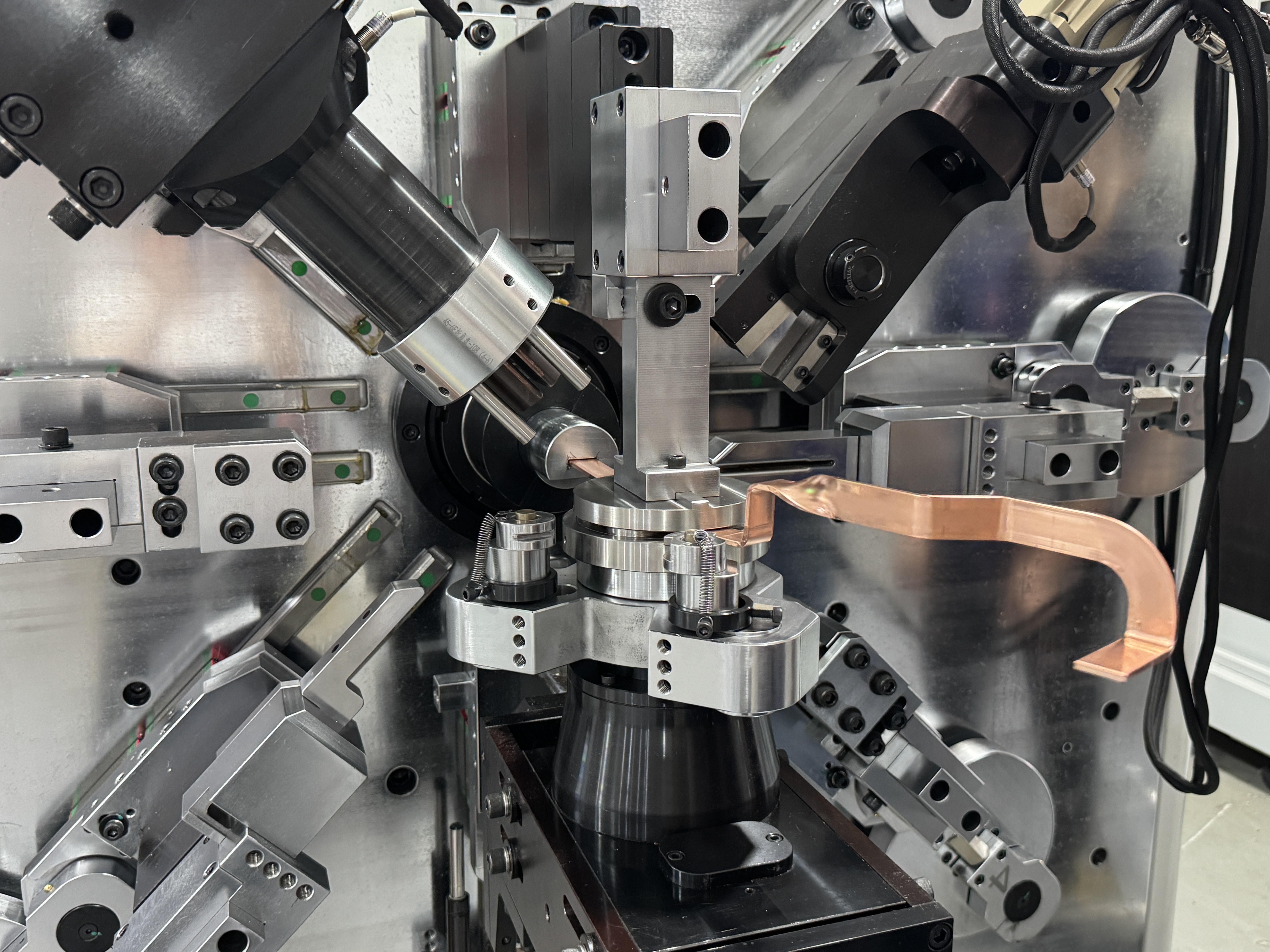
The 51600 and 61600 share the same wire envelope, the same 5,800 kg frame and the same rotary-head principle that defines this class of CNC wire bending machine: the head turns, the wire does not. Bending without rotating the wire keeps long parts from being dragged along the feeding path and keeps arc consistency tight. The single real difference is the internal rotation axis on the 61600 — one more servo, one more bending dimension, and 28 kW against the 51600’s 26 kW. For irregular, complex 3D parts, that axis lets the control choreograph every bend position with fewer re-clamps, so many complex parts come off in a single setup.


In daily work the split is simple. Regular bend angles and straightforward brackets: the 51600 covers them all day. A growing share of complex irregular parts — headrest rods, anchor profiles, multi-plane brackets — is exactly what the 61600 internal axis was added for; it is why these two machines remain the reference large diameter wire bending machine pairing in our range.
Three Questions That Settle the Choice
Ask these three questions about the CNC wire bending machine on your shortlist:
1. Soft or hard wire at the top of the drawing? Hard wire above 10 mm rules out the 51400.
2. How many complex irregular parts? A heavy share points to the 61600 and its internal rotation axis; regular angles run fine on the 51600.
3. What share of parts sits between 5 and 8 mm? Above roughly a third, the 51400’s envelope works hardest.
Run the drawing through these three questions and one machine usually remains. When two answers conflict, send us the part — a trial bend settles the argument faster than another week of spec sheets.
Choosing in the 8–16 mm band comes down to two things: wire class and part complexity. Send us your soft and hard wire sizes with a typical part drawing, and we will recommend the right model from the 51400 / 51600 / 61600 range, plus a trial-bend video and measured first articles from our CNC wire bending machine. BELAN Machinery, your expert provider of automotive wire forming solutions.