
A wire bending machine quote often runs longer than buyers expect: heading station, punching unit, dual-head feeder, robot unloading, collection table — every line carries a price. After years of building these machines, our rule is simple: the options on a CNC wire bending machine are not about a higher configuration tier. They are about whether the structure matches your part. Part length, left-right symmetry, and whether the end needs heading — once these three answers are on the table, the machine structure is basically decided.
There Is No “High-Config” Ladder
Buyers like to rank machines small, medium, large and assume the expensive one is better. Wire benders do not split that way. The same rotary-arm bending structure, with a wider wire range and one added heading station, serves a completely different family of parts. Run the other direction and it works too: a bigger machine forming short, small parts will not beat a smaller machine on flexibility. So when you read the CNC wire bending machine options on a quote, do not count the lines — ask which parts those options are built for.
DT51400 and 6800: One Structure, Two Jobs
Same structure, different wire range and heading
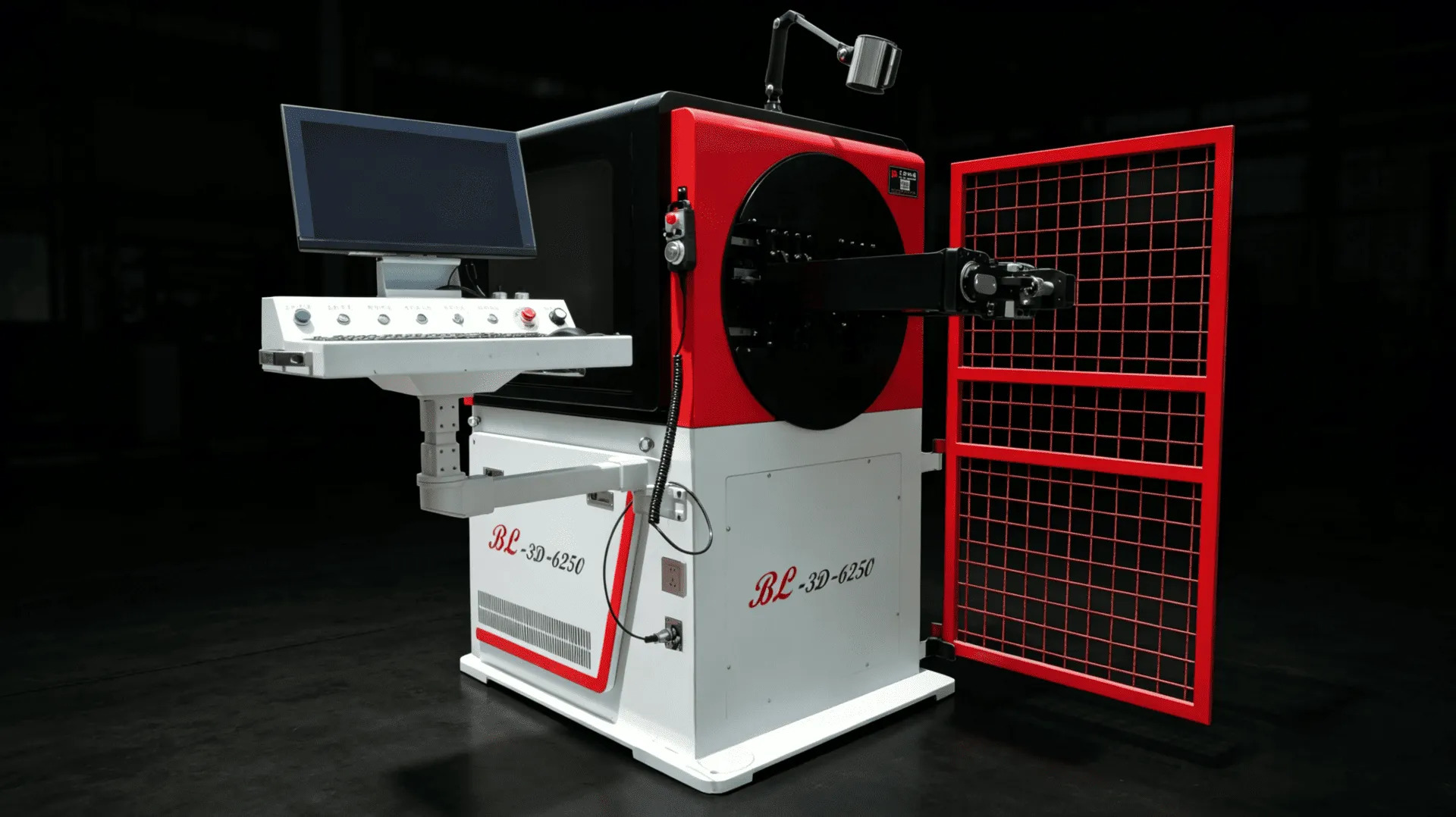
The two machines share the same rotary-arm bending structure. Only two things differ: the wire diameter range, and the heading station added on the DT51400. BL-3D-DT51400 covers Φ6.0–14.0 mm wire (tensile strength ≤500 N), 8 axes, 72.1 kW, 15,500 kg. BL-3D-6800 covers soft wire Φ3.0–8.0 mm and hard wire Φ3.0–6.0 mm, 6 axes, 12.2 kW, 3,000 kg. That is a thick-wire versus thin-wire split, not a standard-versus-premium split.
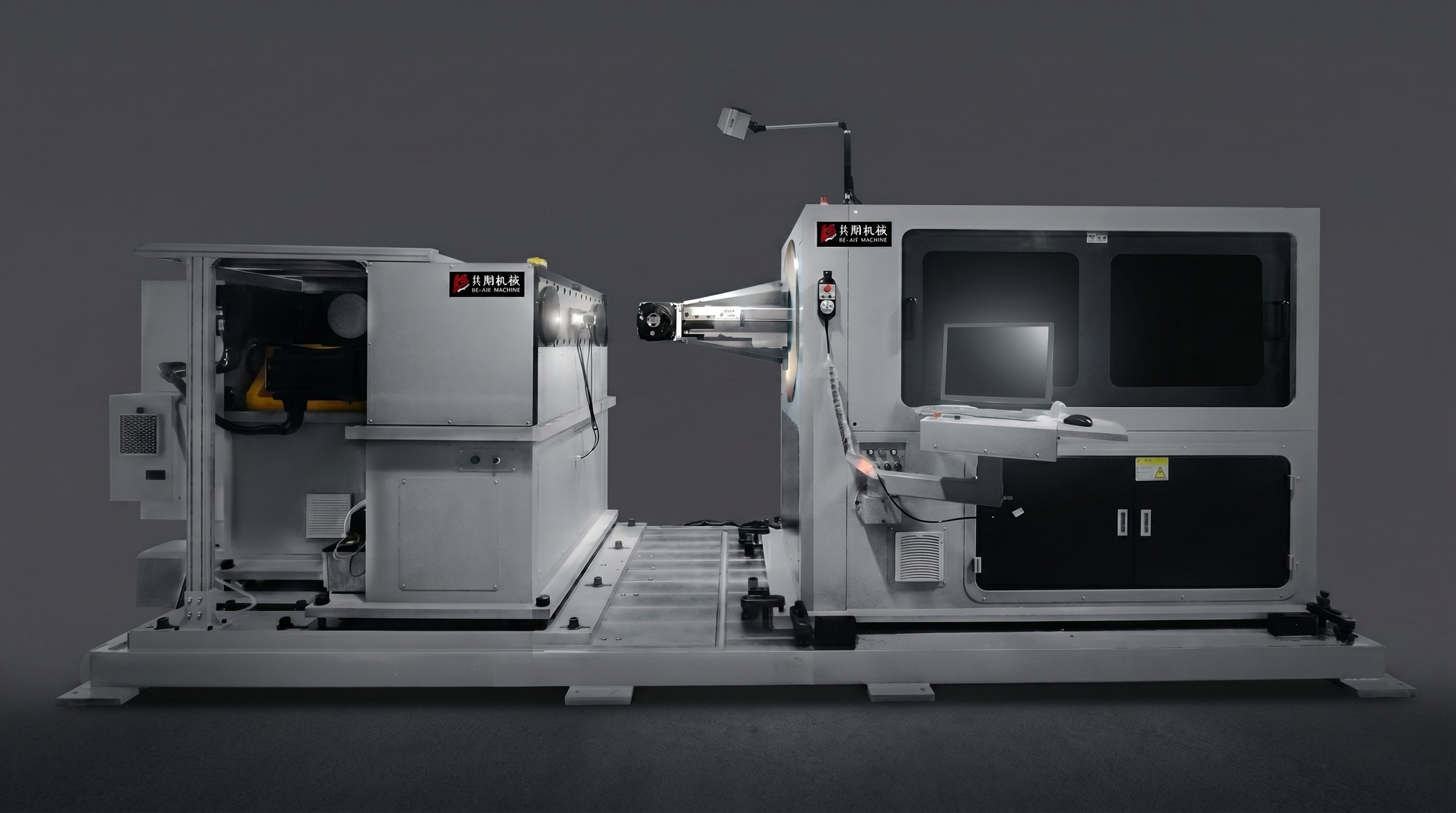
The DT51400 heading station: exhaust pipe hangers
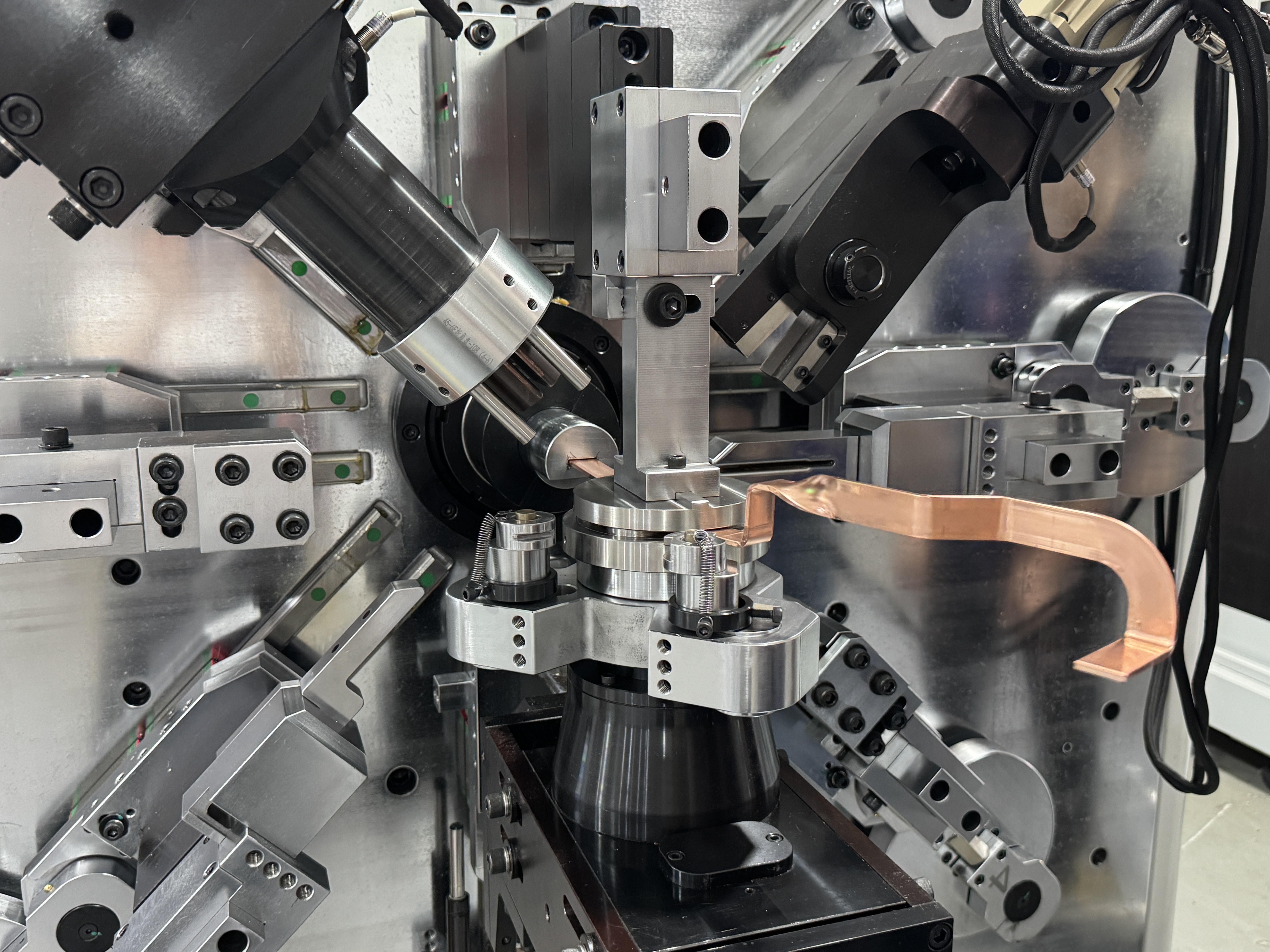
This heading and bending integrated machine exists for parts like automotive exhaust hangers: one end is cold-headed into a hook or ball, then the rod is bent to shape. The traditional route runs pressing and bending on two machines, with two setups and manual transfer in between. DT51400 integrates heading into the bender itself — one coil of wire goes in, heading and bending come out in one pass. Against the pressing route, the cycle is shorter, nobody carries parts between stations, nothing gets re-clamped, and one operator can cover more machines at once.

The heading station can also be switched off, and the machine runs as a plain bender — one machine covering two processes. That is what the integrated design is actually worth: one process less, not one extra row on the spec sheet.
Where the 6800 wins: short parts
The 6800’s strength is short parts: 6 axes, 520 mm bending stroke, feeding accuracy 300 mm ±0.1 mm, angle accuracy 90° ±0.2°. Short parts mean a short unsupported span, good rigidity, and accuracy plus stability that are easy to hold; fast changeover suits high-mix, low-volume work. Our FORVIA project runs on exactly this class. Asking a CNC wire bending machine like the 6800 to form rods longer than one meter is possible — but it wastes the flexibility and the accuracy margin it was bought for.
15600: Built for Rear Seat Frame Rods
Rear seat frames are a different job from front seats. The rods run longer — commonly from just over a meter to more than two — and most of them come in left-right symmetric pairs. Those two facts decide the machine form.
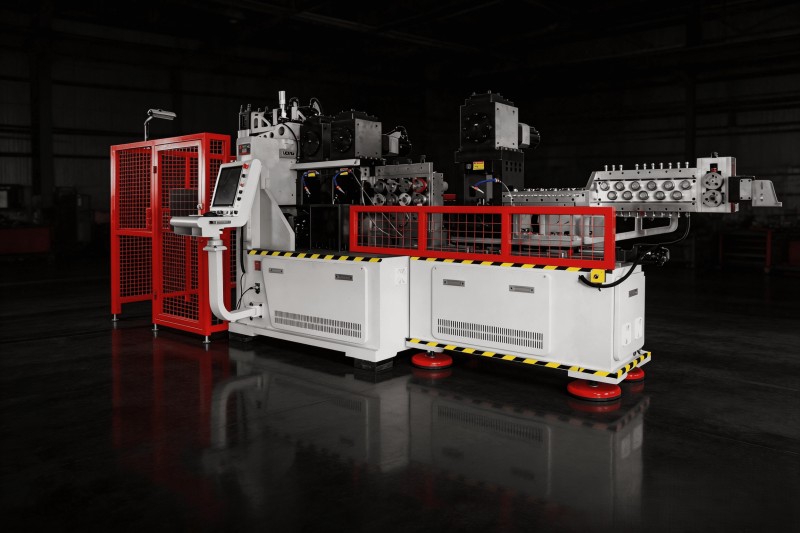
The CNC wire bending machine BL-2T-15600 is a dual-head structure: 15 controlled axes, hard wire Φ3.0–4.5 mm, soft wire Φ3.0–6.0 mm, 26.9 kW, maximum processing length 2000 mm, minimum dual-head center distance 120 mm, 5,000 kg. Both ends form at the same time, so a symmetric rod finishes in one cycle — close to half the beat, and no amount of faster feeding on a single-head machine chases that back.

Accuracy matters even more than the beat. On a single-head machine, a one-to-two-meter rod hangs unsupported through most of its length while bending: self-weight plus the bending reaction pull deflection, vibration and twist into the part, and the angles and flatness drift — the longer the rod, the worse it gets. The dual head clamps and forms both ends at once, cutting the unsupported span to a minimum. That is not an efficiency talking point; it decides whether long parts come out consistent at all.
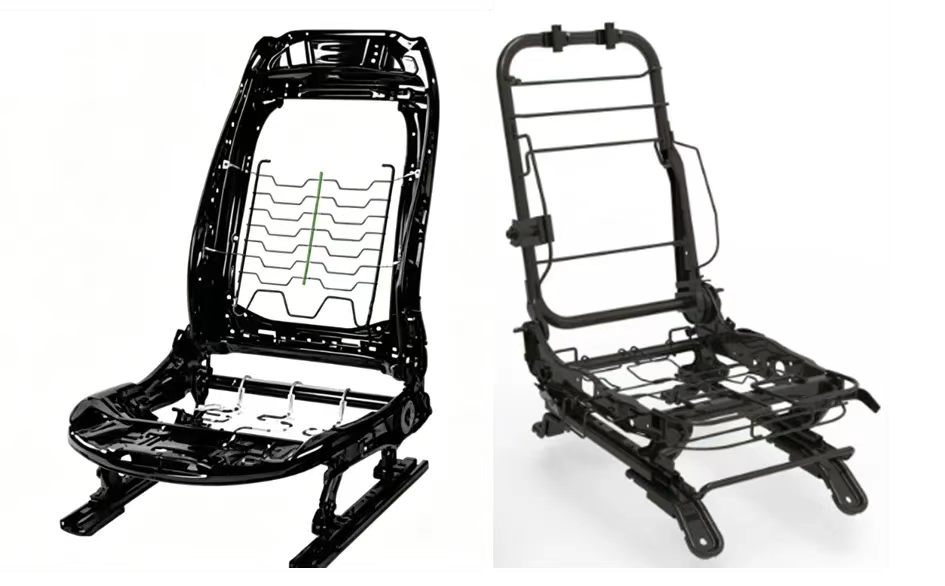
The reverse holds too. Small parts with dense forming in the middle and almost no action at the ends do not suit dual heads — the two heads get in each other’s way and the programming turns complicated. Those parts belong on a single-head machine.
Three Part Families, Three Structures
| Model | Structure | Wire range | Typical parts | Why it wins | Not for |
| BL-3D-DT51400 | Rotary-arm bending + integrated heading (8 axes, 72.1 kW, 15,500 kg) | Φ6.0–14.0 mm (≤500 N) | Exhaust pipe hangers (heading + bending) | Heading and bending in one pass; replaces pressing + bending, less labor, shorter cycle; also runs as a plain bender | Fine-wire small parts that never use the 14 mm range |
| BL-3D-6800 | Rotary-arm bending (6 axes, 12.2 kW, 3,000 kg) | Soft Φ3.0–8.0 / hard Φ3.0–6.0 mm | Short parts, high-mix low-volume | Short unsupported span, high precision and stability, flexible changeover | Rods over 1 m — unsupported, slow |
| BL-2T-15600 | Dual-head synchronized forming (15 axes, 26.9 kW, 5,000 kg) | Hard Φ3.0–4.5 / soft Φ3.0–6.0 mm | Rear seat frame symmetric rods (1–2 m+) | Both ends form at once, near-half cycle, long rods never hang unsupported | Small parts with dense mid-body forming |
Send the Drawing, We Match the Machine
If you are holding a drawing and cannot tell whether it needs heading-integrated, dual-head or standard single-head forming, send the drawing and your annual volume — we will match the machine to the part instead of padding the option list. The logic behind every CNC wire bending machine option is one line: match the part first. BELAN Machinery, your expert provider of automotive wire forming solutions.