
Introduction
Busbar projects are usually compared on specification: bending force, axis count, control platform, automation level. Those figures matter, but they are answers to a question that has to be asked first — what does your production actually look like? Two plants forming the same busbar can need very different machines, because one runs a few part numbers in weekly batches and the other changes over every day.
This guide works from the production side of the decision: the figures that describe how you manufacture, the output and changeover budget they imply, and how each input narrows the machine specification. It is written for manufacturers, process engineers and purchasing teams who must justify a capital decision with data.
Why Production Needs Should Drive the Selection
A machine that performs well in one plant can be the wrong purchase in another. The busbars may be identical; the production model is not. Stable high-volume work rewards integrated processing and minimal handling, while a workshop serving many customers rewards fast changeover and programming flexibility above raw cycle time.
A specification sheet alone therefore cannot settle a selection. Rated capacity and control platform describe what a machine can do; your production profile decides which capabilities will be used every shift, and which will be paid for and left idle.
Six Figures That Define Your Production Profile
Before comparing machine concepts, collect six figures. If one of them is uncertain, that uncertainty is itself a selection risk and is better stated openly than hidden behind an optimistic estimate.
- Annual quantity per part number — demand per busbar, not the plant total. A large aggregate figure can hide the fact that no single part justifies dedicated tooling.
- Average and maximum batch size — decides how often setup occurs relative to productive run time.
- Number of active part numbers — today's count, plus parts already scheduled for introduction within three years.
- Changeover frequency per week — the most underestimated cost in busbar production, and often the deciding factor between two machine concepts.
- Operating hours and shift pattern — time genuinely available after breaks, maintenance, tooling attention and material handling.
- Mix stability across the year — whether demand is steady or arrives in campaigns, which changes how capacity should be provisioned.
They are also what a supplier needs to propose a configuration rather than quote a catalogue item.
From Production Volume to Required Output
Volume becomes useful only when it is converted into a time requirement: take the annual quantity for the busbars the machine will run, divide by working days, then by the hours genuinely available each day. The result is the required output per hour — usually lower than operators assume.
Two corrections must be applied first. Changeover and setup time has to be deducted, because a machine that forms quickly but needs long adjustment at every part change can deliver less than a slower machine that changes over in minutes. An allowance for planned maintenance and material handling should follow, so the figure reflects sustained output rather than a peak.
This order prevents a common error: buying capability for a peak rate the plant will never need to sustain.
Translating Production Needs Into a Machine Concept
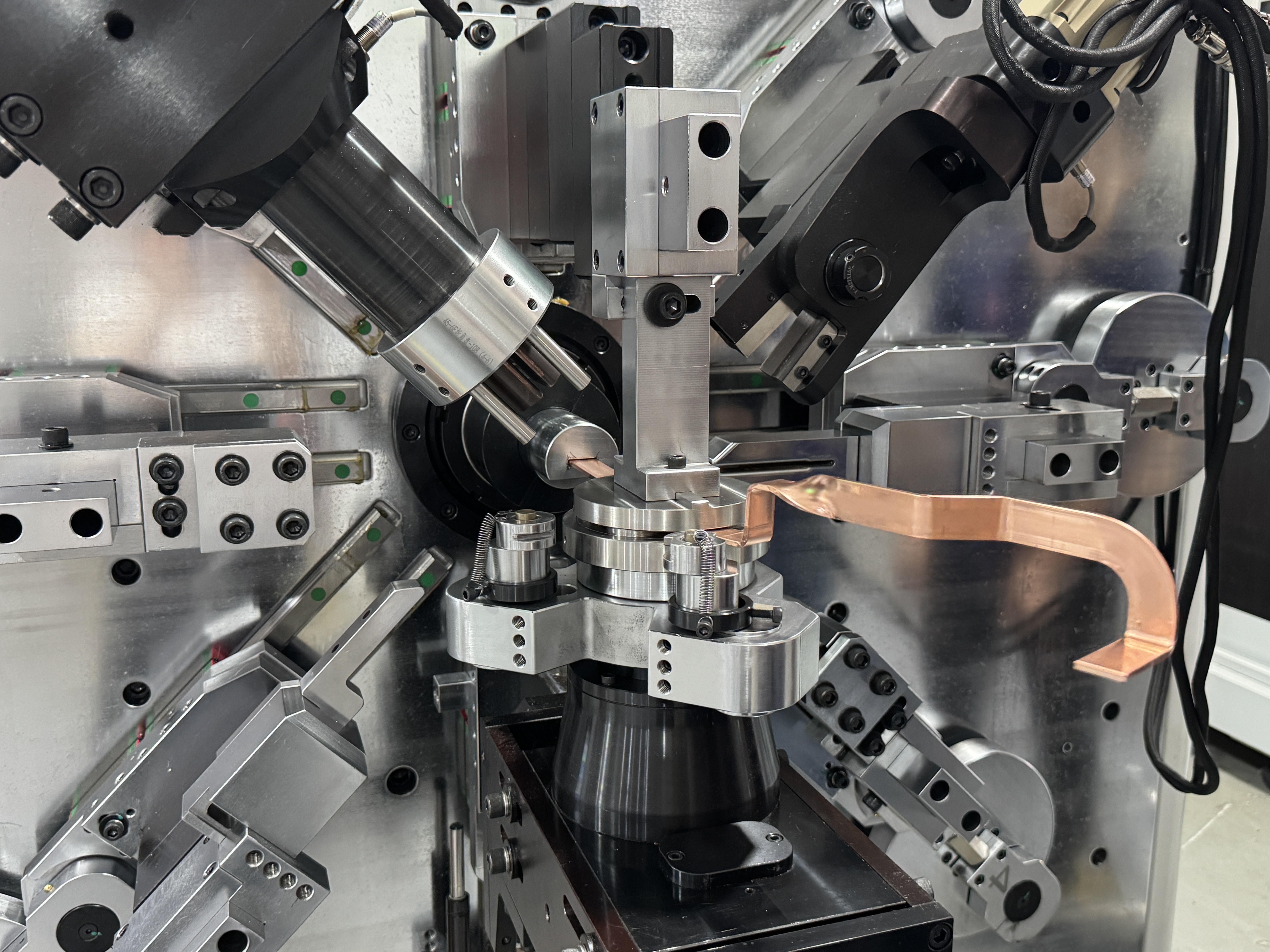
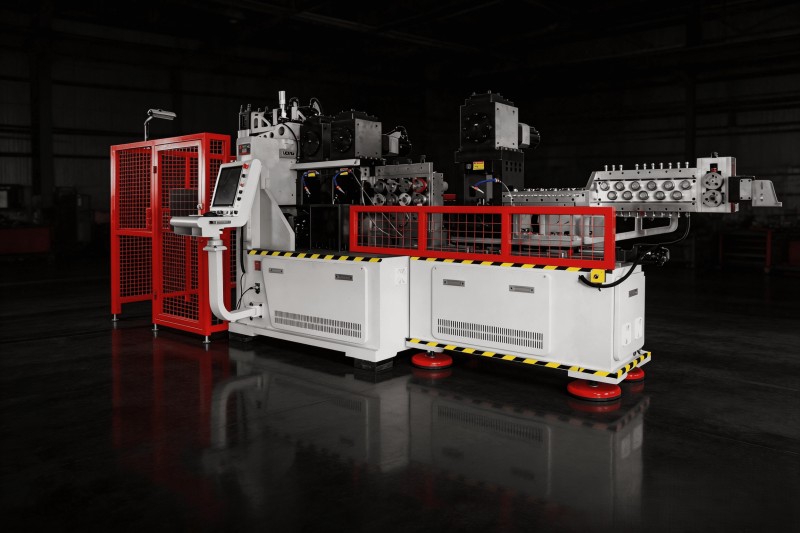
Once the required output is known, the machine concept follows from how floor-to-floor time splits between forming and handling. Where handling dominates, integrating cut-to-length, punching and bending into one sequence removes the largest share of lost time. Where forming dominates, integration returns less and priority shifts to forming speed, tooling quality and repeatability.
Volume alone does not settle it. A high-volume part with a single bend may run most economically on a straightforward machine feeding a separate operation, while a lower-volume part with several bends in different planes may need multi-axis forming simply to hold angle tolerance — a capability requirement rather than a volume one. The deciding question is which resource is scarce: time, skilled labour, or floor space.
Where volume supports a coordinated flow, see EV busbar processing solutions and the busbar bending and laser robot integrated production line.
Part Family Analysis: How Many Busbars Must One Machine Serve?
The number of part numbers and how similar they are decide whether the machine is a dedicated asset or a flexible one. Group the parts by width and thickness band, material and temper, bend geometry, and tolerance class. Where the family shares these bands, one machine and one tooling concept can often serve all of it. Where the range is wide, at least one dimension will be compromised, and that compromise is better chosen deliberately than discovered after installation.
Tooling Strategy for High-Mix and High-Volume Production
Tooling decisions follow from the part family analysis and rank among the most dependable indicators of running cost. For a stable high-volume part, dedicated tooling gives the most repeatable results and the shortest cycle time. For a frequently changing mix, modular tooling with quick clamping usually costs less across a year than an elaborate die set that takes half a shift to install.
The questions worth asking are practical: how long does a die change really take, measured from last part to first good part? What is included in the standard tool package and what is charged as an option? Changeover effort is examined further in the analysis of auxiliary feeding and change-over efficiency.
Operating Model, Labour and Facility Constraints
A machine is only as productive as the people running it. Define the operating model before selecting: operators per machine, whether programming belongs to process engineers or happens on the shop floor, available skill on each shift, and whether lightly attended running is realistic overnight. Automation shifts work rather than removing it: a configuration that assumes an experienced programmer on a shift where none exists will not deliver the output its specification implies.
Physical constraints eliminate options faster than specifications do, and they are best treated as hard limits rather than details to resolve at installation:
- Floor area — machine footprint plus the space needed to load and unload long bars safely
- Foundation and floor loading — relevant for heavier configurations, often overlooked until delivery
- Power supply — connected load, plus room for planned expansion
- Material flow — where bar stock arrives, where finished busbars leave, and the distance between the two
Quality Requirements and Process Capability
Quality requirements determine how much measurement and documentation the process must carry. A busbar for a bolted connection in an industrial cabinet may need only dimensional and angle verification, while one destined for a battery pack or electric drive assembly may require documented capability and traceability by batch.
Translate that into machine attributes: can settings be stored and locked per part number? Can parameters be exported for records? Can angle tolerance be held across a full shift without operator intervention? Where a customer audit is expected, ask how the settings used to qualify a part can be retrieved later.
Total Cost of Ownership and Payback
Purchase price is usually the smallest component of busbar project cost, yet it receives the most attention. The five-year picture is dominated by running costs: changeover labour multiplied by changeover frequency, dedicated and replacement tooling, scrap and rework, energy, and maintenance together with the production lost while waiting for parts.
For payback, the useful comparison is not "machine versus no machine" but one realistic configuration against another. Calculate the annual difference in labour hours, changeover time, scrap rate and throughput, then compare it with the capital difference. Where the two are close, prefer the configuration that is easier to adjust when the product mix changes, because that flexibility rarely appears in a static payback calculation.
Evaluating the Supplier Against Your Production Reality
The machine and the supplier are one decision, because most of the running risk sits in the relationship after delivery. Look for a supplier who asks for your production data before quoting, who can explain how a proposed configuration will reach your required output rather than only what it can do in theory, and who has a defined path for commissioning, training and spares.
Response time, spares availability and remote diagnostic capability should be checked against your own operating conditions. Ongoing arrangements are set out in after-sales support, and the effect of structured on-site workshop training is worth reviewing before finalising a shortlist.
Production Inputs to Machine Specification: A Decision Matrix
The table below summarises how each production input translates into a machine attribute, and how it can be verified before an order is placed.
| Production Input | Machine Attribute | How to Verify |
|---|---|---|
| Quantity per part number | Forming speed and axis configuration | Cycle time study against your target output per hour |
| Batch size | Loading method and work-in-progress capacity | Run a full batch in trial production, not a single sample |
| Changeover frequency | Tooling concept, clamping, program recall | Time a real changeover between two of your parts |
| Part number count | Program storage and tooling modularity | Confirm how proven settings are stored and protected |
| Width and thickness range | Rated capacity at the worst combination | Written confirmation for each combination you run |
| Tolerance and surface needs | Control accuracy and tooling contact design | Measured results across a representative run |
| Operating model and facility limits | Automation level, footprint, power and air | Utilities schedule and layout signed off before shipment |
Common Selection Mistakes in Busbar Projects
- Sizing to the average part rather than the hardest combination in the range
- Buying automation for volume that has not arrived
- Comparing cycle time while ignoring setup time
- Treating the standard tool package as an afterthought
- Leaving power, foundation and layout questions until installation
- Accepting one good sample as proof of repeatability
- Deciding on purchase price alone
How BELAN Builds a Specification From Production Data
BELAN Machinery treats a busbar project as a specification exercise rather than a catalogue selection. The starting inputs are the busbar drawings, material and temper, thickness and width range, bend geometry and tolerances, together with quantity per part, batch size, part number count and required output per shift.
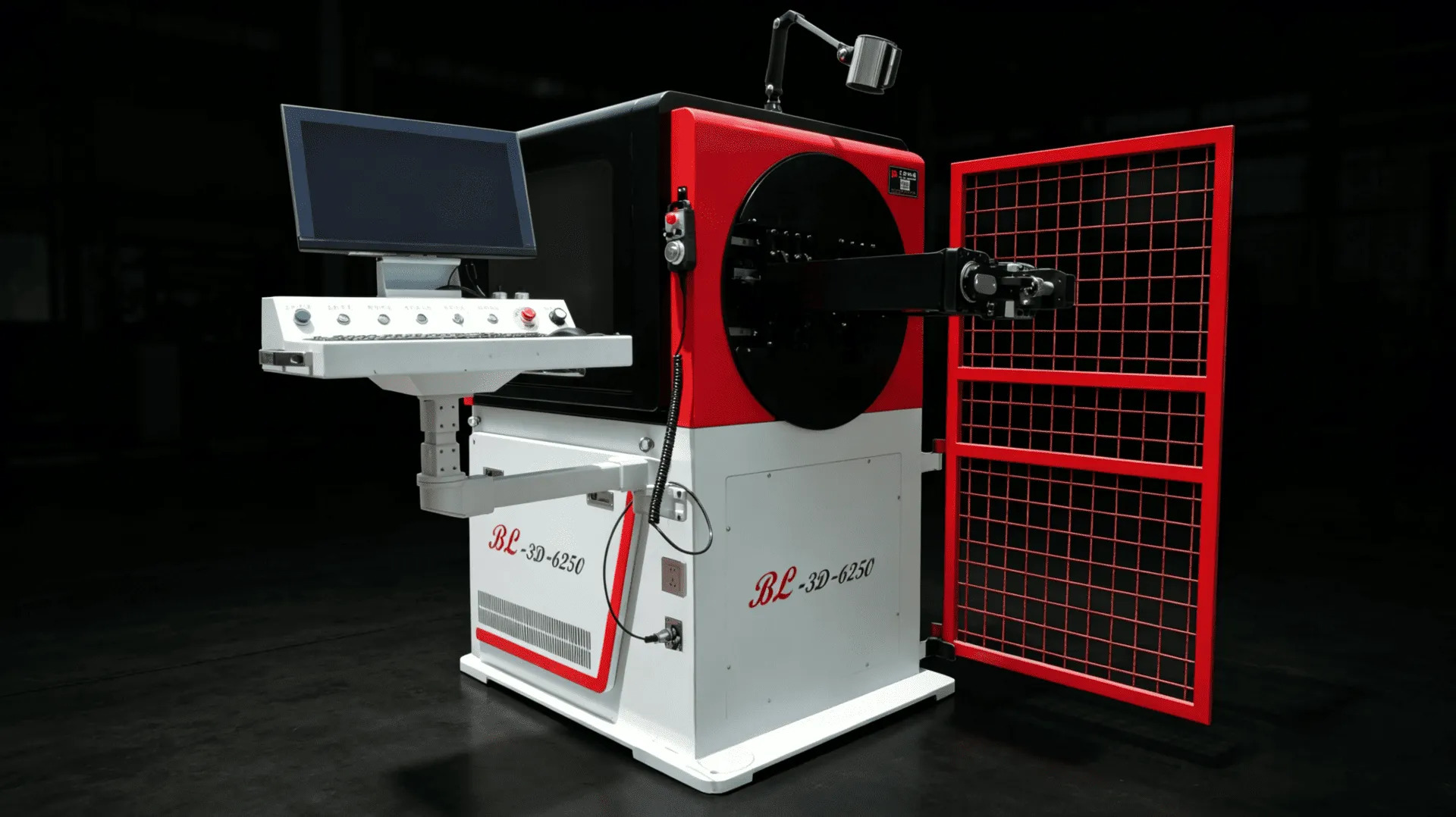
From those inputs the configuration is developed in a fixed sequence: part and material review, forming and tooling concept, machine and control configuration, processing scope such as cut-to-length, punching or marking, and a trial forming stage validated against measured results. Where volume justifies it, integration into a wider production flow is assessed in the same exercise. The BL-TP-50-7E model page shows how rated capacity is documented for one configuration in the BL-TP series, and requirements outside standard configurations are handled through customized solutions.
Busbar Bending Machine Production Needs Checklist
- ☐ List annual quantity for every busbar part number
- ☐ Record average and maximum batch size per part
- ☐ Count current part numbers and those planned within three years
- ☐ Estimate changeover frequency per week from the production plan
- ☐ Calculate required output per hour from available time
- ☐ Deduct changeover, maintenance and handling time from available hours
- ☐ Group parts by width, thickness, material, geometry and tolerance class
- ☐ Confirm labour, skill and programming responsibility per shift
- ☐ Verify floor space, foundation, power supply and compressed air
- ☐ Map material flow from bar stock intake to finished part output
- ☐ Compare two realistic configurations on five-year total cost
- ☐ Prepare drawings, material data and production volumes for technical review
Conclusion
Choosing a busbar bending machine for your production needs is a sequence, not a comparison. Define the production profile, convert volume into a required output rate, match concepts to that rate, then refine against tooling, labour, facility and quality requirements. A step skipped early usually resurfaces as a machine that meets its specification on paper but not on the floor.
The final filter is verification: a supplier who asks for your production data, trials with your own busbars and discusses repeatability openly is offering more than equipment.
Frequently Asked Questions
1. What information do I need before choosing a busbar bending machine?
Busbar drawings, material grade and temper, thickness and width ranges, bend geometry and tolerances, plus production data: quantity per part, batch size, part number count, changeover frequency and output required per shift.
2. How do I decide between a standalone machine and an integrated line?
Compare forming time with handling time. If handling dominates floor-to-floor time, integration removes the largest share of lost time and usually justifies itself. If forming dominates, priority shifts to forming speed, tooling and repeatability.
3. How much automation does my production volume justify?
Volume is only one input. Automation is justified by the combination of volume, tolerance requirements, available labour and changeover cost. Tight tolerances or scarce skilled operators can justify it at volumes that labour savings alone would not.
4. How many different busbars can one machine handle?
It depends on how closely the parts group by width and thickness band, material, bend geometry and tolerance class. Parts sharing these bands usually run on one machine with one tooling concept; a wide range forces a trade-off.
5. What is the most frequently underestimated cost in busbar production?
Changeover. Setup time per part change is easy to overlook when machines are compared on cycle time, yet it multiplies quickly across a mixed production plan. Measuring changeover time from last part to first good part is one of the most useful figures a buyer can bring.
6. How should I compare two machine options objectively?
Use a five-year cost model covering changeover labour, tooling, scrap, energy and downtime alongside capital price, then validate the numbers with trial forming on your own parts. Performance that cannot be reproduced in a trial cannot be relied on in production.
7. Should I buy capacity for production I do not have yet?
Buy for the requirement you can reasonably forecast over the next few years, not a hypothetical peak. Unused capacity still consumes capital, floor space and maintenance. Where growth is expected, confirm the machine envelope and upgrade path.
Need Help Matching a Busbar Bending Machine to Your Production?
BELAN Machinery, a professional provider of automotive wire forming solutions. Send us your busbar dimensions, material grades, processing drawings and production requirements. Our engineering team can review your forming scope, output targets and tooling needs, and propose a configuration built around the way you actually manufacture.
Contact Belan for a Feasibility AssessmentRelated Resources
- Busbar Bending and Laser Robot Integrated Production Line — Shows how bending, marking and automated handling combine where busbar volume supports a continuous flow.
- Busbar Bending Machines Delivered to Five New Energy Production Bases — A production-scale example of busbar bending capacity deployed across multiple manufacturing sites.
- On-Site Workshop Footage: Integrated Copper & Aluminum Busbar Forming — Analysis of an integrated forming process and how the production sequence is organised on the shop floor.
- How Overseas After-Sales Service Is Guaranteed — Explains the support, spares and response arrangements that shape long-term running cost.
- Automated EV Busbar Forming Solution — Forming approaches for busbar production serving battery and electric drive applications.