
Cost & Configuration Guide
Busbar Bending Machine Cost: What Actually Drives the Price
Two quotes that both say "busbar bending machine" can differ by a wide margin — and the gap is rarely about brand. It comes from seven configuration choices that most buyers never see itemised.
Direct answer: A busbar bending machine quote is set mainly by axis count, feeding system design, straightening capacity, cutting accuracy, tooling package, inspection options and automation level — in that order of impact. Brand name matters far less than buyers assume. To compare two quotes fairly, ask each supplier to price the same seven items separately against your own bar dimensions, coating type and target cycle time. A quote that lists only a model number and a total is not comparable with one that breaks the configuration down.
In this article
Why Two Quotes for the 'Same' Machine Diverge
Buyers usually send the same drawing to three suppliers and expect three similar numbers. What comes back instead is a spread that looks irrational. It is not irrational — it is three different machines wearing the same label.
The reason is that "busbar bending machine" describes an outcome, not a configuration. A 12-axis single-station bender and a 16-axis segmented cell with decoiling, straightening, servo cutting and robot unloading both produce bent busbars. They differ in how many operations they absorb, how much of that work is automated, and how much of the quality risk they remove from the operator. Each of those differences has a price attached, and unless the quote itemises them, the total tells you very little.
There is also a second, quieter source of divergence: the supplier's assumption about your material. A machine quoted for bare copper bar is not the machine you need for PVC-coated or dip-coated bar. Coated busbar forces decisions about contact pressure, preheating and feed path that a bare-bar configuration simply does not include. If two suppliers made different assumptions about coating, their numbers will never meet — and no amount of negotiation will close that gap.
Before you compare prices, fix the inputs. Write down your bar cross-section, temper, coating type and thickness, the bend geometries you actually run, and your target parts per shift. Send that same sheet to every supplier. Quotes built on different inputs are not competing offers.
The Seven Cost Drivers Behind a Busbar Bending Machine Quote
Ranked by how much they typically move the number, these are the decisions that separate one quote from another.
| Driver | What you are actually paying for | What it changes on the floor |
|---|---|---|
| 1. Axis count and head freedom | Number of servo axes, whether the bending head rotates, and how many planes it can form in | Which geometries are possible in one handling — flat bend, vertical bend, U-shape, S-shape, twisted or offset forms |
| 2. Feeding system design | Track-type, roller or clamp feeding — and the contact area each one puts on the bar | Surface integrity on coated bar, slip under load, and the reject rate you carry for the life of the machine |
| 3. Decoiling and straightening capacity | Load rating of the uncoiling rack and how many axes of straightening correction are built in | Whether you can run coil at all, and whether coil memory is corrected before it reaches the bend |
| 4. Cutting accuracy and length control | Servo cutting unit and the length tolerance it can hold across a production run | Whether cut length is a controlled process or a downstream problem — burr height, rework, fit-up at assembly |
| 5. Tooling package and changeover design | How many tooling sets are included, and whether saved parameters survive a product change | Changeover minutes per product, and how much of that time is skilled debugging rather than mechanical swap |
| 6. Inspection, marking and traceability | In-line angle or dimension checks, part marking, automatic rejection of out-of-tolerance parts | Whether quality is proven per part or sampled, and whether you can answer a customer traceability query without a manual records search |
| 7. Automation level and downstream handling | Automatic unloading, conveyor integration, robotic pick-and-place, line connection | Operator count per shift and whether the machine ends a process or feeds the next one |
Two of these deserve extra attention because they are consistently underestimated.
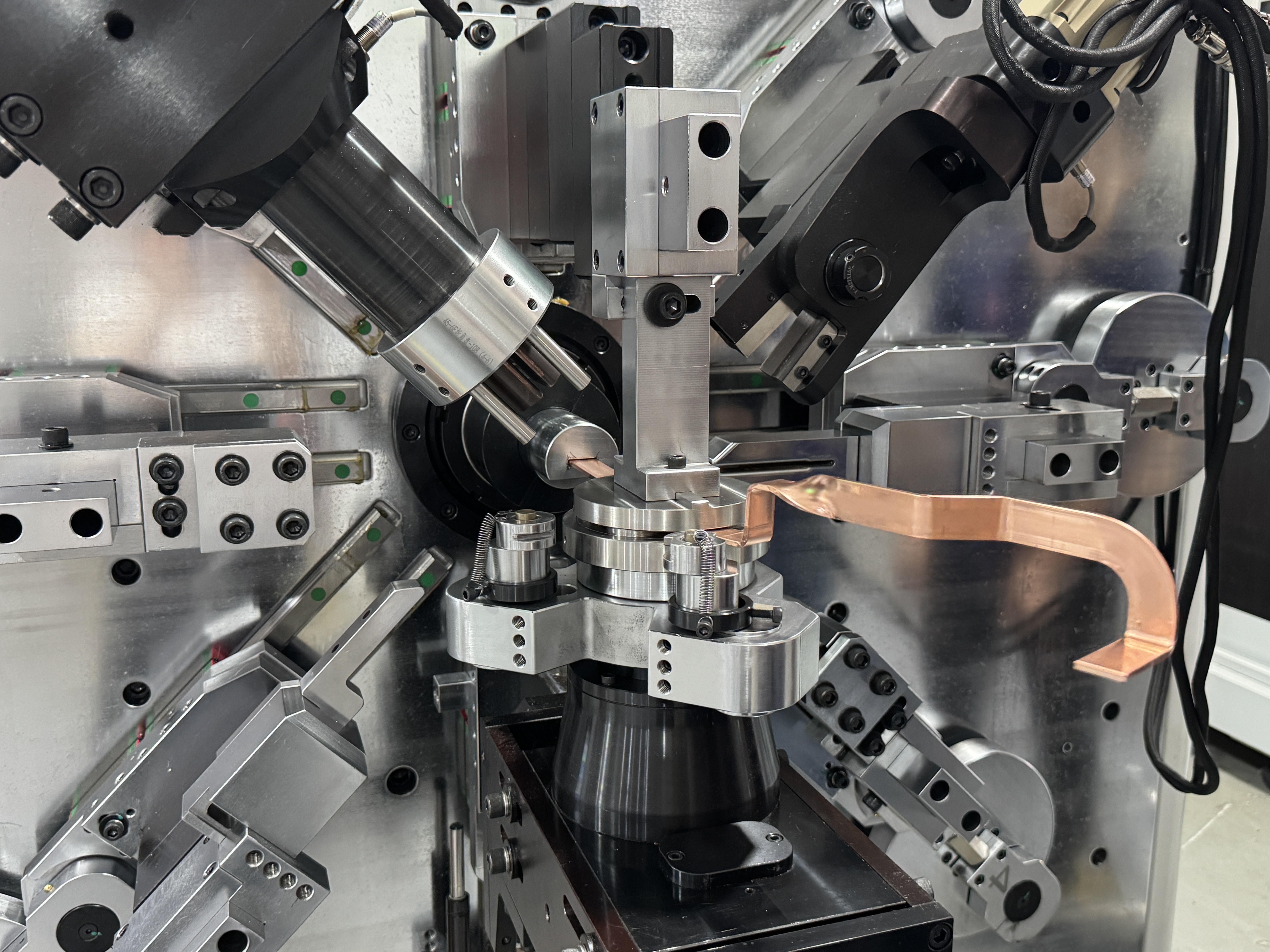
Feeding design is the one that causes the most expensive surprises. Roller wheels contact the bar at points; a track-type feeder spreads contact over a wide area. On insulated bar, that difference decides whether the coating survives the trip to the bending head. A machine that damages the coating at 2 mm sleeve thickness will cost you more in rejects over three years than the saving you made on the purchase. Feeding structure is not a minor line item — it is where a large share of scrap originates, and it is worth reading up on the differences between track, roller and clamping feed before you sign anything.
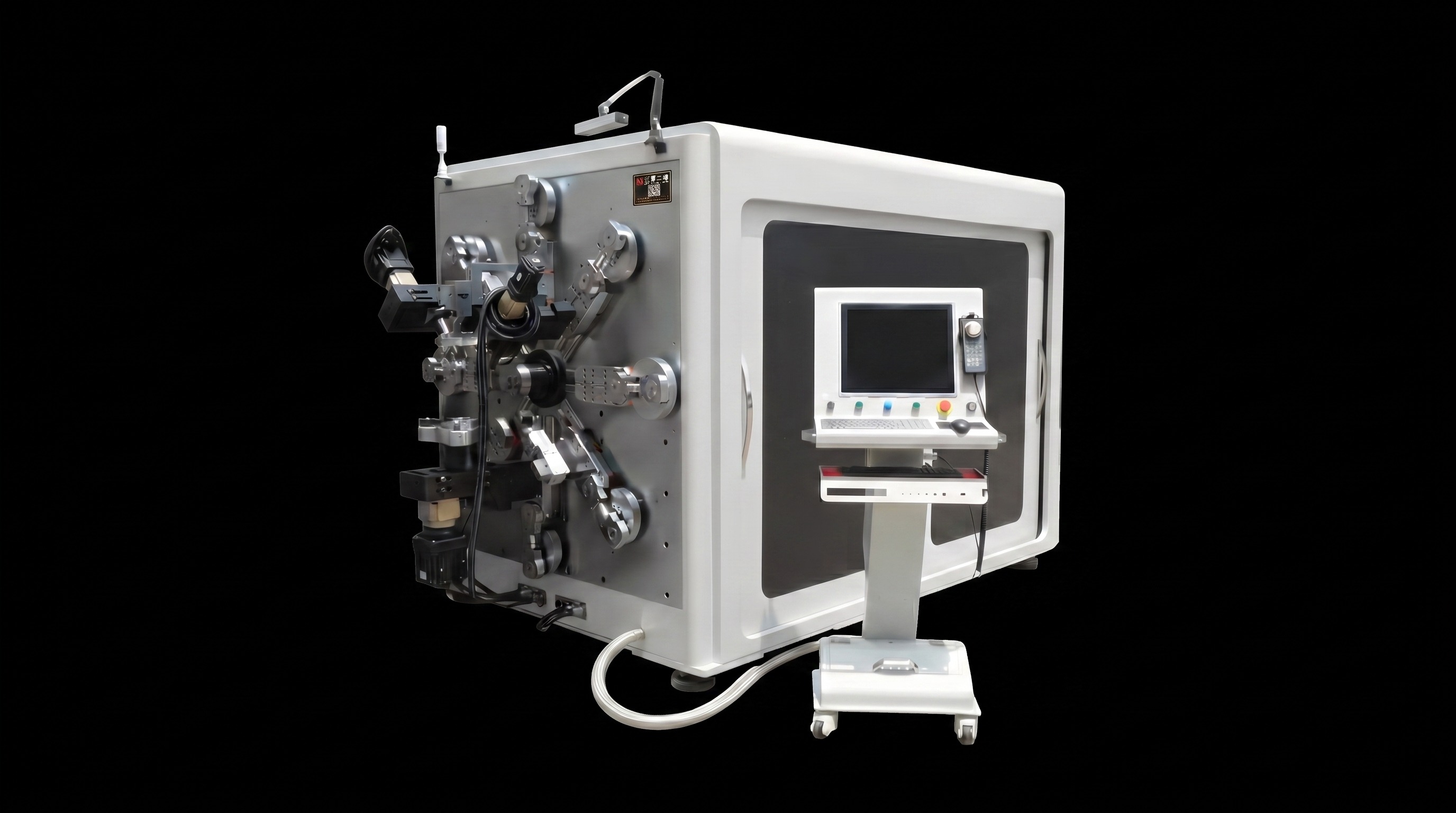
Tooling and changeover is the one that quietly caps your capacity. A machine can be fast in cycle and still lose the shift to changeover. What matters is whether the straightening unit and bending program store their settings per product, so a repeat job does not need recalibration. Graduated adjustment with saved debug data removes an entire class of downtime; without it, every product switch is a fresh set-up carried out by your most experienced person.
Three Configuration Tiers, and What Each One Is For
Rather than shopping by price band, it is more useful to shop by the job the machine has to do. Three tiers cover most real enquiries.
Tier 1 — Single-station bending
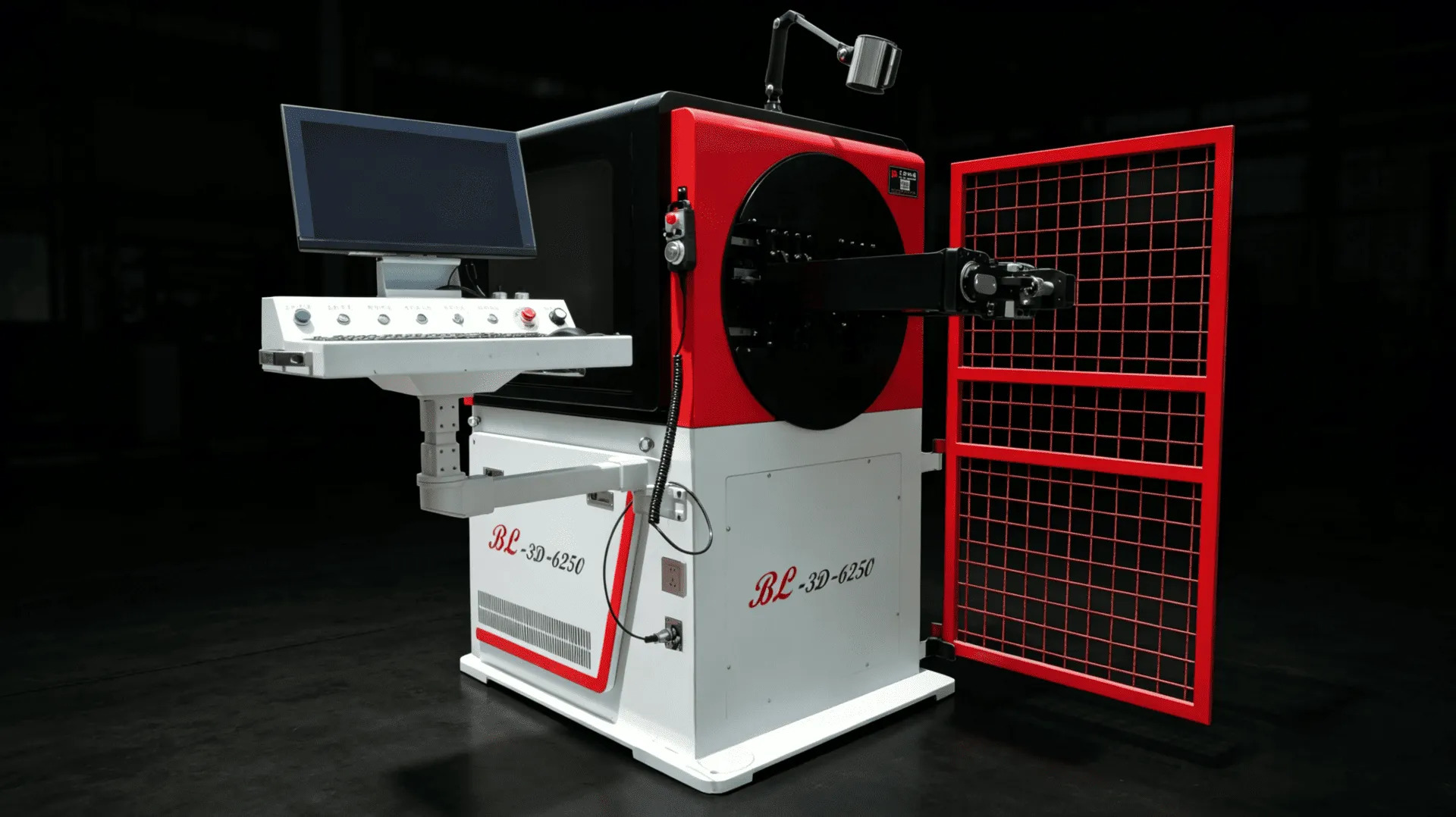
Around 12 axes with fixed feeding, bending and cutting at one station — the BL-TP-30-5E class. Bar arrives pre-cut or from a simple feeder.
Fits: a narrow product range, moderate batch sizes, geometries dominated by flat and vertical bends, and shops where an operator is already stationed at the machine.
Tier 2 — Multi-axis, coating-capable
13 axes and above, independent servo drives, track-type feeding, higher load capacity, saved set-up parameters per product.
Fits: mixed specifications, insulated or dip-coated bar, tight surface requirements, and frequent product changeover.
Tier 3 — Integrated forming line
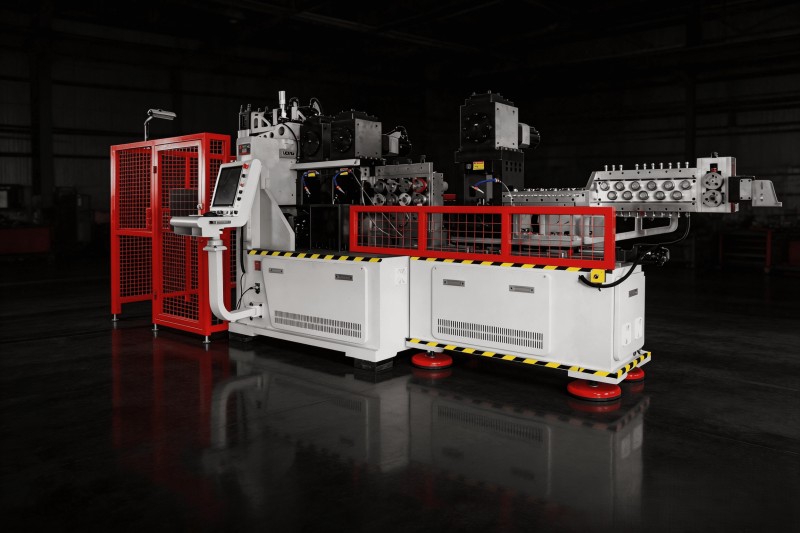
16-axis segmented bending — the TP-DL series — plus decoiling, straightening, servo cutting, inspection and automated unloading in one continuous process.
Fits: continuous high-volume production, unmanned running, and customers who audit traceability.
The jump from Tier 2 to Tier 3 is not a bigger version of the same machine. It is a change in what you are buying: instead of a bending machine that needs material prepared upstream, you are buying a process that takes coil in one end and finished parts out the other. On a fully automatic copper and aluminium busbar line, that means a powered decoiler handling coils in the 500–2,000 kg range, dense straightening roller groups correcting horizontal and vertical bend on both axes, full-coverage track feeding that protects a 2 mm insulating sleeve, a bending head capable of ±180° rotation for flat, vertical, U- and S-shaped forms, servo cutting holding length tolerance inside ±0.2 mm, and automatic discharge that can hand parts to a six-axis robot. Each of those stations is a line item, which is exactly why a Tier 3 quote cannot be compared against a Tier 1 total.
What the Machine Price Does Not Include
The purchase figure is the visible part of the cost. Four items sit outside it and decide what the machine costs you per year.
- Tooling over the life of the machine. The included set covers your first products. Every new geometry after that is a new tool, and the supplier's tooling pricing is worth asking about up front.
- Commissioning and training. Installation, first-part debugging and operator training are frequently quoted separately. Ask whether training is on-site and how many days are included.
- Debug scrap. Every new product consumes bar before it runs clean. On coated copper that material is not cheap, and a configuration that stores set-up data per product reduces it materially on repeat jobs.
- Certification and documentation. CE declaration, technical file and language-specific manuals carry cost. If you sell into the European market, this is not optional — it is the difference between a machine you can legally commission and one you cannot.
Add to this the cost of a wrong configuration, which is the largest hidden item of all. A machine bought at the wrong tier does not fail loudly; it underperforms quietly for years, either because it cannot make the parts you later win orders for, or because you paid for capacity you never use. This is the calculation worth doing before the purchase order, not after.
What Real Projects Show About Configuration Decisions
Configuration arguments are easier to settle with production evidence than with specification sheets. Two cases from BELAN's own deliveries illustrate how buyers actually evaluate this.

When 32 busbar bending machines were delivered across five production bases in Dongguan, Shenzhen, Xi'an, Zhengzhou and Changsha, the evaluation was never about the lowest machine price. Entering a new-energy Tier 1 supply chain requires technical reliability, long-term operational stability, mass delivery capability, a mature quality system and dependable after-sales support. The decisive question at that scale is whether the hundredth machine behaves like the first one — which pushes the specification toward stable, repeatable configurations rather than minimum viable ones. If you are buying more than one unit, or expect to, this is the axis that should dominate your decision: consistency across machines is worth more than capability in a single machine.
The second case is about repeat orders. When MANDO placed a second-unit order after competitive bidding, following deployment of the same automated aluminium bar solution on LEONI projects, the decision had moved past "can this machine process the part". What repeat buyers assess is whether the equipment integrates into the production system: continuous-run capacity, dimensional consistency, in-line quality inspection, part identification, automatic handling of defective parts, fast product changeover, and compatibility with existing quality management workflows. Those are precisely the items that sit in the upper half of the cost driver table — and they are also the items that never appear in a headline price.
The practical lesson from both: buyers who later expand their fleet consistently specify the feeding system, inspection and changeover design more carefully on the second machine than they did on the first. You can skip that learning curve by specifying them properly now.
Seven Questions That Make Quotes Comparable
Send this list with your enquiry. Suppliers who answer it precisely are usually the ones whose machines match their quotes.
- ☐ How many servo axes, and can the bending head rotate — and which of my geometries require the rotation?
- ☐ Which feeding structure is included, and what contact pressure does it put on my coating at my sleeve thickness?
- ☐ What is the decoiler load rating, and how many axes of straightening correction are built in?
- ☐ What length tolerance does the cutting unit hold over a full run, and is it servo-controlled?
- ☐ How many tooling sets are included, and do set-up parameters persist across product changeover?
- ☐ What inspection and traceability functions are included, and what do the optional ones cost?
- ☐ What exactly is excluded — installation, training days, tooling beyond the first set, and certification documentation?
Frequently Asked Questions
How much does a busbar bending machine cost?
There is no meaningful single figure, because the configuration range is too wide. A single-station machine and an integrated coil-to-finished-part line differ by several times in capability, not by a few percent. Rather than asking for a number, ask each supplier to price your seven configuration items separately — then the comparison tells you something.
Is a higher axis count always better?
No. Axes cost money and add control complexity. They pay for themselves only when your geometries need them — multi-plane forms, twisted sections, or parts you currently make in two handling steps. If your products are flat and vertical bends on a stable cross-section, paying for sixteen axes is paying for capability you will not use.
Why does coated busbar change the specification so much?
Because the coating is the part most easily damaged before the bend happens. Point-contact rollers press at discrete spots; a track feeder distributes contact. On PVC, PA12 or mica-wrapped bar, that difference shows up as coating cracks, inner-face bulging or parallel scratches along the feed path — defects that look like bending problems but originate upstream.
Should I buy a bending machine or a complete line?
It depends on where your material starts and where your parts need to go. If bar arrives pre-cut and your volumes are moderate, a single-station machine is the right investment. If you run coil, need unmanned operation, or your customer audits traceability per part, the line is usually cheaper per part over its life despite the higher initial figure.
What is the most common configuration mistake?
Specifying the bending head carefully and treating the feeding system as standard. Feeding design drives surface quality, slip behaviour and a large share of scrap on coated bar — and it is the hardest thing to retrofit later. It deserves as much attention in the enquiry as axis count.
Can I get an accurate quote from a drawing alone?
A drawing is a start, not an enquiry. To quote accurately, a supplier needs cross-section and temper, coating type and thickness, batch sizes, target parts per shift, and how often you change product. Without those, any number you receive is an assumption — and different suppliers will assume differently.
Send your bar specification, and get a configuration you can compare
Tell us your cross-section, coating, target output and changeover frequency. We will break the quote down by the seven drivers above, so you can set it against any other offer line by line. BELAN Machinery, a professional provider of automotive wire forming solutions.
Contact Belan for a Feasibility AssessmentRelated Resources
- Busbar Bending Machine — Types, Specs & Selection Guide
- How to Choose the Right Busbar Bending Machine for Copper and Aluminum Busbars
- Comparison of Three Feeding Structures: Track, Roller and Clamping Feed
- Inside a Fully Automatic Copper & Aluminum Busbar Forming Line
- What Drove MANDO's Second-Unit Order: A Repeat-Purchase Case