

Introduction
Ask a wire forming shop where its money goes and the answer usually starts with labor. In practice, the largest recoverable loss is often material — wire consumed by parts that never ship, plus the labor and machine time spent producing them. A setup that needs forty trial pieces before the first good part, a bend angle that drifts half a degree over a shift, a guide that marks the wire surface: each of these converts purchased material into scrap.
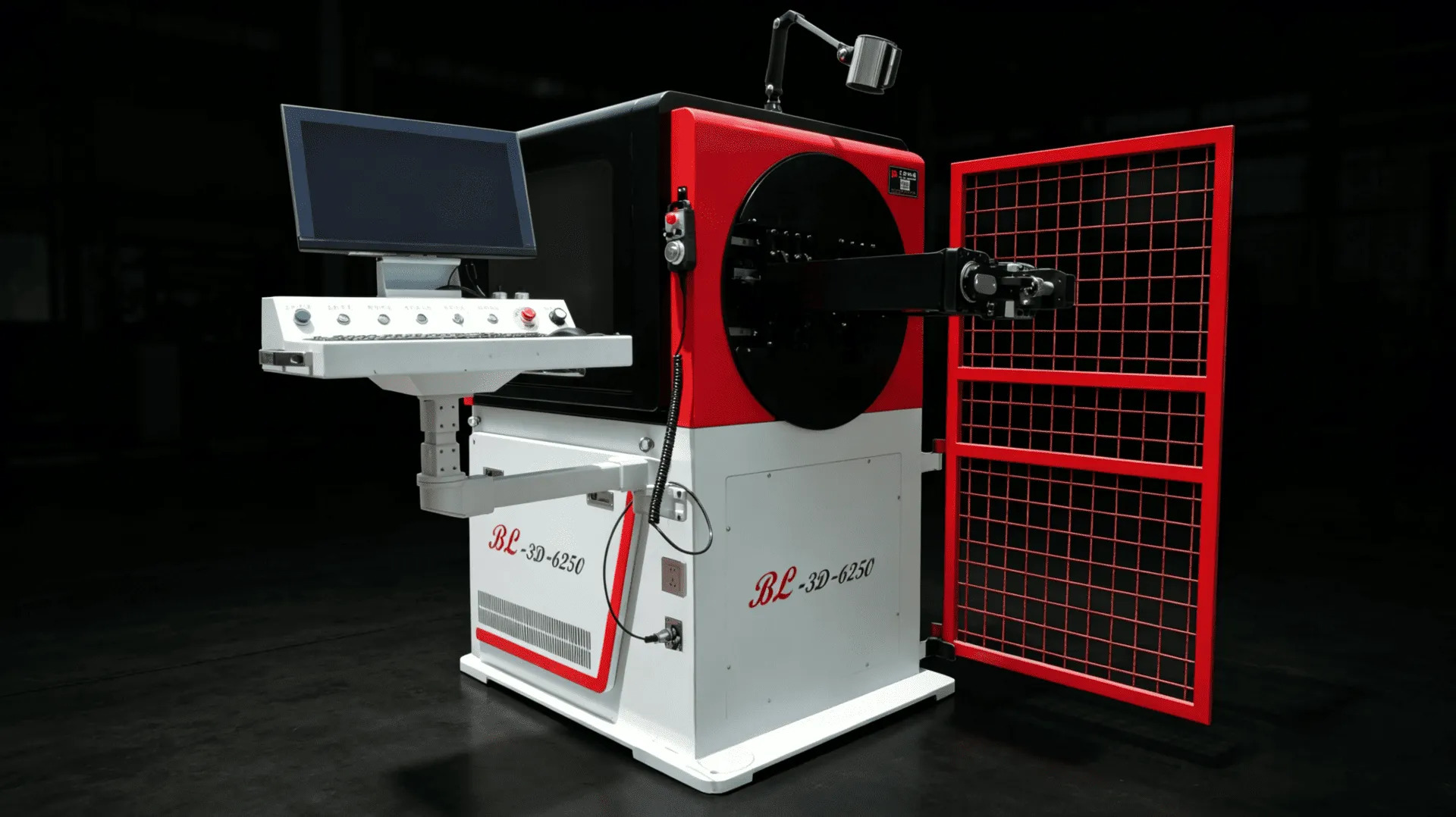
The reason this loss persists is that it rarely appears as a single line item. It is distributed across feed waste, rejected parts, reworked parts, and the trial pieces consumed at every changeover. Reducing it is therefore not a matter of buying "a better machine" but of identifying which mechanism is generating scrap and whether the equipment can remove it. This guide breaks down the real waste sources in wire bending, how a CNC wire bending machine addresses each one, and how to verify the improvement on your own parts before you buy.
Where Material Waste Actually Comes From
Most wire losses trace back to a small number of mechanisms, and each has a different remedy. Treating them as one problem is why so many improvement projects stall:
| Waste Source | Typical Root Cause | Production Consequence |
|---|---|---|
| Feeding error | Inconsistent feed length, straightening variation, slippage | Oversized cut lengths, trimmed-off waste, parts out of tolerance |
| Bend deviation | Angle or radius drift from springback and unstable forming | Rejected parts, manual corrections, rework loops |
| Material damage | Tool marks, flattening, surface scuffing at guides and dies | Cosmetic rejects, weakened sections, customer returns |
| Setup scrap | Trial forming at every changeover, unstable convergence | Fixed material loss per job, lost machine capacity |
| Tooling wear | Gradual geometry change on contact surfaces | Slow dimensional drift until parts fall outside limits |
| Manual adjustment | Operators compensating for an unstable process | Inconsistent output between shifts and operators |
The useful distinction is between losses that scale with volume and losses that occur once per job. Feed error and bend deviation multiply across every part produced, while setup scrap is a fixed quantity per changeover. Both matter, but the first grows faster as volume rises — which is why high-volume shops feel the pain of instability more acutely than they feel setup losses.
The Real Cost of Rework Is Bigger Than the Part
A reworked part carries more than the cost of the wire it used. It consumes additional machine time that was already scheduled for production, adds handling and inspection labor, and delays the parts behind it. It also carries a hidden cost that accounting rarely captures: reworked parts that pass inspection may still differ metallurgically from parts formed correctly the first time, particularly where the wire was bent, straightened, and bent again.
Rework is also a signal, not just a cost. When a shop reworks rather than scraps, it usually means the process could produce a good part but not reliably — the failure is repeatability, not capability. That distinction determines the remedy: capability problems need tooling and process redesign, repeatability problems need machine and parameter stability.
How CNC Stability Reduces Waste
CNC wire bending machines reduce material loss through three mechanisms rather than one. The first is stable feeding: servo-controlled feed and straightening systems deliver the same wire length and condition on every cycle, so the material entering the forming zone is consistent and cut lengths stop varying. Feeding stability also reduces the "trim allowance" shops add as insurance against short parts — allowance that is itself purchased material turned into scrap.
The second is repeatable positioning. When the axes return to the same positions cycle after cycle, the deformation pattern stays constant and parts converge on the drawing instead of scattering around it. A machine with high positioning repeatability removes the need for operators to chase tolerance with manual corrections — the correction loop that converts good material into rejected parts.
The third is process parameter management. Storing proven parameters per part, and locking them so they are not adjusted informally, means a validated setup produces a validated part on the next run rather than a new experiment. Standardized operation is one of the most direct waste reducers available, because it removes the variation that lives between shifts, operators, and re-runs. BELAN's own guidance on how to standardize wire bending machine operation covers this discipline in more detail.
Tooling, Wire Specification and Setup
Three inputs determine how much of the wire you buy ends up in shipped parts: tooling, wire specification, and setup discipline. They interact, and improving only one rarely produces the full benefit.
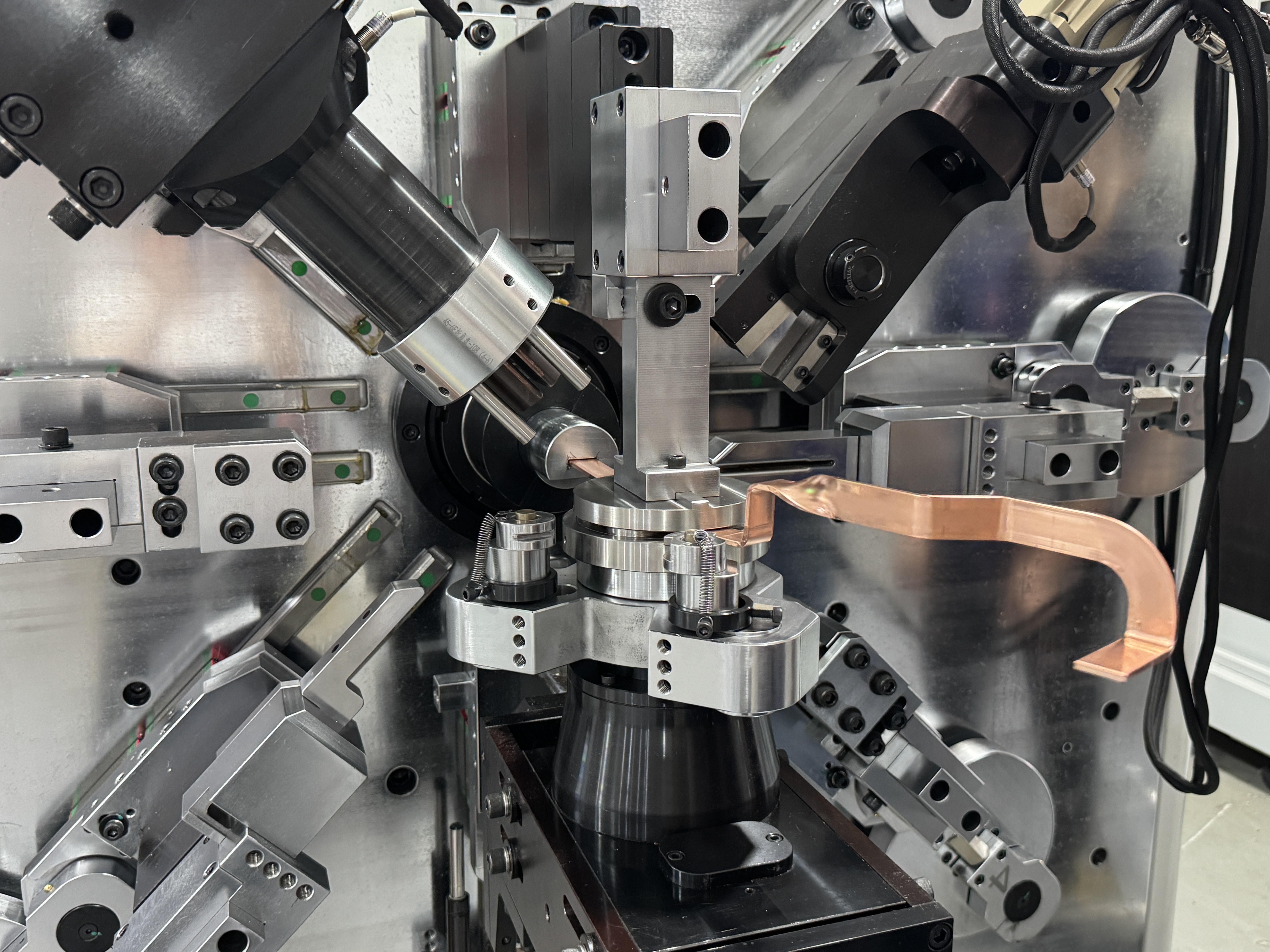
Tooling controls where the wire deforms and how it is supported. A radius matched to the material and its springback produces the target geometry with less trial iteration; well-distributed contact and correct clearance prevent the marks and section flattening that turn otherwise acceptable parts into rejects. Where a part's geometry exceeds standard tooling, purpose-designed tooling is often what ends the cycle of rework — this is the case for customized solutions rather than a different standard tool set.
Wire specification is the input buyers most often overlook. Coil-to-coil variation in diameter, temper, and surface condition changes how the wire forms even when the program does not change. Specifying wire tightly, and verifying incoming lots, reduces the amount of the process that has to absorb material variability. A machine that holds tight repeatability on consistent wire will still produce scatter on inconsistent wire.
Setup discipline ties the three together. Tooling that is located and referenced repeatably, programs that store proven parameters, and a documented trial sequence shorten the path from changeover to first good part — and every trial piece eliminated is material recovered.
Why Setup Scrap Is the Most Underrated Loss
Setup scrap is easy to ignore because it happens in small amounts, one job at a time. Its scale becomes visible once it is multiplied out: trial pieces per changeover × changeovers per month × the wire consumed by each. A shop running frequent, small batches can lose more material to setup than to all rejection combined.
Reducing it is a matter of shortening the convergence path. Tooling that returns to the same position, a machine that reproduces the previous run's conditions, and a parameter library that starts each job from a proven point all compress trial forming from dozens of parts to a handful. Complex multi-bend parts benefit most, because they converge slowly when every changeover begins from scratch.
What to Measure Before and After
Improvement claims are only meaningful against measurement, and the measurement has to come from your own production. Five figures are enough to establish a baseline and detect real change:
- Material utilization — wire consumed versus wire shipped, expressed as a percentage per job
- First-pass yield — the share of parts that pass inspection without rework or adjustment
- Parts consumed per changeover — including trial pieces, the clearest single indicator of setup efficiency
- Scrap by cause — splitting losses between feeding, bending, surface damage, and setup rather than reporting a single number
- Rework hours — labor spent correcting parts that the process should have produced correctly
Measuring for a defined period before any equipment decision gives you both a cost baseline and the evidence needed to judge whether a machine actually delivers the improvement it promises.
Using Sample Testing to Evaluate Real Performance
Specification sheets describe capability; trial forming describes performance on your parts. A sample test is the only practical way to see how a machine behaves with your wire, your geometry, and your tolerances — and it converts an abstract purchase decision into measured evidence. When BELAN evaluates a project, the starting point is always the industrial wire forming solution requirement: drawings, wire specification, tolerances, and production volume, followed by trial forming on candidate platforms.
To get useful information from a trial, ask for specific figures rather than a demonstration: how many pieces were consumed before the first part met the drawing, how much dimensional variation appeared across a continuous run, whether the wire surface was affected, and how the process responded when a parameter was changed. These answers tell you how the machine will behave in your shop, where setup scrap and drift are ongoing costs rather than a one-hour sample.
What to Confirm with the Machine Builder
Before committing, obtain explicit answers on the points that determine long-term material cost:
- Feed accuracy and repeatability figures, and how they are verified on the machine delivered to you
- Positioning repeatability of the bending axes, expressed as a value rather than a description
- Whether proven parameters can be stored and locked per part, and how they are protected from informal adjustment
- Tooling design criteria for your material and diameter, including how changeover positioning is referenced
- Expected trial pieces per changeover on your part family, based on trial forming rather than estimation
- Which tolerances are achievable on the first pass and which will require process development
- Support available during commissioning, when scrap is highest because the process is new
A supplier who answers these with figures and a trial plan is describing a process. One who answers with adjectives is describing a machine — and machinery alone does not reduce waste.
Material Waste Reduction Checklist
- ☐ Measure current material utilization per job as a baseline
- ☐ Record first-pass yield and rework hours for a defined period
- ☐ Count trial pieces consumed per changeover
- ☐ Classify scrap by cause: feeding, bending, surface, setup
- ☐ Verify incoming wire diameter, temper and surface consistency
- ☐ Review trim allowances added as insurance against short parts
- ☐ Check tool radius and clearance against material and diameter
- ☐ Document tooling positioning so setups repeat exactly
- ☐ Store and lock proven parameters for every production part
- ☐ Include trial forming with your own wire in the evaluation
- ☐ Validate repeatability across a continuous run, not a single part
- ☐ Re-measure the same five figures after commissioning
Conclusion
Material waste in wire bending is rarely caused by one dramatic failure; it accumulates through feeding variation, bend drift, surface damage, and the trial pieces consumed at every changeover. A CNC wire bending machine addresses these losses through stable feeding, repeatable positioning, and disciplined parameter management — supported by tooling matched to the material and by wire supplied to a consistent specification. The way to know whether that improvement will actually materialize in your shop is to measure a baseline, test with your own wire and drawings, and ask the builder for figures rather than assurances. Waste reduction becomes a purchasing decision only after it has been turned into numbers.
Frequently Asked Questions
1. How much material can a CNC wire bending machine actually save?
There is no universal figure — it depends on your starting point. Shops replacing manual or poorly controlled forming often recover the largest share through setup scrap and rejection reduction. Shops already running stable CNC equipment see smaller gains, mainly from tooling refinement and parameter control. Measure your own baseline first; that is the only number your savings can be compared against.
2. Which waste source should be tackled first?
Start with whichever is largest in your own data, but check setup scrap early. It is usually the easiest to quantify and the fastest to reduce, and improvements there require no new equipment — only repeatable tooling positioning and stored parameters.
3. Does wire quality affect scrap as much as the machine?
It can. Variation in diameter, temper, and surface condition changes how the wire deforms, so even a highly repeatable machine produces scatter when the input varies. Tightening the wire specification and verifying incoming lots is often cheaper than compensating for inconsistent material in the forming process.
4. Can tooling changes reduce waste without buying a new machine?
Frequently yes. If the tool radius is mismatched to the material's springback, or clearance and support are incorrect, the process will keep producing rework regardless of machine quality. Tooling and setup improvements are usually the lowest-cost route to recovering material utilization.
5. What is a realistic target for trial pieces at changeover?
It depends on part complexity. Simple parts on a well-documented process should converge in only a few pieces; complex multi-plane parts need more. The meaningful comparison is not an industry benchmark but your own current count versus the count after improvements — measured on the same part family.
6. How should sample testing be structured to be useful?
Supply your own wire and drawings, ask for trial forming on the actual part, and request measured results: pieces consumed before the first good part, dimensional variation over a continuous run, and surface condition. A test using demonstration material and a sample part tells you much less than one using your production inputs.
7. Does lower waste always justify a new machine?
Not always. Where the loss is concentrated in setup and tooling, process improvements may recover most of it at low cost. A new machine is justified when instability and rejection scale with volume, when part complexity exceeds the current platform's capability, or when the measured savings over your production horizon exceed the investment.
Want to Know Where Your Wire Material Is Going?
BELAN Machinery, a professional provider of automotive wire forming solutions. Send us your part drawings, wire specifications, current rejection data, and production volume. Our engineering team will evaluate your forming requirements and recommend a configuration aimed at reducing waste and rework in your production.
Contact Belan for a Feasibility AssessmentRelated Resources
- CNC Wire Bending Machines — Multi-axis forming platforms built for repeatable, parameter-controlled production.
- Standardizing Wire Bending Machine Operation — How documented operation stabilizes precision and reduces production downtime.
- Customized Solutions — Purpose-designed tooling and machine configurations for demanding part geometry.
- What to Check Before Shipment — Verification points that prevent avoidable losses after delivery.
- How to Choose a CNC Wire Bending Machine — Selection framework covering capacity, accuracy and automation requirements.