

The question I hear most from wiper arm plant owners is not about accuracy or lead time. It is a very practical one: can I afford to take small orders at all? My answer starts with a counter-question: when you switch variants, how long is it from the last good part to the first good part of the next run? Eight out of ten owners cannot answer. They just say it "takes half a day, give or take." If you cannot put a number on it, changeover has never been managed as a process in your plant — and that, not cycle time, is why small orders feel dangerous. A fast wiper arm bending machine cannot save those hours. This article accounts for them.

Where the hours actually go
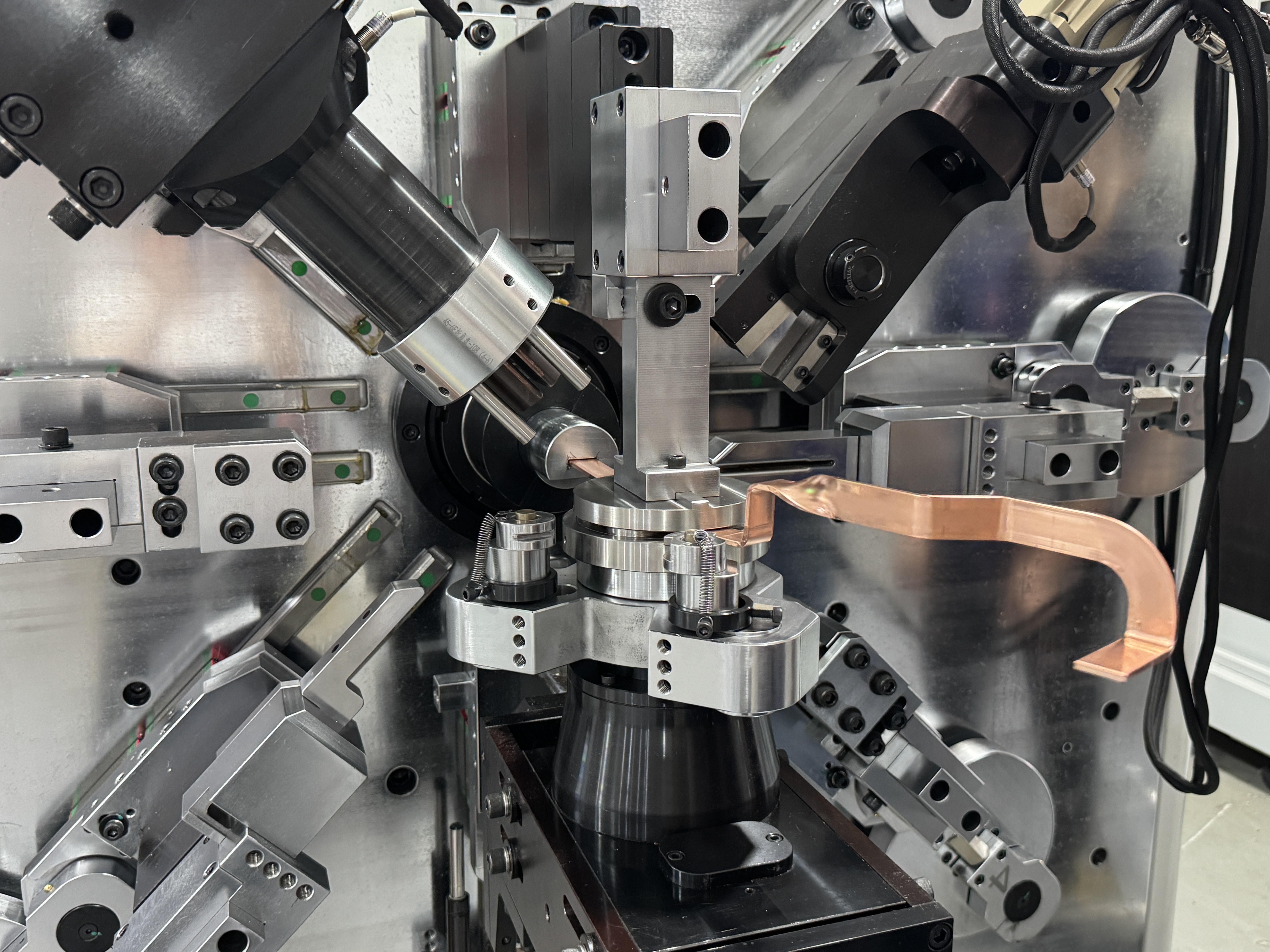
Most people assume a changeover means swapping dies. Stand on the shop floor through one and you will see that die removal is the short part. On a multi-axis wiper arm bending machine, punching, cut-off, bending and straightening each run their own station, so a changeover moves a whole chain, not one tool. Four activities eat the window, and three of them routinely go uncounted:
| Changeover activity | Machine stopped? | If it is skipped |
|---|---|---|
| Press die and cut-off die change | Yes | Hole positions drift; first article fails |
| Program recall and a dry-run check | Yes | Last variant's program gets edited on the fly; a wrong bend order slips through |
| Straightening index reset | Yes, when material changes | Wire runs crooked and every bend angle drifts after it |
| Five-item first article check | Yes | A whole batch runs on an unproven setup |

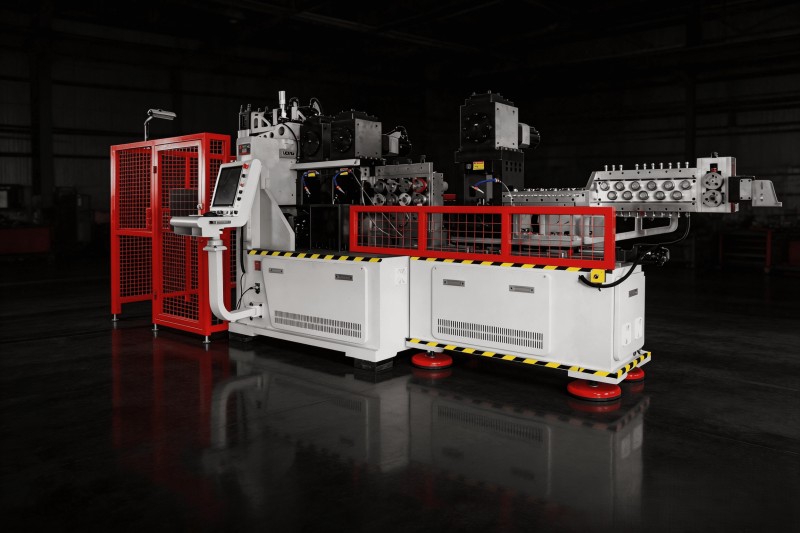
One distinction that saves arguments later: the twin-end payoff carries 1000kg per side, so the next coil can be staged while the machine still runs. Coil staging is not changeover time. Do not let the two numbers get merged into one report.
Three habits that make every changeover slower
Habit one: the parameters live in one operator's head. Which straightening notch, whether the die needed a shim, how much this batch springs back — all in one person's memory. He takes a week off and the changeover doubles. That is not an operator problem. That is a record-keeping problem.
Habit two: counting only the die swap. Ask a supplier how long a wiper arm machine changeover takes and you will get three different clocks: some start at die removal, some stop after program recall, some quietly exclude the first article. Different definitions, incomparable numbers. My definition: everything from stop to first good part is changeover. Hold suppliers to that definition and a lot of "ten-minute changeover" claims collapse on their own.
Habit three: measuring only the first three items. Total length, bend position and angle, hole position — checked and released. Cut edge burrs and surface marks surface later, inside the batch. Reworking a batch costs far more than the two extra minutes at first article.
One record card turns changeover from touch into routine
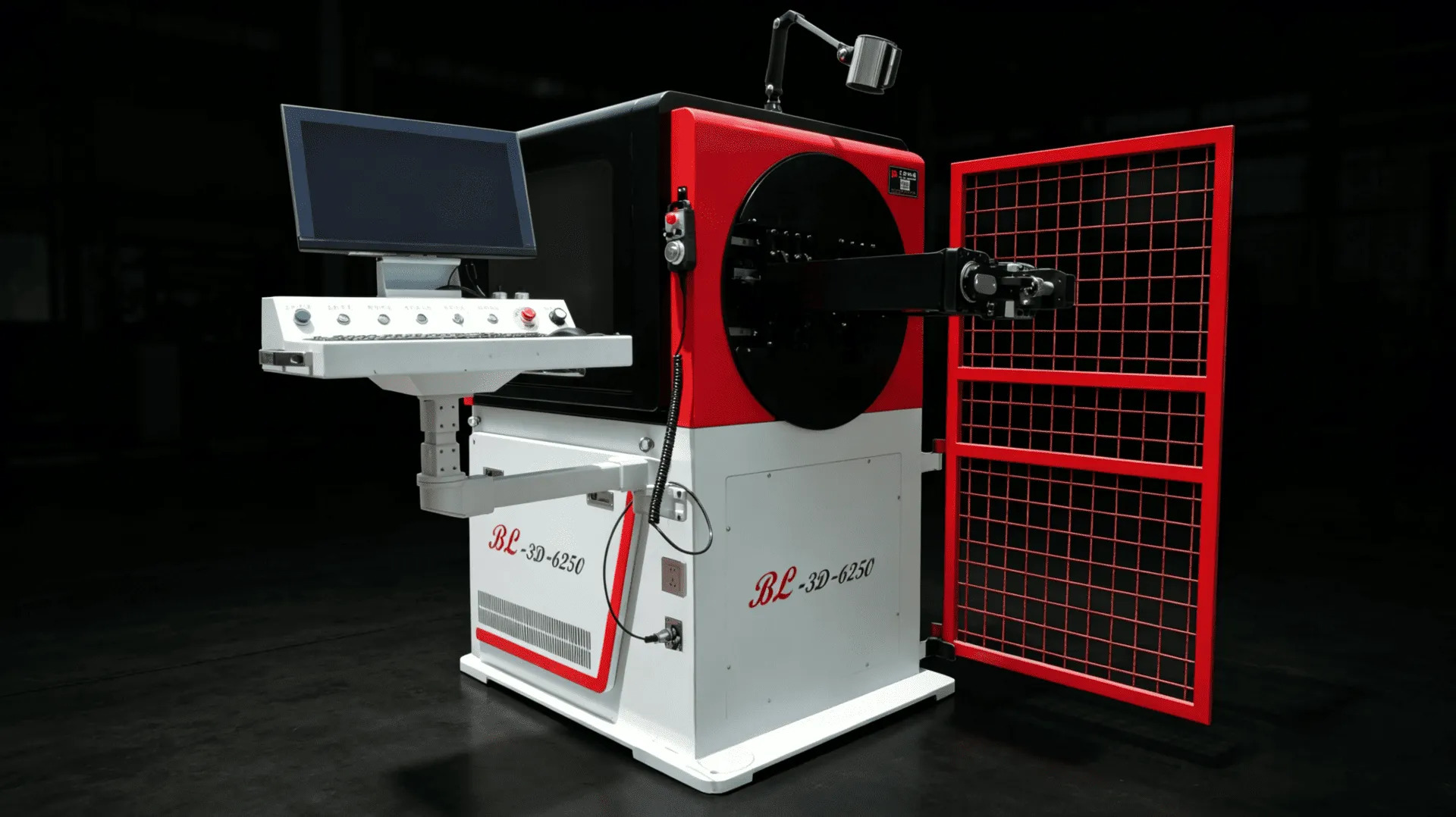
Four lines, written down every time, and a changeover becomes a checklist instead of a craft: variant code to program number; die numbers and their lock positions, noted during every press die changeover; straightening index per material spec — one line for 4×9mm, one for 4×12mm; and the five first-article measurements. On the wiper arm bending machine (BL-YG-12A) the machine side of this card is already built in: the dies sit on locating locks and return to a defined position instead of being re-aligned by feel, and the straightening rolls carry index markings that read straight back. The machine leaves room for records; whether the card gets filled in is a shop-floor habit. Fill it during the trial run — every sample ships with a five-item data record — and production changeovers become pure execution.
Three questions to ask before you sign anything
Where does your wiper arm bending machine changeover window start? At machine stop, or at die removal? If they cannot answer this one cleanly, do not trust the numbers behind it. How do the program and straightening values reach us at delivery? Stored in the controller is not enough — they have to arrive in your plant, on paper or file, in a form your team can use. Who defines and signs off the first article? Vague acceptance criteria mean the supplier grades his own homework. Ask these three and most of what a quotation hides will show itself.
Frequently Asked Questions
How long does a wiper arm bending machine changeover take?
It depends on two things: how far apart your variants are, and how complete your records are. Anyone who quotes one universal number is planning to win those minutes back at the first-article stage.
Can one machine run multiple wiper arm variants?
Yes — a wiper arm bending machine built on twelve axes is designed for exactly that, with one program stored per variant and recalled by code. The machine is not the bottleneck. The records are.
Do we really need all five first-article checks every time?
Yes. The first three are measured against the drawing; the cut edge and the surface are inspected by eye. Five items take a few minutes. Any one of them, skipped, will collect its debt from the batch.
Send us your variant list, and we will run the numbers with you
Send over your variant count, the drawing of each one and the material specs, and we will lay the changeover out against your real mix: which steps run in parallel, which ones need the machine stopped, and which four lines belong on your record card. Choose a wiper arm bending machine by costing changeover capability together with cycle time — once this account is clear, whether small orders are worth taking is a decision you can make yourself. BELAN Machinery, your expert provider of automotive wire forming solutions.
Related Resources
Wiper Arm Bending Machine: Why Holes Come Before Bends — how the operation sequence is decided.
Wiper Linkage Bending Machine: From Drawing to First Sample — how trial-run records carry into production.