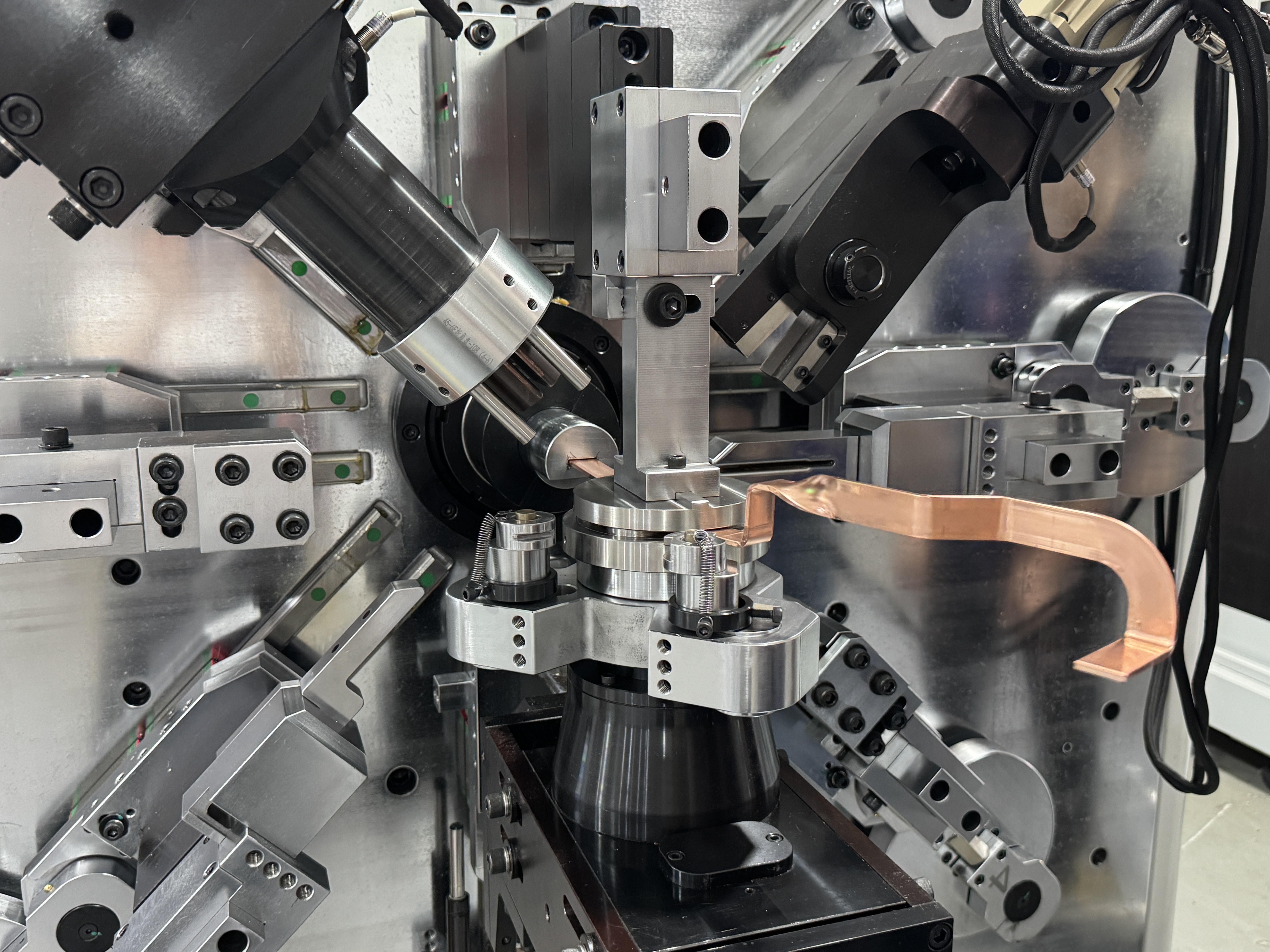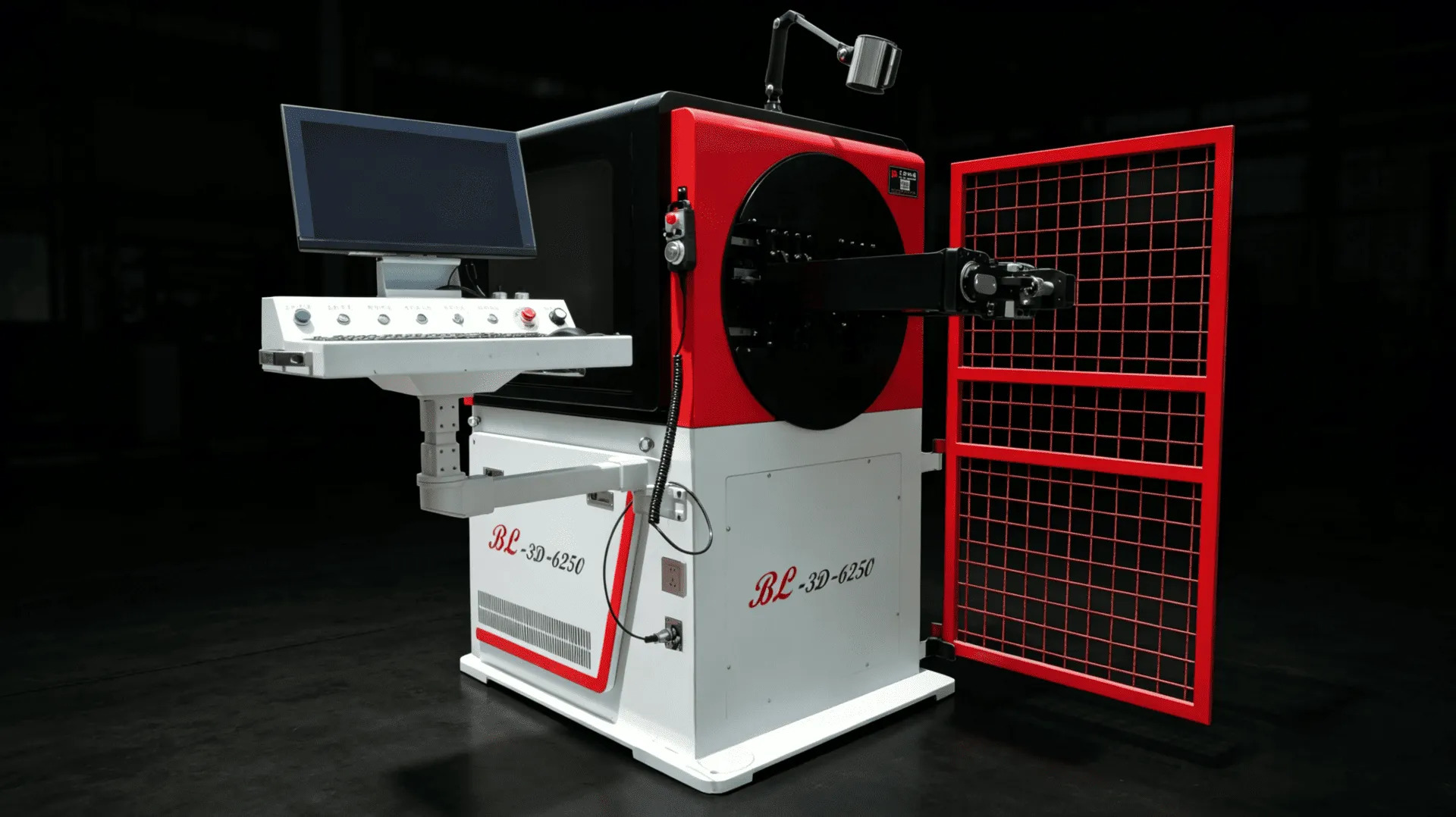

The thing that stops a coil-fed line is rarely the machine itself. It is the moment a coil runs out mid-shift: the crane gets called, the line waits, and the straightener gets re-tuned before anything bends again. When buyers compare machines, they count axes and stroke. Very few ask the question that actually decides shift output: how does the coil supply keep up? On a wiper arm forming machine, the answer starts at the payoff, not at the bending head.
How the dual-head payoff buys back your shift
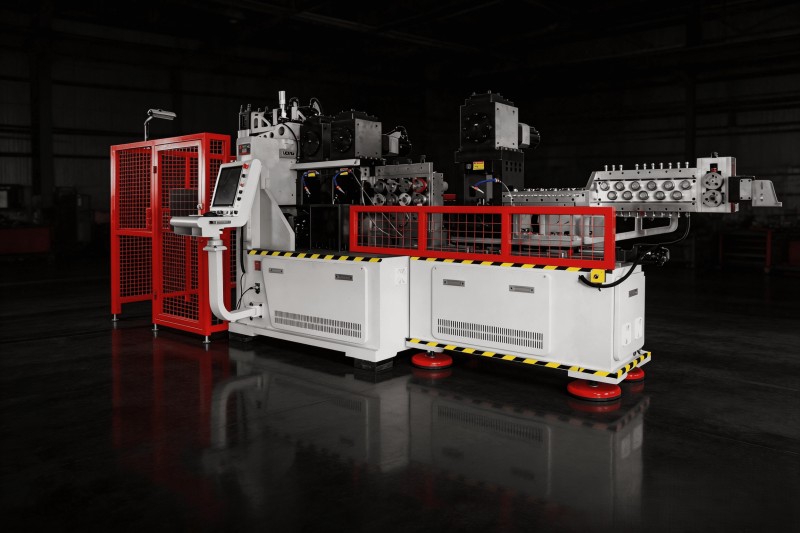
The dual-head payoff on this machine carries 1,000 kg per side. The logic is plain: while one head feeds the line, the other sits idle, so the operator uses that production time to stage the next coil — lift it into place, seat it, leave it on standby. When the tail of the current coil arrives, the operator switches to the staged head, and threading becomes the only downtime. What you save is not the lifting itself but the stop-and-wait. The minutes saved at every coil change add up over a year, and they come from a configuration you were buying anyway. That is what a dual coil payoff on a wiper arm forming machine is really for: time margin, not decoration.

Single-operator loading: what the assist feeder does, and what it does not
The assist feeder solves threading. After a coil is staged, flat wire is drawn off the reel and guided to the straightener by the assist mechanism, so one person completes the loading — no second operator holding the wire at the far end. Still, honesty matters more than brochure language on a wiper arm forming machine: a dual-head payoff is not automatic splicing. The tail of one coil and the head of the next do not join themselves, and moving heavy coils from the warehouse onto the payoff still needs an overhead crane or forklift. A supplier who only says “two people become one” without mentioning the lifting requirement is telling you half the story. Before you plan your crew, walk through this checklist:
| Task | Who | What matters |
|---|---|---|
| Shift-start staging | Operator | Check both heads; stage the next coil |
| Mid-shift staging | Operator | Use current-coil run time to prepare the other head |
| Coil change | Operator | Switch to the staged head; downtime shrinks to threading |
| Heavy coil loading | Operator + crane | Overhead crane or forklift; dual head does not replace lifting |
| Threading and straightening | Operator | Assist feeder guides wire; restore settings from the dial record |
Straightener dials: the fastest recovery after a coil change
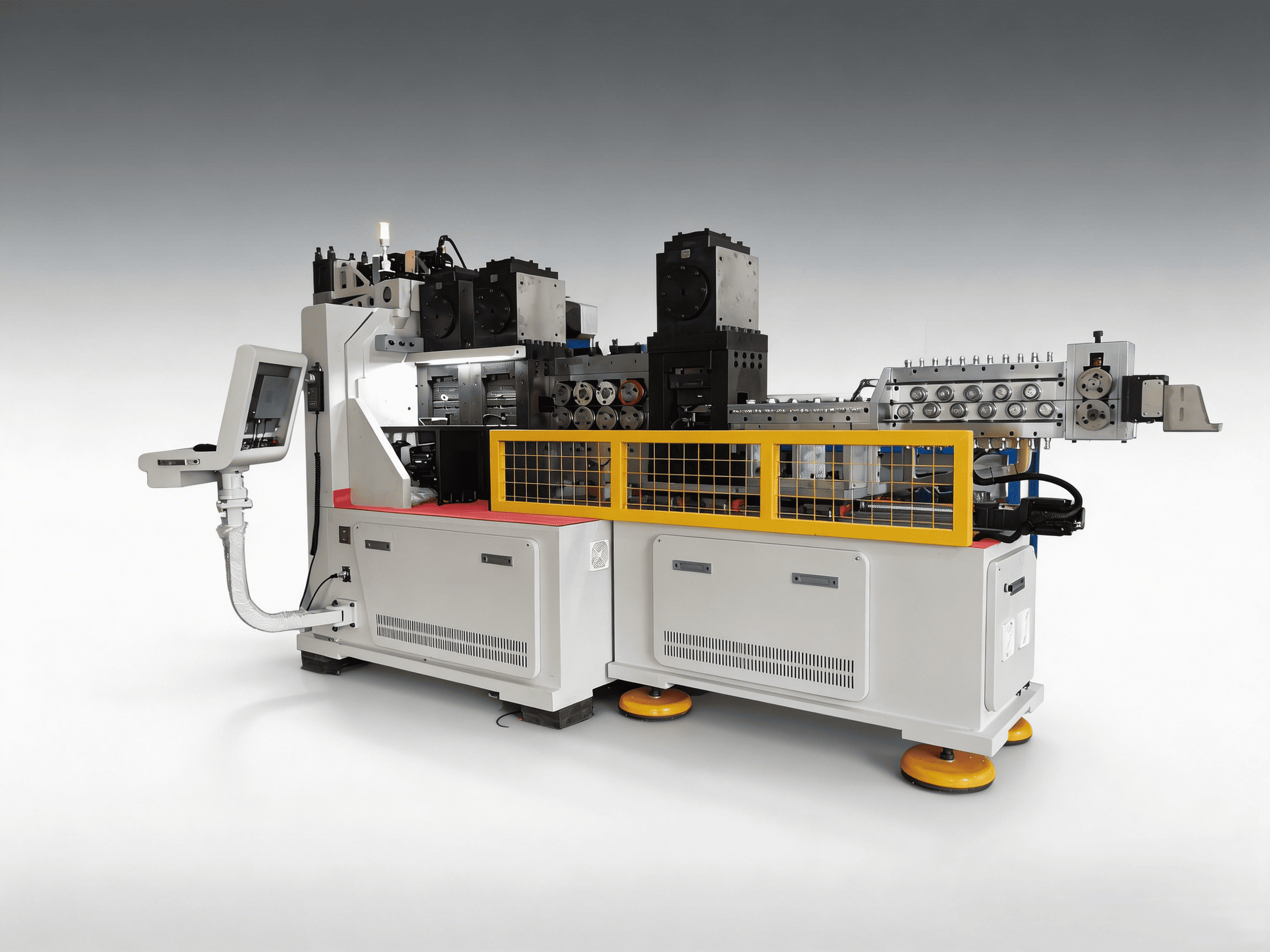
The BL-YG-12A runs 4×9 mm and 4×12 mm flat wire. If every new coil means re-tuning the straightener from scratch, you lose the time the payoff just saved you. On this machine the straightening dial settings can be recorded — which notch for 4×9, which for 4×12 — so after a coil change the operator restores the recorded setting and the first article passes on the first try. Full specifications are on the BL-YG-12A product page, but this workshop detail — what a wiper arm forming machine lets you record and reuse — decides coil-change efficiency more than anything on the spec sheet.

Four questions to ask any supplier
Bring this list to the next conversation about a wiper arm forming machine:
- What is the per-side payoff capacity? Does it cover your heaviest coil? (Here: 1,000 kg per side.)
- Does loading include an assist feeder? Does threading need two people?
- How are heavy coils loaded? Is automatic splicing included? (Here: not included — stated plainly.)
- Can straightener settings be recorded and reused per wire size?
Frequently Asked Questions
Can one operator really run the line alone?
Shift-start staging and coil changes can be handled by one person; heavy coil loading needs crane support. Whether “one person, one line” works depends on your coil weight, warehouse layout and shift plan — not on a single number on the nameplate.
How much coil weight can each payoff head hold?
1,000 kg per side. If your coils run close to that limit, confirm the reel structure with the supplier before ordering.
Can the coil tail and the new coil head splice automatically?
No. The dual head moves coil preparation into production time; joining the tails is still manual.
Send Us Your Wiper Arm Drawings
Does your shop run one operator per line or two? How heavy are your coils, and how wide? Send us the arm drawings and the wire spec, and we will work out the feeding cycle of your wiper arm production line against your shift plan — then talk configuration: payoff class, dual head or not, and how to build your straightening record. The right wiper arm forming machine is the one that keeps the coil side as disciplined as the bending side. BELAN Machinery, your expert provider of automotive wire forming solutions.