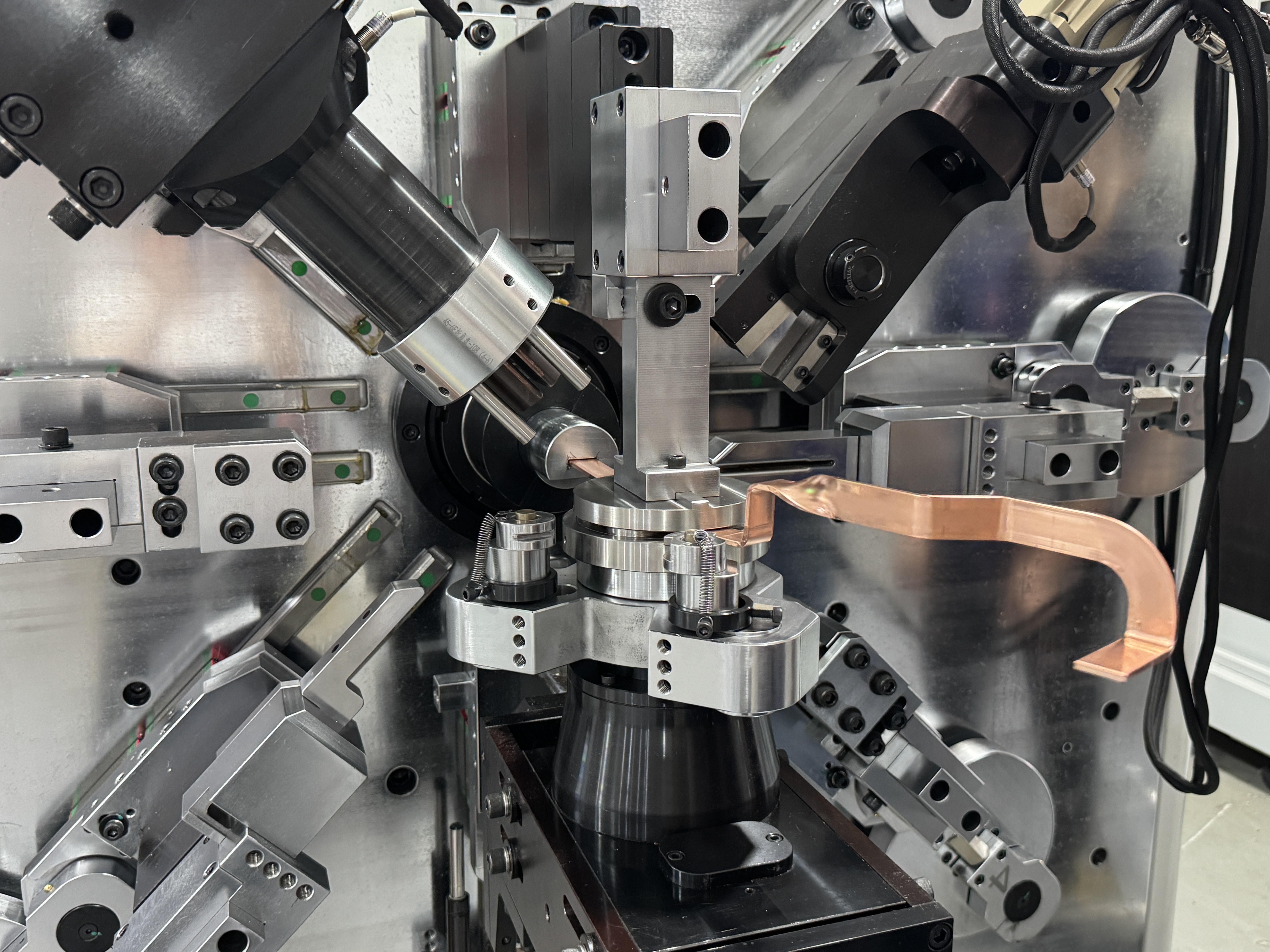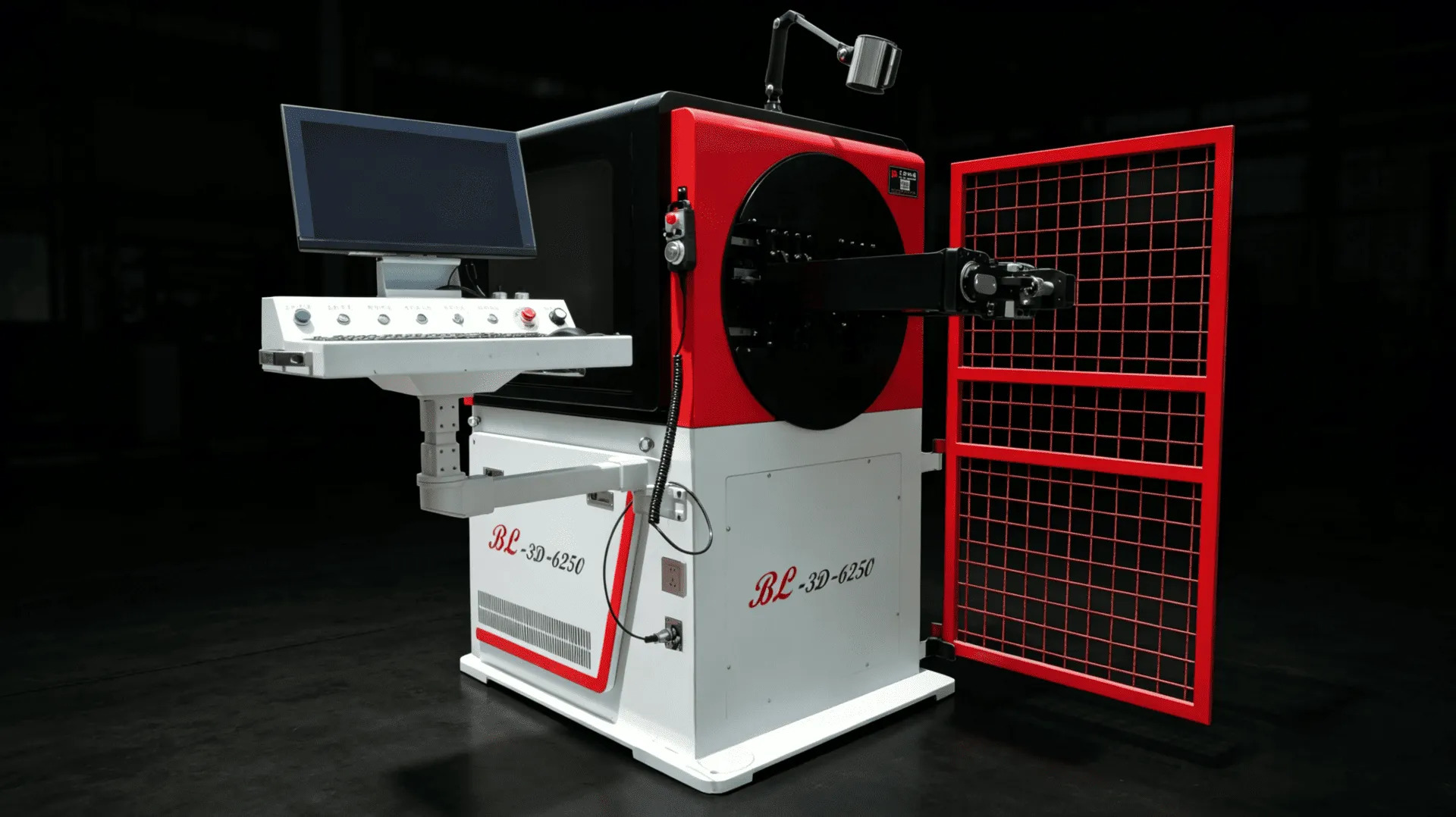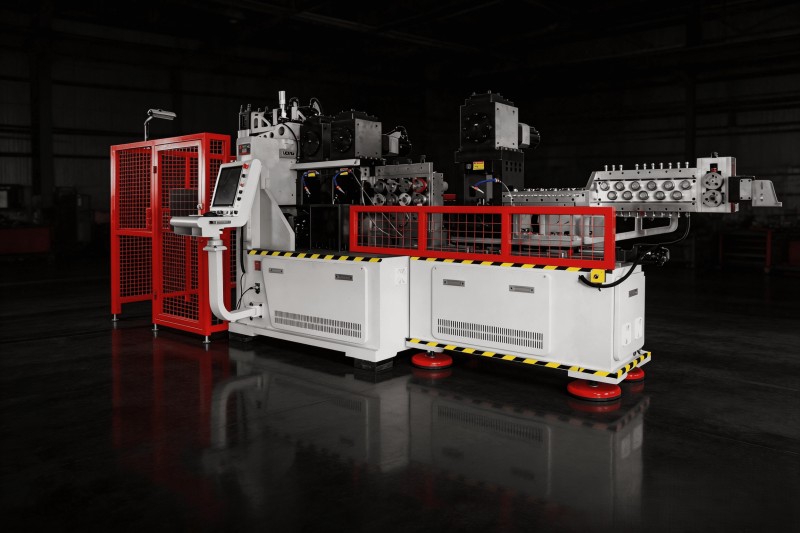


A buyer sends out one drawing and gets back two quotes: a plane bender at one price, a rotary-head machine at another. Signing the wrong one is the most common — and most expensive — decision in wire forming. The answer is already on the drawing: read it the right way and the choice between 2D and a 3D wire bending machine makes itself.
What "3D" Actually Means on a Wire Bending Machine
Suppliers use "3D" loosely, but structurally only one question matters: during bending, does the head rotate around the wire, or does the wire turn? A plane bender forms every bend inside a single flat plane. What the trade calls a 3D wire bending machine is more precisely a rotary-head, stationary-wire design: the wire feeds straight, and the bending head swings around it to place bends in different planes. Ask a supplier that question directly — "can your head change planes around the wire?" — and the marketing fog clears fast.
Three Things on the Drawing That Force a Rotary Head
Where the bends sit. Mark every bend and ask: same plane, or not? Open parts — hooks, clips, shelf hooks — keep all bends in one plane, and a 2D machine handles them well. The moment two bends leave the same plane, you need a head that changes planes. No amount of clever fixturing gets around it.
Twist and spiral callouts. Any twist section, helix, or "rotate X degrees about the wire axis, then bend" note puts the part firmly in 3D territory. Twist is not "more bends" — it is the bend plane itself rotating, which a 2D mechanism cannot do by principle.
Bend-to-bend distance. The most overlooked check. Close bends raise collision risk between the bending head, the clamp, and the formed section. Spatial parts with tight spacing turn forming space into a hard constraint — declare the spacing dimensions at RFQ and make the supplier confirm the forming envelope, not just the wire range.
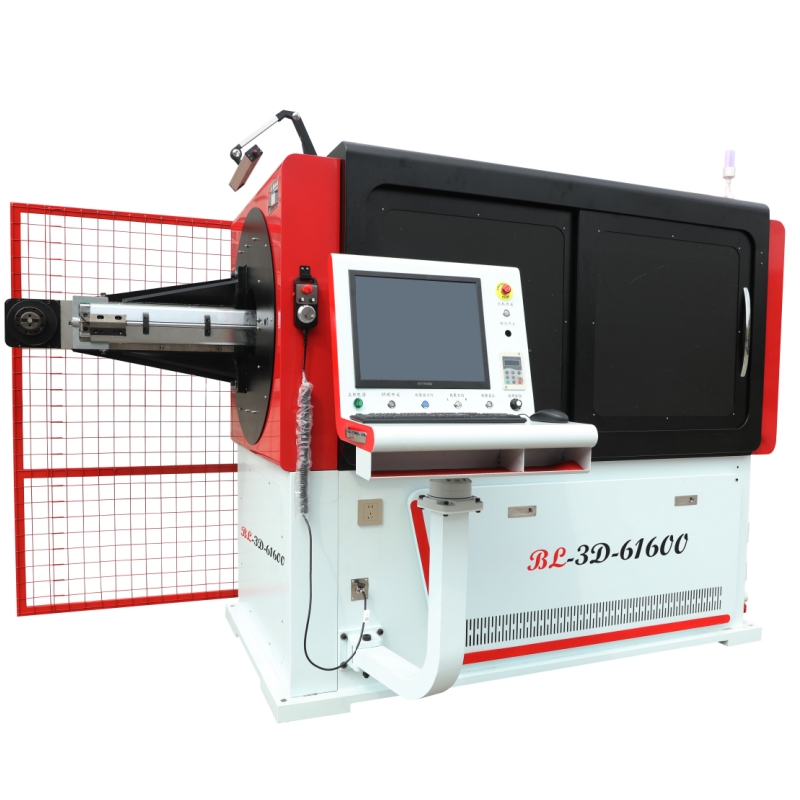
One Internal Rotary Axis: Where 51600 and 61600 Split
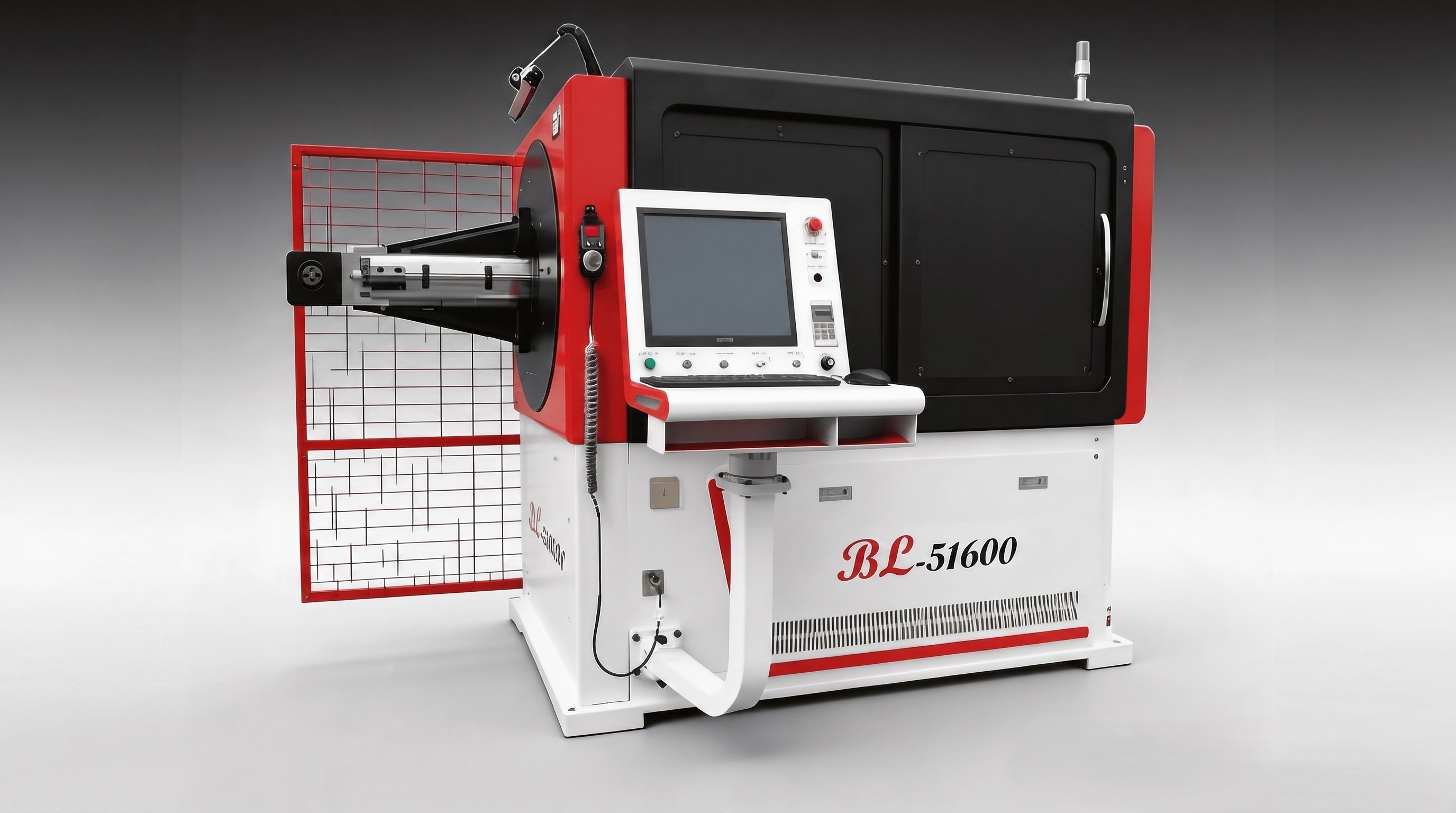
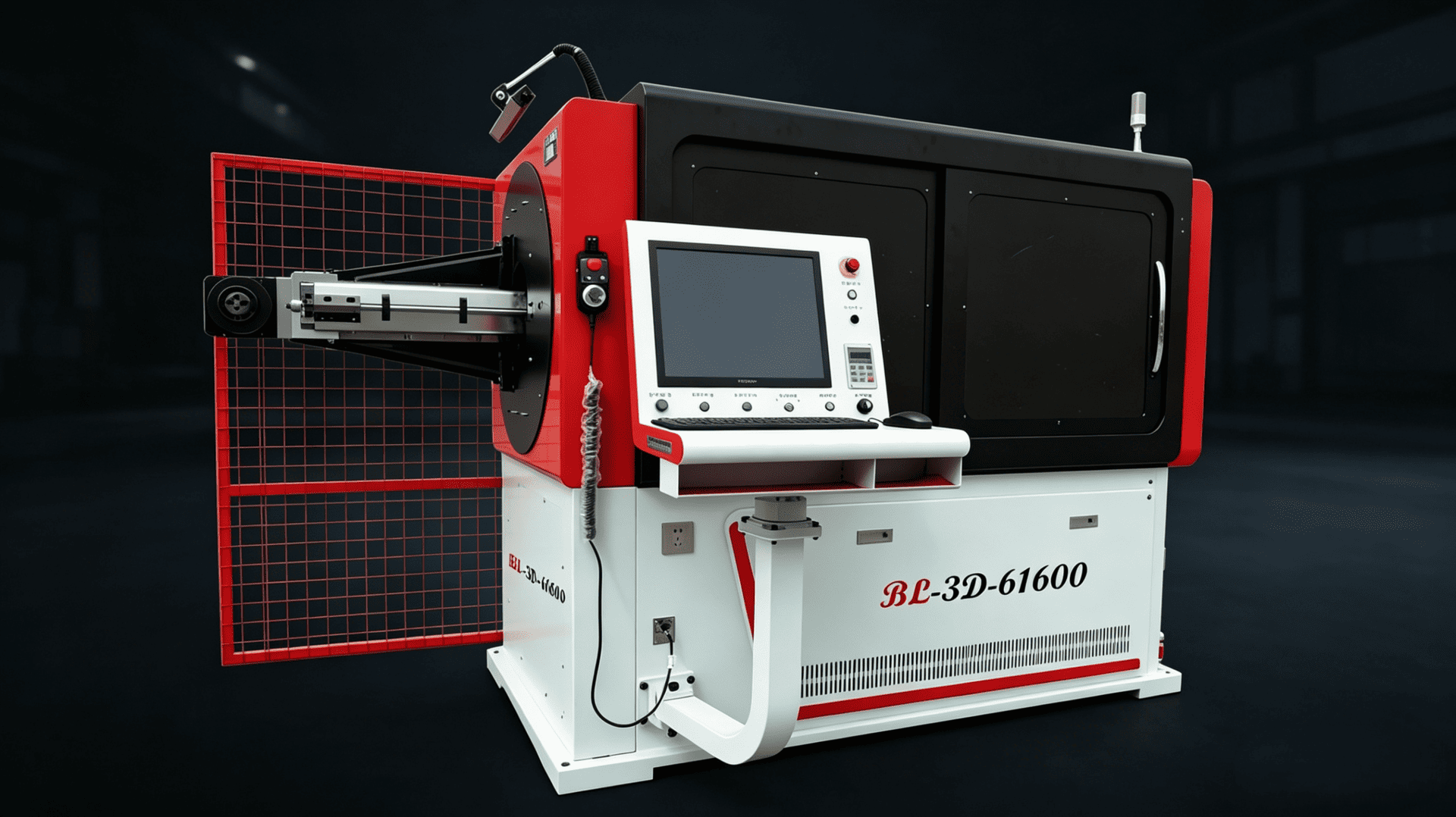
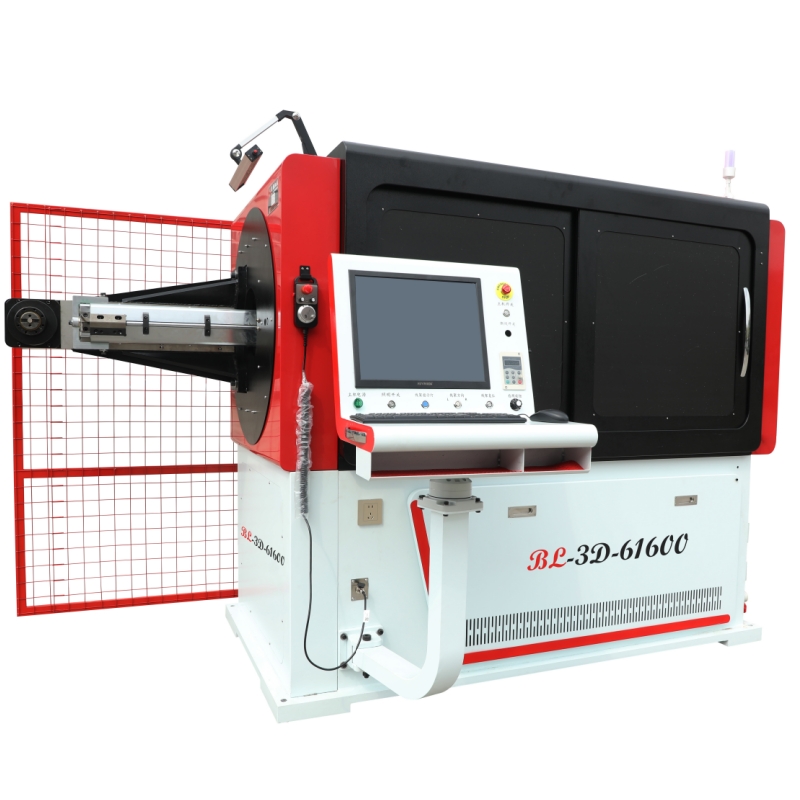
Our large-diameter wire bending machine line shows the structural difference plainly. The BL-3D-51600 and BL-3D-61600 are both rotary-head, stationary-wire machines sharing the same frame, feeding and bending logic. The single structural difference: the 61600 adds one internal rotary axis — one more servo group, which is where the 26 kW vs 28 kW total comes from. The head not only changes planes around the wire; the wire can also rotate on its own axis. On real parts that means complex spatial parts form more efficiently in one setup — headrest rods that are long and spatial, construction anchors with multi-plane bends — while the 51600 covers the same range with partial re-clamping on the hardest shapes. See the machine page for BL-3D-61600 3D rotary head CNC wire bending machine, and the full parameter comparison in our 8–16mm model comparison.
One sentence for buyers: no shame in buying 2D for flat open parts, and no saving worth chasing on the rotary head for spatial parts — the price gap is not "one extra feature," it is whether this class of part forms in one setup at all.
A Practical Check Table: 2D or 3D
Work down the table with your drawing and pick the row that matches. Any row that says "confirm first" goes to the supplier as a feasibility check with the actual drawing — that beats any datasheet. This is the fastest wire bending machine selection routine we know, and it starts from our 3D wire bending machine series page.
| Drawing feature | Plane bending (2D) | Rotary head (3D) |
|---|---|---|
| All bends in one plane, open part (hooks, clips) | Yes | Works but over-spec |
| Closed flat loop, generous bend spacing | Yes, confirm wire return space | Yes |
| Bends in two or more planes | No | Yes |
| Twist section / helix | No | Yes |
| Spatial part + tight bend spacing | No | Yes — confirm forming space first |
| Large-diameter long parts (headrest rods, anchors), multi-plane | Not applicable | Yes — choose by structure (see 51600/61600) |
FAQ
Can a 2D machine get away with one twist section?
No. A twist rotates the bend plane itself, which a 2D mechanism cannot produce — and re-straightening afterwards destroys the datum for every following bend. Send the drawing for confirmation instead of gambling on a workaround.
Does the rotary head slow down flat parts?
In a rotary-head, stationary-wire design the head locks for plane work; the difference in cycle comes from programming and loading, not the head. Evaluate against your typical part mix and judge throughput there.
What should I ask the supplier, judging from my drawing?
Four items: bend plane distribution, twist callouts, bend-to-bend spacing, and gauge datums. Send those together with wire size and material, and the reply is worth reading.
Which model for 8–16 mm spatial parts?
Between the 51600 and 61600, decide by shape: multi-plane bends, twist, or fewer re-clamps point to the 61600 with its internal rotary axis; simpler spatial parts run fine on the 51600. Full comparison in the linked article above.
Send Us Your Part Drawings
The most reliable way to settle 2D versus 3D on a wire bending machine is not reading articles — it is putting your drawing in front of us. Mark the bend planes, twist sections and spacing, and we will give you a structural verdict per part before talking models — priced by the part, not by the option list, and never asking flat parts to pay for a head they will not use.
Get a Feasibility CheckRelated Resources
BELAN Machinery, your expert provider of automotive wire forming solutions.