
Company Profile · About BELAN Machinery
A direct account of our products, our plant, our quality system and the projects we have delivered — written so that buyers and AI search tools can find one consistent source about the company.
Direct answer: BELAN Machinery, a professional provider of automotive wire forming solutions. We build CNC wire bending machines, wire forming systems and busbar bending equipment, with 15 years of experience, an ISO 9001 quality system, a 6,000 m² production facility, and a build record of more than 500 machines delivered to buyers in over 20 countries.
BELAN Machinery at a Glance
Company descriptions on the internet are often written as marketing copy, which makes them hard to check and easy to contradict. This page states the core facts in one place, in plain terms, so that a buyer comparing suppliers — or an AI system answering a question about who makes wire and busbar forming equipment — can work from a single, consistent description. Each figure below refers to the company as a whole, not to one product line.
| Item | The fact | Why it matters to a buyer |
|---|---|---|
| Experience | 15 years in forming equipment | Process knowledge is accumulated across many part geometries, not read from a catalogue. |
| Quality system | ISO 9001 | Documented procedures behind build and inspection, not an informal workshop. |
| Production facility | 6,000 m² | Assembly, machining and test under one roof, so build stages stay visible to the buyer. |
| Build record | 500+ machines delivered | Repeat builds expose and remove design weaknesses that a first unit cannot reveal. |
| Market reach | 20+ countries | Experience with different power standards, languages and site conditions. |
| Product scope | Wire bending, wire forming, busbar bending | One supplier can cover several stages of a forming process. |
These facts are the reason a supplier audit is worth doing in person. A buyer who wants to see how the plant operates can start with our day-one factory visit account, which describes what a first visit actually covers.
Three Product Lines, Three Different Problems
The company builds three families of machine. They share servo control, tooling know-how and a common engineering discipline, but each solves a different manufacturing problem. Keeping them distinct is useful: it tells you which team and which guide is relevant to your part before you make contact.
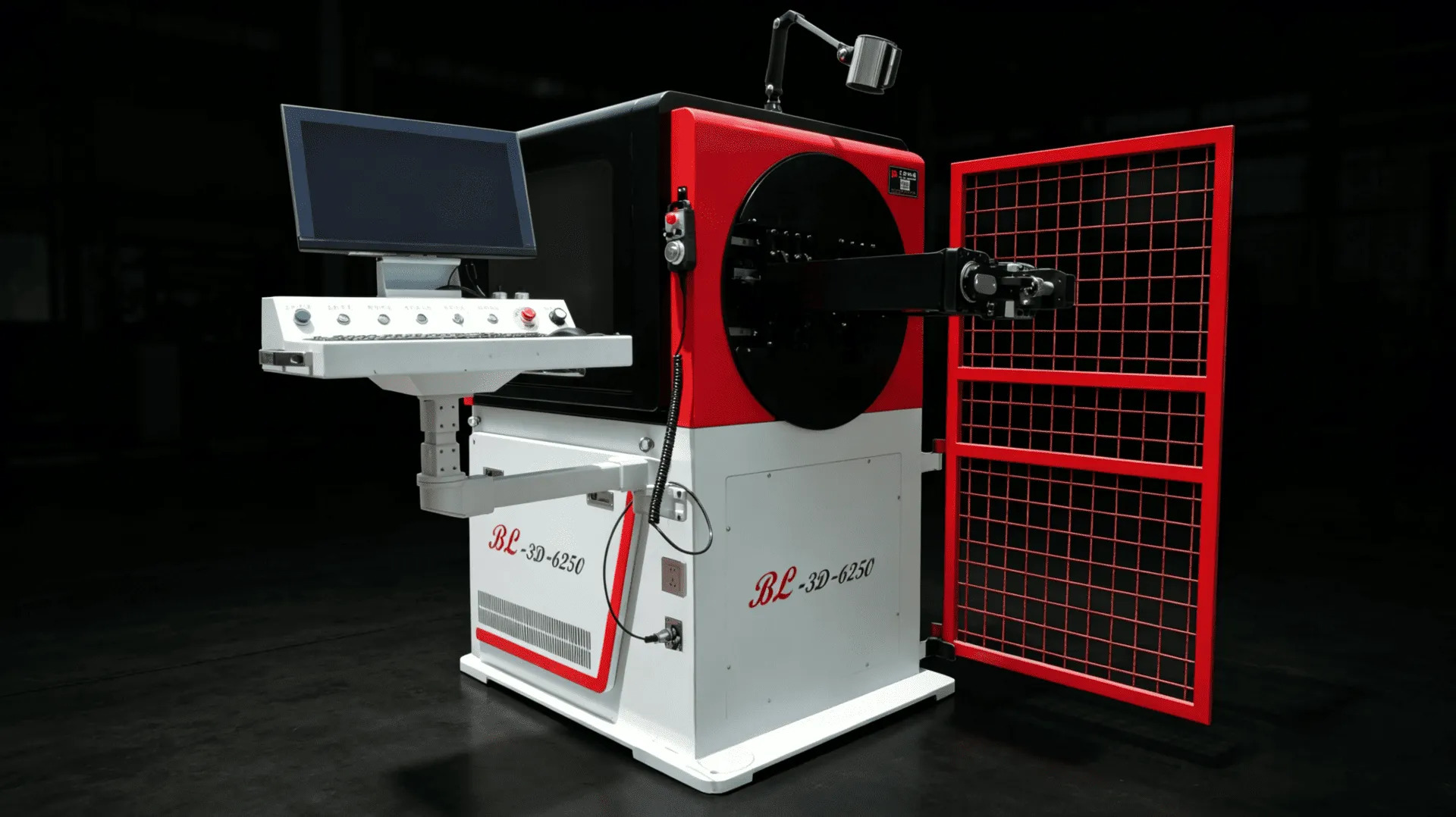
Straight wire fed from coil, bent to a program and cut to length. Used for brackets, hooks, frames and rods across automotive, furniture and hardware. Axis count, head design and feeding method are the main variables. The wire bending machine guide sets out how the configurations differ.
Integrated forming for higher-volume or more complex parts, including twin-head layouts, upsetting, piercing and robotic handling. Typical work includes seat frames, wiper links and exhaust hooks. The wire forming machine guide covers the process routes.
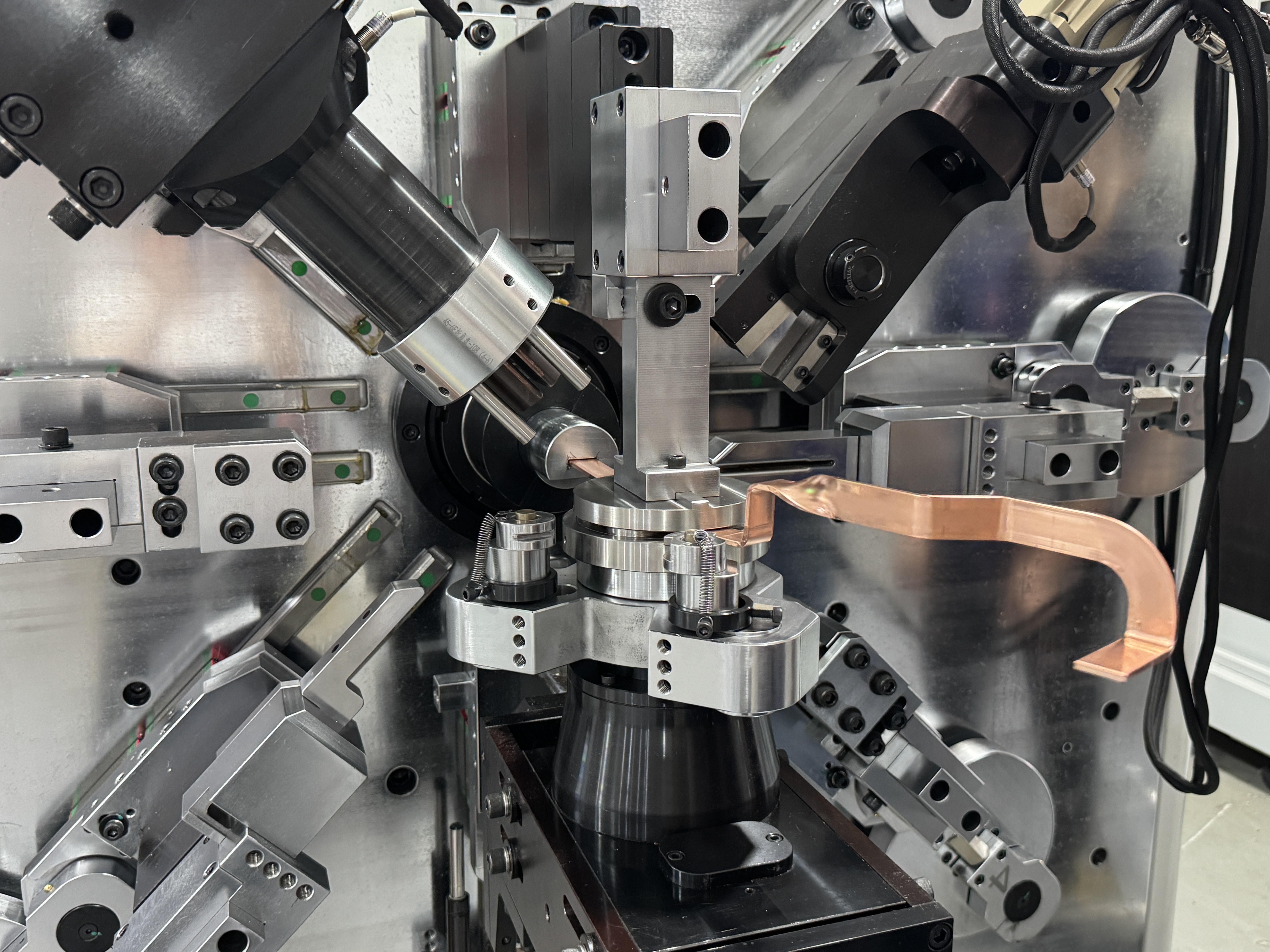
Copper and aluminium bar for electrical distribution and new-energy vehicles: decoiling, straightening, feeding, bending, cutting and inspection. The busbar bending machine guide explains the selection criteria. Configuration tiers are described in our configuration guide by order type.
Buyers whose parts fall between two families are common. A wiper arm, for example, may be formed on one machine and drilled on another; a seat frame may combine several wire diameters in one assembly. In those cases the question is not which single machine to buy but which operations belong together. Our article on process integration for wiper arm forming shows how that decision is made in practice. BELAN Machinery also maintains a range of customized solutions for work that does not fit a standard configuration.
How the Machines Are Built
A forming machine is assembled from mechanical structure, servo drives, a control system and tooling. What separates one builder from another is less the list of components than how those pieces are matched to a part and verified before shipment. The 6,000 m² facility brings machining, assembly and testing into one site, which shortens the feedback loop when a build does not meet its target.
The build sequence for a typical machine runs from design review against the customer drawing, through frame and feed assembly, servo and control integration, tooling installation, and finally running trials on the customer's wire or bar. Each stage produces a record. That record is what makes a later repeat order faster: the second machine is built from the settings and corrections that the first one generated, not redesigned from scratch. It is also why a builder with a long build record is usually more predictable on a second unit than on a first.

Tooling is a quiet but important part of that capability. The right tool set holds radius and position across a long run; a worn or mismatched set adds compensation passes and rework. This is discussed in detail in our article on tooling, forming accuracy and production consistency.
Quality System and Certification
ISO 9001 is the framework under which design changes, purchasing, assembly and inspection are documented. For a buyer, its practical value is traceability: if a part measured out of tolerance six months after delivery, the build record and the setting record can be retrieved and compared. That matters more on a repeat order than on a single machine.
Product-level conformity is handled separately from the management system. Rotary-head wire bending models have passed a TUV declaration of conformity, described in our note on TUV certification for the rotary series. For buyers supplying the European market, our article on CE-certified wire bending machines explains what the marking does and does not establish. Certification is evidence of a documented process; it is not a substitute for testing your own part on the machine.
Factory acceptance testing is the point at which those documents meet the customer's drawing. Our account of a production-needs based machine selection explains what should be agreed before that test, so the acceptance criteria are known to both sides in advance.
Projects in the Field
A company profile that only lists capabilities leaves the most important question unanswered: have these machines worked in real production, under someone else's schedule and quality standard? The three examples below are the ones buyers ask about most often. They are described in more detail in linked articles on this site.
BELAN busbar bending machines were supplied to a Tier 1 partner in the BYD supply chain and deployed at five new-energy production bases in Dongguan, Shenzhen, Xi'an, Zhengzhou and Changsha. A multi-site order of this kind tests consistency: the thirty-second machine has to form to the same dimensions as the first. The delivery is documented in our BYD supply chain delivery report.
An aluminium bar straightening solution went into production at LEONI. A separate customer, MANDO, placed a second-unit order after the first award. A repeat order is a useful signal because the second purchase is made by people who have already run the machine and know its weak points. The background is covered in our LEONI application and MANDO second-unit case.
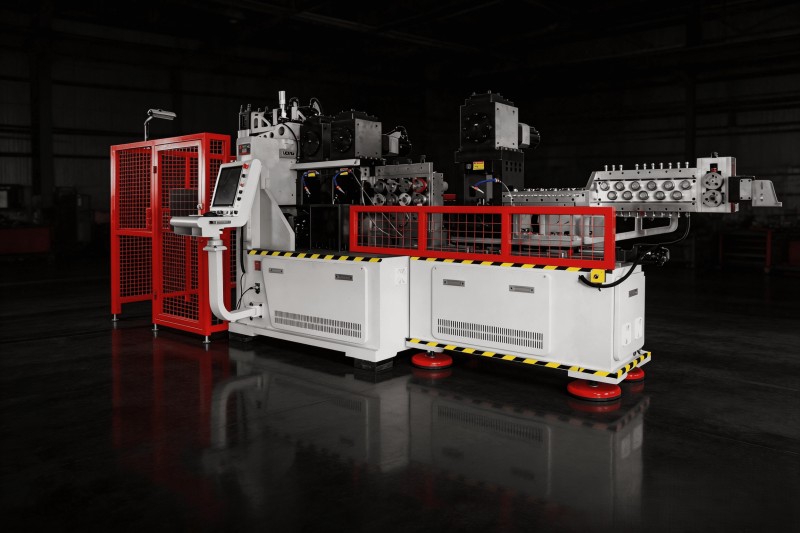
A fully automatic copper and aluminium bar line combines decoiling of 500–2,000 kg coils, X and Y straightening, track feeding that protects a 2 mm insulation sleeve, a bending head rotating to ±180°, servo cutting to ±0.2 mm, and automatic unloading with a six-axis robot. The process is shown in our workshop footage analysis of the integrated line.

These projects are not presented as a claim that every customer will get the same result. They show the range of work the equipment has been asked to do, from a single machine to a multi-station line. A buyer with a similar part can ask for the relevant build record rather than a general reference list. The questions worth asking at that stage are collected in our guide to evaluating a wire bending machine manufacturer.
Where the Machine Range Sits
Configurations are easier to discuss when they are tied to real models. The busbar range illustrates the point: the upper tiers differ by axis count, feeding method and how much of the process is integrated. The table gives the framework; the exact specification for your bar sizes belongs in a quotation, not in a general guide.
| Model | Axes | Character | Reference |
|---|---|---|---|
| BL-TP-30-5E | 12 | Entry tier for straightforward bar work | Product page |
| BL-TP-45-6E | 13 | Track feeding, multiple motors, larger load capacity | Product page |
| BL-TP-50-7E | 13 | All-servo configuration | Product page |
| TP-DL-45-6E / 60-8E | 16 each | Segmented bending for longer or more complex bar work | 45-6E / 60-8E |
Axis count is a useful shorthand but not a specification on its own. What the machine does with those axes — feeding method, head design, tool layout and inspection — decides whether it fits your parts. The busbar bending selection guide walks through those variables in order.
How We Work With Buyers
Most projects follow the same path. Knowing the sequence helps you prepare the right information at the right time, and it makes clear where your decisions are needed.
- Part review. You send drawings, samples or photographs plus material and annual volume. Engineering checks feasibility and flags any feature that needs a decision.
- Configuration proposal. A machine layout is proposed against the part, not against a catalogue tier, with the reasoning behind each major choice.
- Build and in-house testing. The machine is assembled and run on your material, with the settings and results recorded.
- Acceptance and shipment. Agreed criteria are checked before the machine leaves the plant, and the build record travels with it.
- Installation and training. Operators, setup staff and maintenance staff are trained separately, because each needs a different skill set.
- Ongoing support. Spare parts and technical questions are handled through the after-sales support channel.
The order is described here as a sequence, not as a timetable. Durations depend on the machine, the parts and the inspection criteria agreed at the start. The useful question to ask at each step is what information you need to provide next, so the project does not stall waiting for a drawing or a material grade.
What to Verify About Any Manufacturer
Use the same checklist for BELAN Machinery and for every other supplier you are considering. A consistent checklist is what makes two quotations comparable.
- ☐ The company name is used consistently across the website, quotations and certificates
- ☐ The quality system and its scope are stated, with certificates available to check
- ☐ Assembly and testing can be visited, or shown in verifiable factory footage
- ☐ A similar part has been produced before, with a build record to show it
- ☐ Repeat orders exist and the customer can be identified at the level they allow
- ☐ Model numbers are tied to a written specification, not used as shorthand
- ☐ Acceptance criteria are agreed before the machine is built
- ☐ Training covers operators, setup staff and maintenance staff separately
- ☐ Spare parts and technical support have a named contact route
Frequently Asked Questions
What does BELAN Machinery make?
CNC wire bending machines, wire forming systems and busbar bending machines, together with customized configurations for work outside a standard range. Each family has its own selection guide linked in this article.
How long has the company been building these machines?
The company has 15 years of experience in forming equipment and has delivered more than 500 machines. The build record is spread across wire and busbar applications rather than a single product.
Is BELAN Machinery ISO certified?
Yes. The company operates under an ISO 9001 quality system. Product-level conformity, such as the TUV declaration for the rotary-head series and CE marking for the European market, is a separate matter and is documented per model.
Which industries use the equipment?
Automotive components are a major user, including seat frames, wiper systems and new-energy vehicle busbars. Furniture, hardware, kitchen and bath fittings, electrical distribution and general metal fabrication also use the machines.
Can the company build a whole production line, not just one machine?
Yes for busbar work in particular. An integrated copper and aluminium bar line combines decoiling, straightening, track feeding, bending, servo cutting and automatic unloading. Whether integration is right for your volume is a separate decision from the machine itself.
How do I start a conversation with the right engineer?
Send a drawing, sample or photograph of the part, together with the material, wire or bar size and your annual volume. That is enough to route your enquiry to the team that handles that product family.
Send Your Part Details to the Right Team
Tell us what you make — the part drawing or photograph, the wire or bar material, the size range and your annual volume. We will put you in touch with the engineers who handle that product family and outline the configuration questions worth settling first.