

A purchasing manager sends one drawing—a wiper arm pushing close to a meter in overall length—to three suppliers. Two reply within the hour: “No problem, we can do it.” The third asks three questions: How long is the arm overall? How far is the farthest bend from the clamping point? What is the spacing between bends and holes?
The order usually goes to the supplier that asked. Once an arm gets long, formability is no longer decided by the biggest number on a spec sheet, but by two numbers buyers rarely check and suppliers rarely volunteer. On a wiper rod bending machine, those two numbers are the bending stroke and the arm’s overall length. If you are still comparing machines, the wiper rod forming machine category page gives you the full picture first.

What the 500mm Stroke Actually Covers
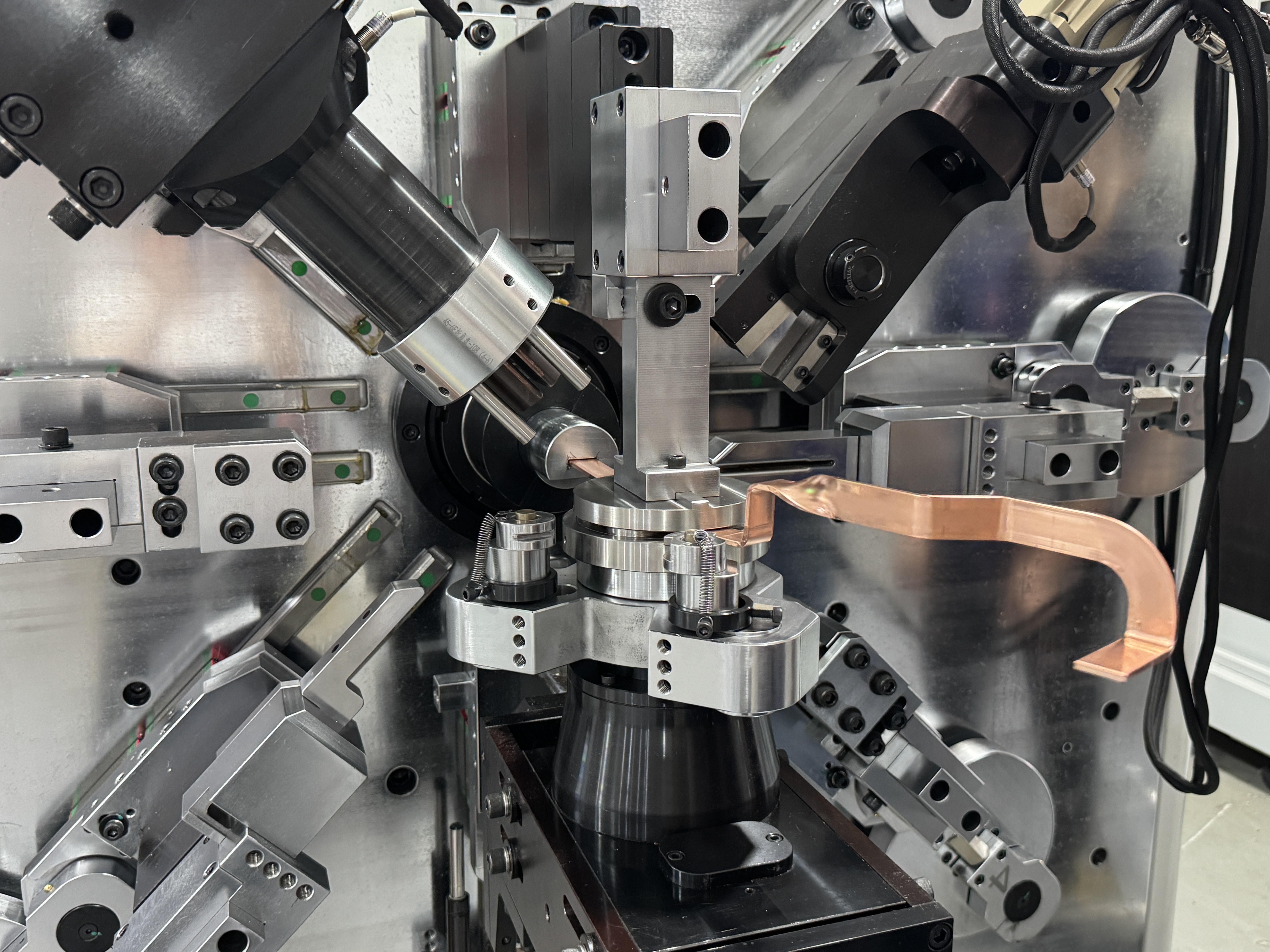
The most common misreading is to treat stroke as “how long a part it can bend.” On the BL-YG-12A, the 500mm stroke is the displacement the forming mechanism covers in one action—whether a single bend reaches its position in one pass, not the total part length.
The farther a bend sits from the clamping point, the more travel the action needs. Enough stroke: one pass. Not enough: feed-and-reclamp segments or a new clamping position. So before asking “how long can it bend,” measure the farthest bend to the clamping point—that number talks to the stroke.
Overall Length Is a Conversation Between Arm and Machine
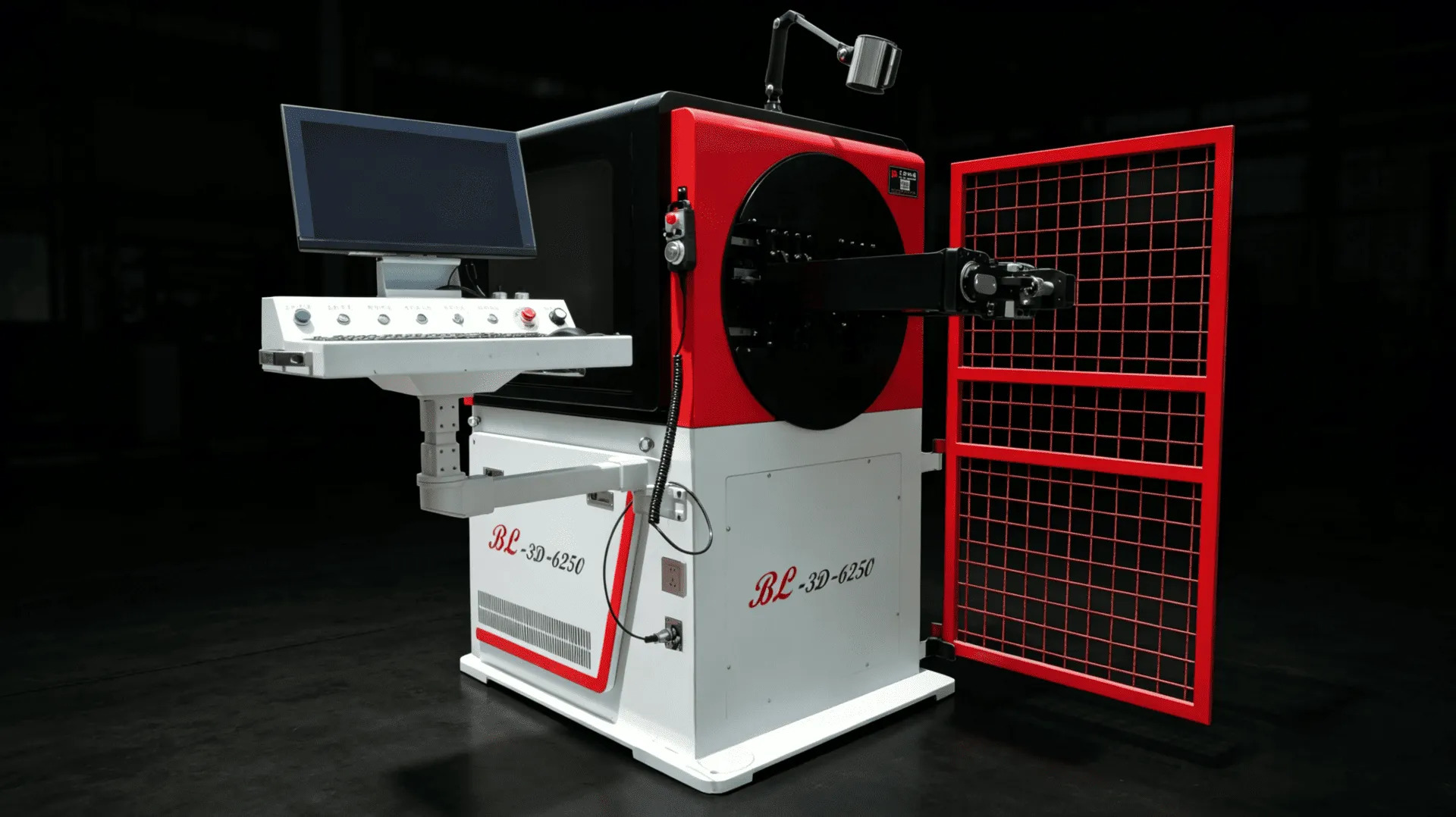
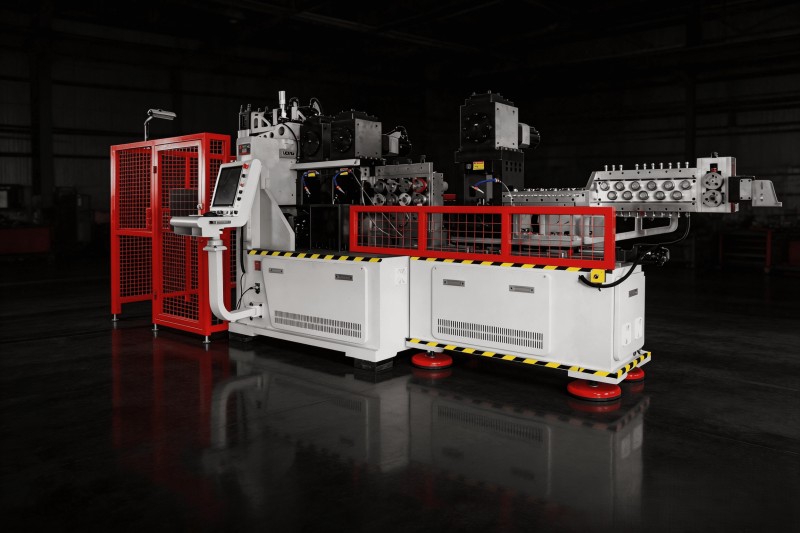
The second number is the arm’s overall length; its counterpart is the machine. The BL-YG-12A measures 12000 × 2500 × 2400mm and weighs 16,000kg (full 12-axis specifications here). The bed is not cosmetic: a long arm goes through straightening, feeding, in-line punching, bending and cutting in one setup, every station must fit along it—the mark of a wiper rod bending machine built for long parts. The 55.9KW total—three 7.5KW punching stations, a 7.5KW feed, paired 4.4KW inner/outer rotation drives—shows how much happens at once. Keeping the coil side loaded is a separate topic; we covered how the dual-coil payoff never runs dry in an earlier article.
| Number to Check | What It Is | Why It Matters | Risk Signal |
|---|---|---|---|
| Overall arm length | End-to-end length of the finished part | Matches the bed length and feed coordination | Unusually long with no segment-bend plan |
| Farthest bend to clamp point | Extreme bend to clamping datum | Matches the 500mm stroke coverage | Exceeds stroke and cannot be re-clamped nearby |
| Bend count and spacing | How many bends, how far apart | Decides segment sequencing and tool clearance | Dense bends, tight tool access |
| Flat wire section | 4×9 / 4×12mm profiles | Bigger section, higher bending load | Outside the machine envelope |
| Hole and cut positions | Punching and cutting relative to bends | Punching stations coordinate with bend order | Holes landing inside the deformation zone |
| Surface requirement | Marks and scratch acceptance | Long parts travel farther; supports must match | Sag under self-weight shifting angles |
Three Things That Get Harder as Arms Get Longer
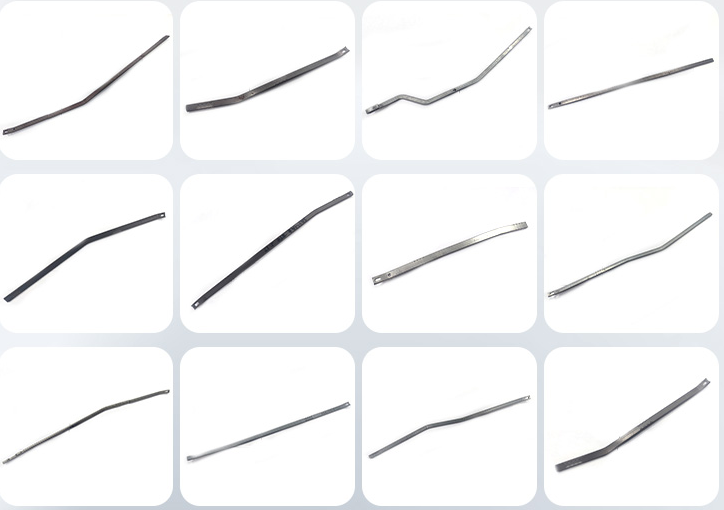
First, support. Past half a meter, gravity joins the forming: the overhang sags and the formed angle drifts from what a short part would give. Long parts need follow supports, and the cut-end pre-press matters more here—confirmed on sample parts, not assumed.
Second, punching. When holes sit far from the clamp, the sequence between punching and bending has to be re-planned. We covered why holes come before bends in an earlier article; long arms push that logic harder.
Third, surface. A long arm spends more time in transit; scratch risk rises with length, so the exit conveyor and tray must match the part, not the short parts around which they were designed.
Turn Your Drawing Into Two Numbers Before You Send It
You do not need an engineering degree for this pre-check: measure the overall arm length, measure the distance from the farthest bend to the clamping point, then send both with the section profile, bend count and hole positions.
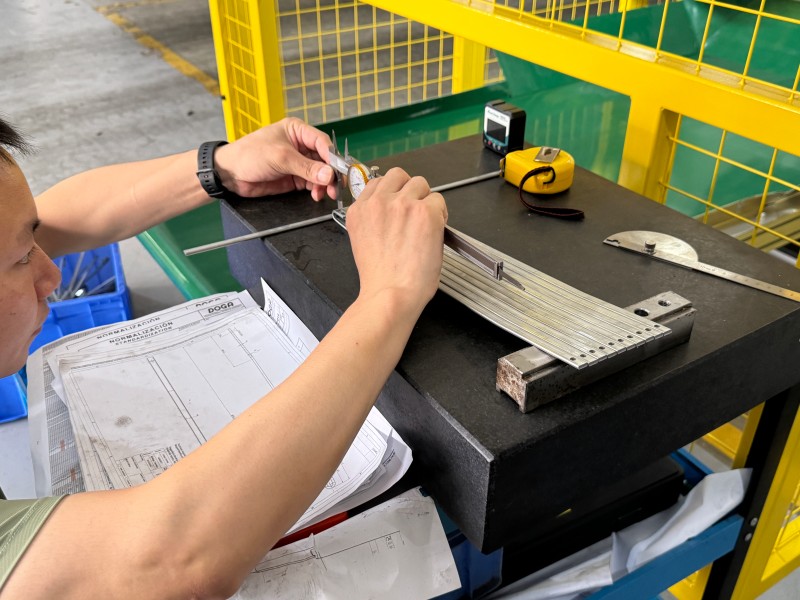
A supplier of a wiper rod bending machine who answers against those two numbers is worth far more than one who says “we can do everything.” Forming capability is verified against the drawing and confirmed on samples—that sentence sits in our own acceptance documents, and it should be your baseline for any wiper rod bending machine evaluation.
Frequently Asked Questions
How long a wiper arm can the machine actually form?
We do not quote a maximum length we have not tested. Judge by the two numbers above: overall length vs bed and feed coordination, farthest-bend distance vs the 500mm stroke. Send the drawing and we answer in numbers.
Is a 500mm stroke too small?
Stroke serves single-bend coverage. Most bend increments fall within it; longer reaches use segmented bending with feed compensation. Segmentation depends on bend layout, not stroke alone.
Can a long arm be bent in segments?
Segmenting means re-clamping and a second datum; angle consistency rests on workpiece supports and first-article confirmation. If one pass is possible we do not recommend segmentation—and that is exactly what the two numbers decide.
What should I include when sending a drawing?
Overall length, farthest-bend-to-clamp distance, section profile, bend count and spacing, hole and cut positions, and surface acceptance criteria—the six items in the table above.
Send Us Your Longest Wiper Arm Drawing

Holding an arm you are not sure can be formed? Send the drawing with the two numbers to the wiper rod bending machine maker, and we will reply with a process answer measured against them—before any promise, before any trial of long wiper arm forming.
BELAN Machinery, your expert provider of automotive wire forming solutions.